
Friday, November 20, 2026



News and Views from the Global South
Environment
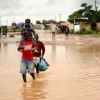
ZAMBIA: Health Fears Follow Floods
As the heavy rains subside, signifying the end of the rainy season, a cholera outbreak is sweeping through the Zambian capital, Lusaka.SOUTH AFRICA: Coal Plant Won’t Promote Development, Say Groups
As the World Bank approved a controversial three-billion-dollar loan for a coal-fired power plant in South Africa Thursday, both the details and the broader impacts of the loan continue to be criticised by community and environmental groups.ECUADOR: Environmental Inspection in Yasuni Park
Representatives of Ecuador's ombudsman's office and environmental groups are visiting the Yasuni National Park on Saturday, home to some of the world's last indigenous people still living in voluntary isolation, in order to verify reports of illegal activity by oil companies.ENVIRONMENT-BRAZIL: A Tragedy of Local and Global Dimensions
The people who live in the favela of Guararapes are probably unaware that the heavy rains that forced them to flee their homes were caused by a phenomenon that is affecting the whole planet: global warming.
CARIBBEAN: Final Throes for Jamaica’s ‘Hippie Paradise’?
For centuries, Negril, a seven-mile stretch of white sand beach on the western tip of Jamaica, was cut off from the rest of the island by bad roads and a large swamp.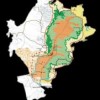
SOUTH AMERICA: Clear Water – Mercosur’s Underground Treasure
Invisible beneath a vast area of Argentina, Brazil, Paraguay and Uruguay, the Guaraní Aquifer is one of the world's largest reserves of freshwater. Despite supplying water to millions of people, it is neither contaminated nor overexploited.ARGENTINA: Sweeping the (Garbage) Problem Under the Rug
To live up to the "Zero Garbage" law that went into effect in 2006, the volume of waste ending up in landfills in the Argentine capital was to be significantly reduced every year, with the ultimate aim of eradicating landfills by 2020. But environmentalists are skeptical that the goal will be reached.
PERU: Miners Call Off Protests for Talks; Six Killed in Clashes
In response to a government promise to negotiate, small-scale gold miners in southern Peru temporarily called off protests Wednesday in which six people were killed and as many as 30 injured when the police attempted to clear a roadblock.
URUGUAY: Fighting Climate Change from the Countryside
"We would get up and go to bed every day looking up at the sky, hoping for something to fall, but nothing happened, not even a drop fell," says María Inés Queiros, who makes artisanal cheese in the southern Uruguayan province of San José.
ENVIRONMENT: Forests at a Climate Crossroads
Billions of dollars are being mobilised to protect and increase the world's forests under a climate protection mechanism known as REDD (Reduced Emissions from Deforestation and Degradation). But many experts are unsure that it will work, and some fear it could end in disaster.
WATER : Swazi Village Gets a Self-Sustaining Water Supply
No one loves the bill collector, and Sifiso Shongwe gets a chilly welcome as he goes from household to household collecting money for Maphilingo's community water scheme.ASIA: Mistrust Lingers as China Confronts Thorny Mekong Issues
Lost in the deluge of accusations that China's dams are the culprit in the Mekong River's unusually low levels is the fact that Beijing has actually become much less tightlipped about thorny issues with its neighbours than in the past.ENVIRONMENT-INDONESIA: Solving Waste Woes Far from Easy
By running his illegal dumpsite, Nasrulloh believes he is doing the community good, helping the city government, doing his bit for the environment – while making money for himself as well.GUATEMALA-EL SALVADOR: Cross Border Opposition to Mine
The Cerro Blanco gold and silver mine in the southeastern Guatemalan province of Jutiapa, on the border with El Salvador, is under fire from environmentalists in both countries concerned about the threat it poses to the shared Lake Güija and rivers on either side of the border.PERU: Oil Pipeline and Uncontacted Tribes
A 200-km oil pipeline that Franco-British oil group Perenco aims to build in the heart of Peru's Amazon jungle region is at the centre of a controversy because of the reported existence of uncontacted native groups in the area.Ecobreves – MEXICO: Worm-Made Fertilizer Regenerates Soils
The use of organic fertilizer made by worms is on the rise in Mexico.Ecobreves – ARGENTINA: Threats Against Eco-Activists
Environmental and neighborhood groups in the eastern Argentine province of Santa Fe have reported threats that they believe are related to their fight against the spraying of dangerous agrochemicals near urban zones.Ecobreves – BRAZIL: Macaúba Palm for Biodiesel
The macaúba (Acrocomia aculeata), an abundant palm native to Brazil, will be important raw material for biodiesel, according to Entaban Ecoenergetics of Brazil, a partnership of Spanish and Brazilian capital.Clear Waters Mercosur's Underground Treasure
The Guaraní Aquifer remains unpolluted and an essential reserve for an increasingly thirsty world, according to a detailed report from the four countries under which it lies.
Forests at the Climate Crossroads
The use of forests as a tool to fight climate change is facing more and more doubts.
Final Throes for Jamaica's 'Hippie Paradise'?
What was once a magical place in Jamaica is on the verge of losing its best trait: the beaches.« Previous Page — Next Page »


Through our global network of local writers, we are continuing our award-winning coverage of global and local environmental challenges, with a focus on the people for whom the ecosphere matters in a direct way: rural dwellers who have little means to protect themselves against adverse conditions; communities that need to switch to sustainable development in order to survive; poor women and children, who are the most vulnerable in natural disasters. Sponsored by the United Nations Environment Program (UNEP), the United Nations Development Program (UNDP) and The World Bank (WB), IPS also maintains the award-winning Tierramérica, a specialised information service on environment and development.

The Week with IPS

Tracking global progress towards a sustainable world


