
Friday, November 20, 2026



News and Views from the Global South
Environment

ENVIRONMENT-ZIMBABWE: Future Generations Will ‘Inherit Only the Wind’
The plumes of smoke rising above the dense working class suburbs of Bulawayo are a sign of the environmental impact of Zimbabwe's electricity crisis.SIERRA LEONE: Plan For Sanitation Rests with Community
Lying forgotten in the bush somewhere is a sign declaring "Ogoo Farm is an open defecation-free community."CLIMATE CHANGE: Native Peoples Reject Market Mechanisms
Solutions to global warming based on the logic of the market are a threat to the rights and way of life of indigenous peoples, the Latin American Indigenous Forum on Climate Change concluded this week in Costa Rica.UGANDA: NGOs Judging Oil Palm on Hearsay, Says U.N.
Non-governmental organisations (NGOs) are guilty of judging a palm oil project in Uganda on innuendo rather than its merits, the United Nations poverty agency supporting the controversial scheme said, as the project starts to bear fruit for smallholder farmers.
PERU: The Tangled Paths of New Forest Law
Indigenous protests prompted the introduction of a new legislative bill on forests and wildlife in Peru, the second most forested country in South America. Experts consulted by Tierramérica pointed to what the initiative gets right, but also to what's wrong with it.U.S.: Obama Approves New Coastal Oil Drilling
U.S. President Barack Obama announced on Wednesday his administration's plan to expand the areas off the U.S. coast which will be eligible for oil and natural gas drilling, as environmental groups condemned the plan as damaging to the oceans and coastal ecosystems.
NIGER: Livestock Herders Plan Ahead
The cows Djibo Hama looks after belong to someone else, but he is diligent. Anticipating a severe shortage of good grazing in 2010, he secured cattle feed for the 35 that remain.
CHILE: Quake a Chance for Sustainable Rebuilding
Although there is not yet an official tally of the environmental consequences of Chile's Feb. 27 earthquake and tsunami, environmental groups and experts are calling for quick and sustainable responses to the problems.U.S.: Big Energy Firms Blocking Solar Power in South
As citizens, businesses and non-profit organisations seek to transition to cleaner power sources like solar and wind, some big energy firms whose business models rely on polluting sources are standing in the way.CLIMATE CHANGE: From Copenhagen to Cochabamba
A different way of fighting global warming will be tried out in the central Bolivian city of Cochabamba when government representatives and thousands of activists gather for the World People's Conference on Climate Change and the Rights of Mother Earth.EUROPE: Waste in East Going Waste
Environment groups have warned that Eastern Europe is plagued with serious and potentially dangerous waste disposal problems as new figures reveal the region has Europe's lowest recycling rates.
BIODIVERSITY-EUROPE: Sturgeons Return to the Danube
A century ago, when the Danube was still blue, it teemed with beluga sturgeon, as did the Rhine with salmon. But industrialisation and the construction of canals and dams have destroyed the habitat of both species of fish.VENEZUELA: New Frogs Appear; Their Discoverers Disappear
Shortly after it informed the world of the discovery of three new species of frogs, the environmental organisation Fundación Andígena closed its doors in Venezuela this month due to lack of financial support.ENERGY: Bank-Funded Coal Plant Tests Green Agenda
Decision-makers around the world are in a period of transition when it comes to the future of supplying energy. Even if everyone agrees that a low carbon future is the inevitable solution, there is nothing close to consensus regarding which path to take.
ENVIRONMENT: Forests May Depend on Survival of Native People
After the failures in Copenhagen to agree on a new climate protection treaty, and more recently at the Doha meetings on trade in endangered species to prevent bluefin tuna from going extinct, indigenous forest communities may offer examples of sensible governance for shared resources on a small planet.
Q&A: South Korea a Key Convention Centre in Asia
The Republic of Korea (ROK), one of the fastest growing industrial nations and the world's 13th largest economy, has not only survived the global financial crisis but is also gearing up to play a key role in the international arena.
Q&A: Exposing the “Clandestine Passengers of Globalisation”
Between 30 and 40 percent of taxes that should be collected by developing countries end up in countries operating as tax havens. Overall, these "clandestine passengers of globalisation" contribute to capital flight from developing countries to the tune of 1,000 billion dollars a year.
Quake a Chance for Sustainable Rebuilding in Chile
Chilean environmentalists are promoting sustainable and inclusive reconstruction of their country in the aftermath of the Feb. 27 quake. They want better-planned cities and unconventional renewable energy sources.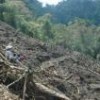
The Tangled Road of Peru's Forest Law
Some of the provisions of new regulations for protecting the forests of Peru and the rights of the indigenous communities of the Amazon have stirred up controversy.Sturgeons Return to the Danube
A program involving experts and officials from eight European countries is working to repopulate the iconic Danube with the endangered beluga sturgeon.Ecobreves – VENEZUELA: Fires Cover Caracas in Smog
A hot, dense haze covered the Venezuelan capital in late March, when the ash from a series of fires across some 140 hectares on Mount Ávila, which looms over the capital, mixed with the city's usual air pollution« Previous Page — Next Page »


Through our global network of local writers, we are continuing our award-winning coverage of global and local environmental challenges, with a focus on the people for whom the ecosphere matters in a direct way: rural dwellers who have little means to protect themselves against adverse conditions; communities that need to switch to sustainable development in order to survive; poor women and children, who are the most vulnerable in natural disasters. Sponsored by the United Nations Environment Program (UNEP), the United Nations Development Program (UNDP) and The World Bank (WB), IPS also maintains the award-winning Tierramérica, a specialised information service on environment and development.

The Week with IPS

Tracking global progress towards a sustainable world


