
Saturday, November 21, 2026



News and Views from the Global South
Environment
CLIMATE CHANGE: Copenhagen Talks Create Hardly a Ripple in Malaysia
Even if Prime Minister Najib Razak is in Copenhagen for the high-level segment of the U.N. conference on climate change, there has been precious little meaningful debate on the subject here in Malaysia.BANGLADESH: Food Security in Great Peril from Climate Change
Unless the world comes to its aid, Bangladesh says the vulnerability of its agriculture sector to climate change could spell severe consequences for its millions of people, who stand to lose their main source of livelihood.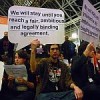
CLIMATE CHANGE: “Canada Is the Dinosaur”
Canada bears a large share of responsibility for any failure to make a breakthrough in reducing greenhouse gas emissions here in Copenhagen, say participants and civil society activists.SOUTH ASIA: Glacial Data Crucial to Combating Climate Change
People living in the Himalayan region are increasingly confronted by rising temperatures and glaciers melting at an unprecedented rate, threatening their very survival. This much the world already knows.CLIMATE CHANGE: Everything Left to Accomplish*
"It’s clear now – we’re not getting a binding deal at the end of tomorrow," said the president of Friends of the Earth-United States, Erich Pica.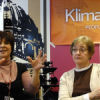
CLIMATE CHANGE: No Water in Copenhagen Talks
In the last two years, the conclusion among decision-makers has been that the only way to solve the climate crisis is to turn carbon into a commodity and privatise the atmosphere.
CLIMATE CHANGE: Lawmakers Push for a Deal
With only one day to go to the end of the climate change talks and no agreement in sight, it looks like it will ultimately be up to national legislators to effectively implement whatever agreement is forged here in the Danish capital.
Q&A: Global Economic Apartheid Is Obstacle to Fair Climate Deal
"Climate change is an opportunity to deal with all the issues of equity and justice that we have been struggling for all along," said Kumi Naidoo, Executive Director of Greenpeace International in an interview with IPS on Thursday in Copenhagen.
CLIMATE CHANGE: Zenawi Stands Alone In Copenhagen
Ethiopian Prime Minister Meles Zenawi says Africa must compromise and be flexible towards other countries, if the U.N. Climate Conference ending on Dec. 18, is to reach an agreement.DEVELOPMENT-THAILAND: Fish, Not Dams
Seventy-one-year old Kham, a woman from Napho Klang, left home early in the morning of Dec. 14 to join a ritual to revitalise the Mekong River, which passes through this part of north-eastern Thailand.
CLIMATE CHANGE: Meat-Eating Gets Grilled
Climate change has given vegetarians a big, new stick to bash meat-eating with, albeit one they would have gladly done without.
CLIMATE CHANGE: ‘What’s Good for Asia Is Good for the World’
China appears to have gained instant celebrity status since the opening days of the United Nations Climate Change Conference here.Ecobreves – MEXICO: Eye on Native Christmas Tree Sales
Faced with competition from foreign species, native Christmas tree growers in the southern area of the Mexican capital are fighting to keep their plantations in business.Ecobreves – HONDURAS: New Diploma in Geology
Public and private Honduran institutions this month created the first diploma in geology, aimed at developing human resources to contribute to the prevention and mitigation of natural disasters.
Latin America: The Climate Clock Is Ticking
A new study suggests that Latin America would not incur great costs if it takes on commitments now to reduce greenhouse gas emissions and takes immediate steps to mitigate the impacts of climate change.
Indigenous Mythology and Global Warming
Phenomena like climate change have occurred in long-past eras of humanity, when the balance between people and nature was broken, writes anthropologist Marina Barbosa in this column.
December 12 Was a Tipping Point
Regardless of the words these presidents and prime ministers decide in a "protocol" or "agreement" this week, it is the people of the world who have put the writing on the wall!, says in this column Saleemul Huq.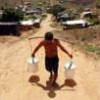
No Water in Copenhagen Climate Talks
The climate change summit in Copenhagen has ignored the world's water problems, which will only worsen with global warming, say experts.Ecobreves – BRAZIL: Micro Hydropower for Isolated Towns
The Hidropolio micro hydropower system is an alternative for bringing clean energy to some 10 million Brazilians living in isolated areas who otherwise lack electricity.Ecobreves – ARGENTINA: Residents Resist Mining Project
Residents of the northwestern Argentine province of Catamarca have kept up a roadblock on the access route to a mining site, because they say its exploitation by the Canadian firm Yamana Gold would harm the environment.
CLIMATE CHANGE: Chavez, Morales Lash Out at Wealthy North
Presidents Evo Morales of Bolivia and Hugo Chávez of Venezuela had harsh words for rich countries Wednesday, accusing them of driving the COP 15 talks to the brink of failure out of "selfishness" and supporting a "culture of death."« Previous Page — Next Page »


Through our global network of local writers, we are continuing our award-winning coverage of global and local environmental challenges, with a focus on the people for whom the ecosphere matters in a direct way: rural dwellers who have little means to protect themselves against adverse conditions; communities that need to switch to sustainable development in order to survive; poor women and children, who are the most vulnerable in natural disasters. Sponsored by the United Nations Environment Program (UNEP), the United Nations Development Program (UNDP) and The World Bank (WB), IPS also maintains the award-winning Tierramérica, a specialised information service on environment and development.

The Week with IPS

Tracking global progress towards a sustainable world


