
Saturday, November 21, 2026



News and Views from the Global South
Environment
AFRICA: Drying, Drying, Disappearing…
Lake Chad was bigger than Israel less than 50 years ago. Today its surface area is less than a tenth of its earlier size, amid forecasts the lake could disappear altogether within 20 years.PARAGUAY: Bottled Water Scare Exposes Threat to Groundwater
It all started with a warning on the quality of bottled water in Paraguay. But concern has now spread about the extent of pollution of the country's underground water reserves.CLIMATE CHANGE: Ice Melting Faster Everywhere
From the Arctic sea ice to the Antarctic interior and the mountainous peaks of Peru, Alaska, and Tibet, ice is melting at an alarming rate. The accelerating loss of ice sheets, sea ice, and glaciers is one of the most powerful and striking indicators of a warming climate.
MADAGASCAR: Worrying Lapse in Forest Management
The illegal logging of precious wood rose sharply during the political crisis that gripped Madagascar during 2009. Forest communities, who could be part of the preservation of these resources, have been swept up in the rush for rosewood.SRI LANKA: Five Years after Tsunami, Many Still without Shelter
"We have been here for almost five years. So many promises have been made, but very few have been kept," complains Mohideen Nafia, 22, one of the survivors of the 2004 Asian tsunami still living in a temporary facility in the coastal town of Kalmunai, located 300 kilometres east of the capital, Colombo.
ENERGY-ICELAND: Osmotic, Tidal Power Show Promise
Iceland already gets over 72 percent of its energy from renewable, hydroelectric and geothermal sources, but Icelanders are ambitious when it comes to energy and scientists are now looking at osmotic and tidal power to meet future energy needs.CLIMATE CHANGE: Copenhagen Fizzled, California Forges Ahead
As countries failed to reach a substantive climate change pact at Copenhagen last week, action at the subnational level has emerged as one of the likeliest paths toward significant climate action.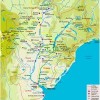
ENVIRONMENT: Rio de la Plata Fish and Fisherfolk Under Threat
A study by more than 30 experts from Argentina, Bolivia, Brazil and Paraguay warns of the threat menacing the survival of fish species and 50 riverside settlements in the Río de la Plata basin, which is the second largest river system in South America after the Amazon basin and contains a wealth of biodiversity.
No Real Deal, and No Exit
Coral reefs are dying, glaciers are melting and rising sea levels threaten the homes of millions. The effects of climate change will continue and there is little room for optimism as the Copenhagen summit has come came to an end with disappointing results.
Climate Change: Scientific Fact, Not a Political Issue
It might take a story of huge cataclysm, like the one told by Komatu Sakyo in his 1973 novel "Japan Sinks", to convince the world to reach an accord that will steer it away from the suicidal path of global warming.

Latin America’s Green Path Forward
Aside from the impact on biodiversity Andes glacier disappearance will have a tremendous economic impact on some of the Latin America's poorest residents.INDIA: Despite Failed Climate Talks, More Green Awareness
The world supped on an alphabet soup of acronyms over the nearly two weeks of climate change talks that just ended – UNFCCC, COP-15, IPCC, CDM, LDCF, MEF, CCS. But did any of these filter down to reach the average citizen?
CLIMATE CHANGE: “We’re Not Finished Yet,” Civil Society Warns
The climate change summit proved to be a "spectacular failure even according to its own terms," but civil society had "some successes," such as the inclusion of certain issues on the climate agenda, and making the voice of the South heard loud and clear.
CLIMATE CHANGE: History Was Not Made
There is no Copenhagen climate treaty. History was not made here and no deal was sealed.
CLIMATE CHANGE: Scientific Fact, Not Political Issue
"In a year's time, the Japanese archipelago will be completely under water." This official announcement was made following a violent eruption of Mt. Fuji, as a series of devastating earthquakes shook the country, forcing the world to face the challenge of taking in 110 million refugees within a very short time.
CLIMATE CHANGE: Getting Ready for Mexico
Before the outcome of COP 15 has even emerged, Latin American social organisations are already discussing their strategies for the next climate summit, to be held in a year's time in Mexico.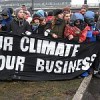
CLIMATE CHANGE: No Real Deal, and No Exit
The roof of our house is on fire but our leaders, our economic system and we ourselves are ignoring the alarms and continuing to add more fuel. There are no exit doors in our house; there is nowhere else to go.
CLIMATE CHANGE: Draft Accord Weak on Cuts, Funding
Heads of state and government are working fervently Friday to complete an agreement at the climate change summit in Copenhagen, but texts coming out of their midst so far lack details on emissions cuts and long-term funding.
CLIMATE CHANGE: “The Intelligence We Lacked”*
World leaders speaking in Copenhagen on Friday, the last day of negotiations for a deal on climate change, retreated into their national positions.
CLIMATE CHANGE: Norway Is Trying*
Norway is the world’s third largest donor in terms of development aid as a percentage of GDP. Norwegian Minister of Environment and International Development Erik Solheim spoke to TerraViva about the initiatives promoted by his country on environmental protection and its role during the Copenhagen negotiations.« Previous Page — Next Page »


Through our global network of local writers, we are continuing our award-winning coverage of global and local environmental challenges, with a focus on the people for whom the ecosphere matters in a direct way: rural dwellers who have little means to protect themselves against adverse conditions; communities that need to switch to sustainable development in order to survive; poor women and children, who are the most vulnerable in natural disasters. Sponsored by the United Nations Environment Program (UNEP), the United Nations Development Program (UNDP) and The World Bank (WB), IPS also maintains the award-winning Tierramérica, a specialised information service on environment and development.

The Week with IPS

Tracking global progress towards a sustainable world


