
Saturday, November 21, 2026



News and Views from the Global South
Environment
ENVIRONMENT: India’s Floods in Retrospect
"For almost one full day, we were desperate, wet and hungry," said Raja Angamutthu. "Our house, farmland, utensils, everything was floating in a watery grave while we looked on helplessly!"
MEXICO: Indigenous Enterprises Unite
Mexico is about to become the first Latin American country with an indigenous chamber of business, dedicated to promoting and representing more than one million micro and small enterprises that are on the frontline in the fight against poverty.BIODIVERSITY: Earth’s Life Support Systems Failing
The world has failed to slow the accelerating extinction crisis despite 17 years of national and international efforts since the great hopes raised at the 1992 Earth Summit in Rio de Janeiro.AFRICA: Climate Change Worsening Farming’s Trade-Related Woes
Numerous research institutes and international organisations agree that climate change will in the short and medium term worsen Africa's agriculture and food production capabilities, unless greenhouse gases emissions (GHE) are substantially reduced and adequate trade and investment policies put in place.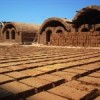
MIDEAST: Gaza Gets Ambitious With Mud
On a searing summer morning, workers are adding layers to the mud-brick police station being constructed in Sheikh Zayed, northern Gaza.THAILAND: Coastal Folk Flex Collective Muscle to Restore Mangroves
Looking across the bay while at a restaurant built on stilts over water, Bonchai Chayapat muses over the transformed landscape once lush with a mangrove forest that today has all but vanished.
Indigenous Enterprises Unite
In two years an inventory will be complete, tracking the economic and social status of indigenous businesses in Mexico, which will soon have their own umbrella organization.
Climate Change Just One Factor in Coastal Erosion
To understand the link between global climate change and coastal erosion requires an integration of the otherwise reductionist specialization on the issue, says Argentine scientist Jorge Codignotto.Ecobreves – BRAZIL: Ceramic Absorbs Industrial CO2
Using porous ceramic microspheres, scientists at the Brazilian Federal University of Minas Gerais were able to cut industrial carbon dioxide emissions by 40 percent.Ecobreves – MEXICO: City Campaign to Protect Birds
An initiative - backed by the city government and the schools - aims to raise awareness about preserving birds in the metropolitan zone of the Mexican capital. Threats to the birds include cats and rats, as well as lack of food and water, and the effects of climate change.Ecobreves – HONDURAS: Prize for La Mosquitia Documentary Film
A documentary that collects the multiplicity of sounds and forms of life of La Mosquitia, the Honduran jungle region on the Caribbean coast, has won an award from the Environment Secretariat (ministry) and a private foundation.Ecobreves – ARGENTINA: Refuge for Rescued Wild Animals
An Argentine environmental group has proposed creating a Wild Animal Rescue Center in the central province of La Pampa for animals captured by hunters.CLIMATE CHANGE: Kyoto Protocol Is a Lifeline for Island Nations
"It was a little bit scary," says Dessima Williams, describing how the two weeks of United Nations climate change negotiations ended here on Oct. 9. "Our concerns need to be heard more."CLIMATE CHANGE: New Financial Scheme Turns Heat on Rich Nations
A new financial mechanism to help the developing world deal with the challenges posed by climate change looms as a major hurdle on the road leading up to a United Nations summit in Copenhagen in mid-December.ENERGY: Crisis Has Hurt Investment in Renewables
In Latin America, Brazil is the leader in the development of renewable energies, while nations like Mexico, Peru, Chile and Argentina are taking slow steps to change their energy mix.BIODIVERSITY: Dwindling Fish Catch Could Leave a Billion Hungry
Fish catches are expected to decline dramatically in the world's tropical regions because of climate change, but may increase in the north, said a new study published Thursday.TRADE: NGOs Welcome EU Vow Not to Push Africa into EPAs
Non-governmental organisations have expressed their satisfaction at the European Commission’s declaration that it would not put "undue pressure" on African and other countries to conclude the controversial trade deals called economic partnership agreements (EPAs).CLIMATE CHANGE: Four Degrees of Devastation
The prospect of a four-degree Celsius rise in global average temperatures in 50 years is alarming - but not alarmist, climate scientists now believe.SOUTHERN AFRICA: Lack of Clean Groundwater a Health Threat
As the rainy season approaches, and sewage from pit latrines seep further into the Zimbabwe's groundwater, Irene Ngubeni will be at risk as the country faces another possible cholera outbreak.ENVIRONMENT: Developing Nations Refuse to Ditch Kyoto Protocol
As the countdown continues towards a United Nations climate change summit in Copenhagen in December, a seemingly intractable tussle between negotiators from the developing and developed world has begun to take shape over international commitments to slash greenhouse gas (GhG) emissions.
ENVIRONMENT: Back to Traditional Farming to Beat Climate Change
When organisers of an international conference on climate change and the food crisis first scheduled the event here for late September, little did they realise the event would be sandwiched by two typhoons buffeting the region. Ironically, the first typhoon, ‘Ketsana', delayed the arrival of conference delegates from the Philippines.« Previous Page — Next Page »


Through our global network of local writers, we are continuing our award-winning coverage of global and local environmental challenges, with a focus on the people for whom the ecosphere matters in a direct way: rural dwellers who have little means to protect themselves against adverse conditions; communities that need to switch to sustainable development in order to survive; poor women and children, who are the most vulnerable in natural disasters. Sponsored by the United Nations Environment Program (UNEP), the United Nations Development Program (UNDP) and The World Bank (WB), IPS also maintains the award-winning Tierramérica, a specialised information service on environment and development.

The Week with IPS

Tracking global progress towards a sustainable world


