
Saturday, November 21, 2026



News and Views from the Global South
Environment
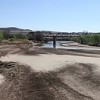
SOUTHERN AFRICA: Neglected Land Washing Away
Damage to wetlands high in Lesotho's Maluti mountains has impacts on the health of the whole of the Orange-Senqu river system.
SRI LANKA: Mixed Hopes amid Unpredictable Weather Shifts
As the world awaits with bated breath the much-anticipated outcome of the upcoming Copenhagen Climate Change Summit in December, the impact of which will reverberate across the globe, Sri Lanka, like many other countries, has been reeling under sharply contrasting weather conditions.ENVIRONMENT: Could Food Shortages Bring Down Civilisation?
In early 2008, Saudi Arabia announced that, after being self-sufficient in wheat for over 20 years, the non-replenishable aquifer it had been pumping for irrigation was largely depleted.
DEVELOPMENT: ‘Gender Is No Distraction in Climate Change Talks’
As the countdown to the Copenhagen Climate Change Summit draws to a close, gender and climate change advocates are doubling their efforts to make sure that 23 gender-related paragraphs in the negotiating text will make it to the new treaty that will be hammered out in December.DEVELOPMENT: Gender Advocates Keep a Close Eye on Climate Talks
After nine months of a rollercoaster ride pushing for a gender perspective on climate change, advocates are finally beginning to reap the fruits of their labour.
HEALTH-ANGOLA: "It's Normal Here That Children Die Young"
Angelina Silva doesn’t remember the exact dates when her sons died. She just remembers their ages.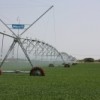
AGRICULTURE: Can South Africa Afford to Export Virtual Water?
Near the banks of the Orange River, farm manager Le Roux Viljoen sends off an SMS to a weather station and receives an almost instantaneous response telling him the temperature, wind direction and estimated evaporation index.SOUTH AFRICA: Less Water More Money
South Africans may have to start paying more for water if they do not manage their water resources efficiently.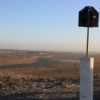
SOUTHERN AFRICA: Orange River Wetlands Need a Lifetime to Recover
Much of the internationally-recognised wetland surrounding the Orange River mouth has lost its rich green colour. Situated close to long-standing diamond mining operations, the river's mouth has been treated with environmental disregard for decades.ASIA: Calls for Massive Financing Kick Off Climate Change Talks
The need for adequate financing to assist developing countries in meeting the challenges of climate change was highlighted on Monday’s opening of the United Nations Framework Convention on Climate Change (UNFCCC) negotiations in Thailand’s capital.GERMANY: Crisis Shackles New Govt
The economic crisis looks set to reduce the new government's commitments in development and environmental policy.
Underwater Museum to Protect Mexico's Coral Reefs
In the ocean depths off the coast of southeastern Mexico, galleries of human sculptures are to be installed as an artistic attraction with environmental ends.
Cuba Encourages Tourism in Its Largest Marsh
One of the most important wetlands of the Caribbean, Ciénaga de Zapata in Cuba, is throwing open the doors to tourists interested in nature.Ecobreves – BRAZIL: Pure and Cheap Biokerosene
Biokerosene developed by the Brazilian University of Campinas as a means to reduce polluting emissions from the aviation industry is notable for its purity and low cost, says one of the scientists involved in producing it.Ecobreves – URUGUAY: Anti-Tobacco Fight Needs More Time
The strict measures against smoking that Uruguay implemented in March 2006 "are very good, but don't take into account the health consequences of those who have been smoking for 30 or 40 years."Ecobreves – MEXICO: Pacific Coast Threatened by Hurricanes
Deficient urban and coastal planning are contributing to heightened risk from hurricanes along Mexico's western seaboard on the Gulf of California, warns an environmentalist.
SOUTH AMERICA-AFRICA: Summit for South-South Cooperation
South American and African leaders are meeting over the weekend on the Caribbean island of Margarita in their second summit in three years, to forge stronger cooperation between the two regions and discuss their positions with regard to a number of pressing international concerns.
SOUTHERN AFRICA: Journey of a Working River: the Orange-Senqu
In the steep valleys of Lesotho's Maluti mountains, women carry yellow plastic buckets of water across fields of dark-brown earth; a group of men form a human chain to pass rocks between them to build a small dam wall across a mountain stream; clothes are being washed in rivers; and men draped in blankets ride donkeys or horses along the roadside.PERU: Environmental Clean-up not Complete, Say Achuar Communities
Leaders of the Achuar people are challenging a decision by the Peruvian government to declare that a clean-up effort by the PlusPetrol oil company in the northeastern Amazon jungle has been completed.UGANDA: Carbon Trading Scheme Pushing People off Their Land
As the world's attention increasingly turns to the impact of climate change, at least one project intended to reduce global carbon emissions is accused of displacing indigenous persons from their home in Uganda.
ASIA: Climate Change Puts Mekong Region’s New Species at Risk
The rich and unique biodiversity of the Mekong region, which has been discovered only since the recent years, is likely to be put at risk by environmental impacts that climate change is expected to bring, says the World Wide Fund For Nature (WWF) in a report launched here Friday.« Previous Page — Next Page »


Through our global network of local writers, we are continuing our award-winning coverage of global and local environmental challenges, with a focus on the people for whom the ecosphere matters in a direct way: rural dwellers who have little means to protect themselves against adverse conditions; communities that need to switch to sustainable development in order to survive; poor women and children, who are the most vulnerable in natural disasters. Sponsored by the United Nations Environment Program (UNEP), the United Nations Development Program (UNDP) and The World Bank (WB), IPS also maintains the award-winning Tierramérica, a specialised information service on environment and development.

The Week with IPS

Tracking global progress towards a sustainable world


