
Saturday, November 21, 2026



News and Views from the Global South
Environment
Ecobreves – VENEZUELA: Dolphin Census
With cameras in hand, youths from the environmental group Vida Marina (Marine Life) use boats to track the dolphins in the Caribbean off the coast of the Venezuelan state of Aragua. They are putting together a dolphin database.ENVIRONMENT: India Warms Up to Copenhagen
With the clock ticking away on the United Nations Framework for Climate Change Committee (UNFCCC) summit in Copenhagen in December, the fractiousness between the developed and the developing nations on who ought to do more to control climate change is getting increasingly strident.PHILIPPINES: Ketsana Signals Need for ‘No Regrets’ Adaptation Plan
Typhoon Ketsana, which swept into the Philippines and left hundreds of people dead and massive devastation in its wake, should serve as a wake-up call to the government.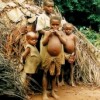
CAMEROON: ‘Our Lives Are Defined By This Forest’
Pauline Siembe, a Baka pygmy in South East Cameroon, comes out of her smoky hut licking her fingers after a meal of pounded yam and bush meat soup.ENVIRONMENT: Nations Urged to Share Low Carbon Development Costs
Following a strict global carbon budget is the only way to ride out climate change — and this is as much the responsibility of developing countries as it is of developed ones.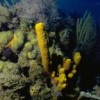
MEXICO: Underwater Museum to Protect Coral Reefs
Four sculptures in human forms, made of concrete, will be submerged in November in the Mexican Caribbean - the first of 400 figures that will comprise the world's largest underwater museum.SOUTHERN AFRICA: Too Much Water and Not Enough to Drink
Mmankosana Letsoela has been queuing since 5am to collect water. You would think that arriving so early at the bore-hole water pump; she would be the first in line.VIETNAM: Preparation Mitigates Impact of Typhoon Ketsana
Three days may have been a small window of opportunity, but it was enough time to save thousands of lives.
CAMEROON: Gearing Up for Copenhagen
"Developed countries have failed to respect the Kyoto Protocol which compelled them to reduce latest 2008 emissions of greenhouse gases by five percent. There is therefore need for new engagements to be taken at the Copenhagen Summit." Decisive words from Cameroon's minister for the environment, Pierre Hele.
TRADE: “We Won’t be Frogmarched Towards a Doha Conclusion”
In a rare meeting of minds, a parliamentarian, a civil servant and a trade unionist, all three from Africa, agreed that the current course of the World Trade Organisation’s Doha Round of trade talks is detrimental to the interests of African countries.POLITICS: U.N. Session Marked by Highs and Lows
The two-week long high-level segment of the U.N. General Assembly, which concluded last week, was characterised by historic moments, political controversies, and at times, routine boredom.CLIMATE CHANGE: Food Supply Hangs in the Balance
Rocketing food prices and hundreds of millions more starving people will be part of humanity's grim future without concerted action on climate change and new investments in agriculture, experts reported this week.
ENVIRONMENT-CHILE: Authorities May Sue Geothermal Energy Firm
The Council for the Defense of the State (CDE), the Chilean government's legal watchdog, is considering bringing a suit for environmental damages against an Italian-Chilean consortium carrying out geothermal studies a few kilometres away from the El Tatio geyser field, a tourist attraction in the northern region of Antofagasta.
SANITATION-ZAMBIA: Back Policy With Funding
Water- and sanitation-related diseases cost communities dearly, particularly in rural Zambia.ASIA: Mounting Costs of Climate Change Raise Fears of Conflict
The rising challenge of climate change has raised fears of growing conflicts as the impact of more extreme weather triggers food water scarcities across the Asia region.
ENVIRONMENT: Cuba Encourages Ecotourism in Largest Wetland
The Zapata wren (Ferminia cerverai) is known in Cuba as the "soprano of the forest" for its lovely song. But this tiny bird is very timid and, at the slightest sound, will hide in the vegetation in the Cienaga de Zapata - Zapata Swamp - 160 km south of Havana on the island’s south-central coast.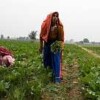
DEVELOPMENT-INDIA: Farmers Vs Coca-Cola in Water Wars
As India faces its worst drought in four decades, a dispute over water resources between farmers in the Kala Dera area of western Rajasthan state and a Coca-Cola bottling plant located there has sharpened.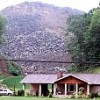
ENVIRONMENT-US: Advocates Fight Mountaintop Removal
Environmental groups across the southeast United States, from Georgia to the Appalachia region, are stepping up their opposition to a controversial but widespread practice by coal companies of removing the tops of mountains with explosives.ENVIRONMENT: Synergies in Fight Against Desertification , Climate Change
Climate change aggravates soil degradation, but sustainable use of land resources can, in turn, mitigate global warming, according to participants at the United Nations conference on desertification in the Argentine capital.
DOMINICAN REPUBLIC: No More Blackouts In This Village
Travel through any Dominican town and you are likely to hear someone yell out, "llegó la luz" - the lights are back on! The country is notorious for its faulty and expensive electric service, which is more often dead than live.
Q&A: Heavy Vehicle Market Taking Off in Africa
Russian president Dmitry Medvedev’s recent official visit to a handful of African countries has provided new impetus to Russian business’s interest in the region.« Previous Page — Next Page »


Through our global network of local writers, we are continuing our award-winning coverage of global and local environmental challenges, with a focus on the people for whom the ecosphere matters in a direct way: rural dwellers who have little means to protect themselves against adverse conditions; communities that need to switch to sustainable development in order to survive; poor women and children, who are the most vulnerable in natural disasters. Sponsored by the United Nations Environment Program (UNEP), the United Nations Development Program (UNDP) and The World Bank (WB), IPS also maintains the award-winning Tierramérica, a specialised information service on environment and development.

The Week with IPS

Tracking global progress towards a sustainable world


