
Saturday, November 21, 2026



News and Views from the Global South
Environment
WATER-LESOTHO: Compensation Victory for Displaced Villagers
Taelo Motseki had every reason to wear a broad smile despite the afternoon chill. His family along with 21 others displaced by Phase 1B of the Lesotho Highlands Water Project at Ha Mohale had won a decade-long struggle seeking compensation.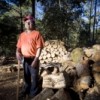
ENVIRONMENT: Desertification – a Macroeconomic Problem
Understanding desertification as a macroeconomic problem, with financial, productive, environmental and civil society aspects, is a major concern for Christian Mersmann, the managing director of the Global Mechanism of the United Nations Convention to Combat Desertification (UNCCD).ENVIRONMENT: Climate Change Faster Than Expected, UN Says
Less than three months before a key global negotiation on curbing greenhouse gases, a new study released here Thursday by the U.N. Environment Programme (UNEP) warns that climate change is taking place faster than anticipated.
ENVIRONMENT-MEXICO: Drowning in Garbage
The same thing could happen to the people of Mexico City as in the Pixar blockbuster Wall-E, where the human species has abandoned earth because it is covered with garbage, and a trash collecting robot has been left to clean up.CLIMATE CHANGE: Time Running Out on Vows to Act, Scientists Warn
Promises are easy to make. But promises by world leaders will not halt the heat-trapping carbon emissions that are dialing-up global temperatures and altering the climate, say critics and climate researchers meeting in this U.S. Midwestern city.
ENERGY: Trees: Out of the Forest and Into the Oven
Millions of trees, especially from the developing countries of the South, are being shipped to Europe and burned in giant furnaces to meet "green energy" requirements that are supposed to combat climate change.ENVIRONMENT: Highly Endangered Aquatic Mammals Awaiting Sanctuary
An aquatic species whose pelts are in high demand by the fur trade are gradually disappearing – and they need a sanctuary fast. Yet not one is forthcoming.ENVIRONMENT: China Backpedals on Emissions But Still Noncommittal
Although pledging to break away from its highly polluting economic path, China has managed to stick to its guns and not compromise on what it believes is its national agenda.
AFRICA: Plant Trees To Boost Agricultural Output
The outlook for food security in East Africa is looking bleak this year following poor rains, underscoring the urgency of raising farm productivity while adapting to a changing climate in Africa. Agroforestry experts have put forward planting trees as a possible solution.ENVIRONMENT: Women on Front Lines of Climate Week
Women's voices remain highly underrepresented in the climate change debate, say international civil society leaders attending events taking place around the United Nations Climate Summit Tuesday.
BRAZIL: Electric Car Revolution in the Making
The electric vehicle - pure or hybrid - will trigger an energy and industrial revolution worldwide in the coming decades, dealing a blow to liquid fuels. But plant-based ethanol will survive and grow, say Brazilian experts consulted for this report.G20: Stiglitz and Sen Come In Too Late
A new report on Measurement of Economic Performance and Social Progress presented earlier this month in Paris by Nobel prize winners Joseph Stiglitz and Amartya Sen is a late, and quite modest contribution to an old debate, many experts say.
ZAMBIA: Farmers Resort to Human Waste for Fertiliser
The economy's down, the price of fertiliser's up. And Zambian farmers are stealing sewage for their vegetable gardens.
ENVIRONMENT: Japan, China Pledge to Act on Climate Change
When the one-day summit meeting on climate change ended late Tuesday, only Japan and China were singled out for their concrete commitments to battle one of the world's biggest environmental challenges.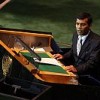
ENVIRONMENT: Act Now or Lose Forever, Climate Summit Told
The world's small island developing nations, most of which are threatened with environmental devastation, put the international community on dire notice: either accept ambitious and binding emission reduction targets, or humanity is doomed.
ENVIRONMENT: For Trees, Against Monoculture
Growing demand for products like timber and biofuels is putting pressure on shrinking rainforests.
Q&A: Plants Know No Frontiers, They Grow Everywhere
Ameenah Gurib-Fakim has spent the last two decades travelling among the Mascarene Islands in the Indian Ocean studying plants.
LAOS: What People Cannot Eat is of Great Importance to Women – Part 2
"When I was born my mother could not eat anything but tiny fish and tea made from herbs for one whole year," says Dr Bhounsouane. "She was so weak that she could hardly walk. Post partum food taboos (phit kam) are a major problem in Laos for women," he said.RIGHTS-MALAYSIA: Win Some, Lose Some for Beleaguered Penan Tribe
In wealthy Malaysia that employs over four million Asians to service its high- rolling lifestyle, a tiny indigenous tribe is fighting for its survival against state inaction and bureaucratic apathy, as well as marauding giant multinationals and timber loggers.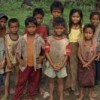
LAOS: Land Legislation Disempowers Women – Part 1
Ki is seven years old but looks more like three. His legs are bowed and skull misshapen. He looked at me with a blank stare. The health worker, Kheo, suggests rickets.Ecobreves – VENEZUELA: CFCs on the Decline
Since 2004, Venezuela has reduced consumption of chlorofluorocarbons (CFCs) by 90 percent, reports Osmer Castillo, president of the Industrial Reconversion Fund. These compounds, used in refrigeration, deplete the planet's ozone layer.« Previous Page — Next Page »


Through our global network of local writers, we are continuing our award-winning coverage of global and local environmental challenges, with a focus on the people for whom the ecosphere matters in a direct way: rural dwellers who have little means to protect themselves against adverse conditions; communities that need to switch to sustainable development in order to survive; poor women and children, who are the most vulnerable in natural disasters. Sponsored by the United Nations Environment Program (UNEP), the United Nations Development Program (UNDP) and The World Bank (WB), IPS also maintains the award-winning Tierramérica, a specialised information service on environment and development.

The Week with IPS

Tracking global progress towards a sustainable world


