
Saturday, November 21, 2026



News and Views from the Global South
Environment
Trees: Out of the Forest and Into the Oven
The boom in electricity production from biomass in the industrialized North is generating boom in demand for wood from natural forests or tree plantations - with environmental and social consequences.Ecobreves – BRAZIL: Sewage Water Contaminates Crops
Sewage water can be used to boost agricultural yields, as Tierramérica has reported, but can also contaminate crops and soil with polycyclic aromatic hydrocarbons (PAHs).Ecobreves – VENEZUELA: CFCs on the Decline
Since 2004, Venezuela has reduced consumption of chlorofluorocarbons (CFCs) by 90 percent, reports Osmer Castillo, president of the Industrial Reconversion Fund. These compounds, used in refrigeration, deplete the planet's ozone layer.Ecobreves – CUBA: Promoting Tourism in the Zapata Marsh
Cuba has decided to boost the tourism profile of the Zapata Marsh, the Caribbean's largest wetland, but is implementing a strategy to ensure the preservation of this rich ecosystem, located 156 kilometers southeast of Havana.Ecobreves – HONDURAS: Endangered Species in Cloud Forest
Experts from the non-governmental Zamorano Biodiversity Center of Honduras have called on officials and community groups to preserve the cloud forest of the northern Yoro Mountain National Park.Ecobreves – CHILE: Progress on Volcano Monitoring
Chile's National Volcanic Monitoring Network is setting its sights on establishing four observatories by 2013.ENVIRONMENT: Electric Fence as Lifesaver for Endangered Elephants
Dennawa is a typical rural Sri Lankan agriculture village, located deep in the dry zone. Behind the houses made of dry brick stretch the fields where villagers tend vegetables and fruit plantations.SOUTH ASIA: Disunity Hovers over a Region Battling Climate Change
As the Copenhagen Conference on climate change draws nearer, South Asia, which appears poised for severe threats from the impacts of climate change, faces a stiff challenge on two fronts.
ZIMBABWE: Warm Words for Investors at Mines Summit
Desperate for investment to lift its moribund economy, the Zimbabwe government welcomed hundreds of prospective mining investors to a conference in Harare this week.
MEXICO: The Goal: Not a Drop Wasted
In his novel "México sediento" (Mexico in a Drought), author Francisco Moreno postulated that drought would lead to war in 2010, just as water shortages helped trigger the fight for Mexico's independence from Spain in 1810 and the Mexican Revolution in 1910.
Q&A: Regional Prescriptions for Water Management
The Orange-Senqu River has a one million square kilometre basin that covers Lesotho, South Africa, Botswana and Namibia. The water it provides is crucial to industry in South Africa, but is also relied on by farmers and domestic users.LATIN AMERICA: Desertification – an Invisible Cancer
"Desertification is the cancer of the earth," Argentine geographer Elena Abraham told IPS. "It is a process of degradation that does not manifest itself in spectacular ways but furtively advances, and by the time it is visible there is nothing to be done, and people have to move away, in search of an alternative."
DRC: Electricity Lines Overhead But Never Seen a Light Bulb
"We produce electricity but we manage darkness. We have big energy sources of electricity but only 20 percent of the population has access to electricity because most of the energy is sold to foreign countries."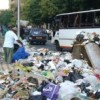
ENVIRONMENT: Cairo Sinking in Garbage
Garbage collectors in Cairo's Giza district have resumed work, but it could take weeks to clear the 25,000 tons of garbage that accumulated during their month-long strike, and longer still to solve the underlying problems.
ENVIRONMENT: Making Wetlands Count
Iceland wants wetland restoration to be assessed for emission reduction units at the summit to work out a new deal on climate change in December in Copenhagen.POPULATION: Where’s Family Planning on Climate Change Radar?
Are climate change and reproductive health two disparate subjects?ENERGY-VENEZUELA: Great Business for Good Friends
While Spanish energy giant Repsol and Italy's Eni reported finding huge deep sea reserves of natural gas in the Gulf of Venezuela, a consortium of Russian companies agreed to pay the Venezuelan government one billion dollars to secure access to the oil-rich Orinoco Belt.FINANCE: Aid Losses Prompting “Development Emergency”
A new U.N. report warns that the world is likely to suffer more economic and environmental disasters if the richest countries fail to shoulder their share of development aid to poorer nations.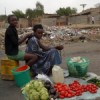
ANGOLA: Rich and Poor – One Country but Worlds Apart
A chauffeur guides a shining 4x4 BMW out of a gated condominium, ferrying a smartly-dressed executive and her three uniformed children out into another morning in the Angolan capital, Luanda.BRAZIL: Green Challenges Posed by Black Gold
Brazil's discovery of vast offshore oil and natural gas reserves raises the question of how to tap the newfound wealth without causing severe environmental impacts and without leaving aside the development of clean energy alternatives.Q&A: "Climate Change Reinforcing Political Problems"
The negative fallout from climate change, including drought, floods, melting glaciers, mass migration, and sea level rise, is being increasingly viewed as a potential security threat to nation states worldwide.« Previous Page — Next Page »


Through our global network of local writers, we are continuing our award-winning coverage of global and local environmental challenges, with a focus on the people for whom the ecosphere matters in a direct way: rural dwellers who have little means to protect themselves against adverse conditions; communities that need to switch to sustainable development in order to survive; poor women and children, who are the most vulnerable in natural disasters. Sponsored by the United Nations Environment Program (UNEP), the United Nations Development Program (UNDP) and The World Bank (WB), IPS also maintains the award-winning Tierramérica, a specialised information service on environment and development.

The Week with IPS

Tracking global progress towards a sustainable world


