
Sunday, October 18, 2026



News and Views from the Global South
Environment
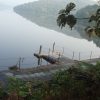
Rejuvenating Tradition To Help Save Ancient Engineering Marvel—Dhamapur Lake
Dhamapur is a small village in Malvan taluka of west Sindhudurg district, housing the famous Dhamapur Lake. The Vijayanagar kings constructed an earthfill dam in 1530 A.D., creating a man-made lake surrounded by hills on three sides. Canals connect it to the Karli river, irrigating lush paddies and farms that grow the red Sorti and Walay rice varieties typical to the region.
The Taste of Honey

A resilient tiger widow from Bangladesh's Sundarbans Mangrove Forest, Shorbanu Khatun, fights climate change's impacts. She struggles to support her children while preserving honey and Gol leaf traditions amidst worsening storms, rising salinity, and societal exclusion.

The Approaching Rainy Season Signals Trouble for Gaza
As the humanitarian crisis in Gaza continues to grow more dire as a result of the Israel-Hamas war, concerns of diminishing public health are growing due to prolonged flooding. Repeated airstrikes and forced evacuations in recent weeks have pushed many displaced citizens to flooding hotspots. An influx of torrential rain has greatly exacerbated the failing sanitation system, increasing the risk of contracting waterborne diseases. Health experts fear that conditions will continue to worsen in the coming winter months.
‘Australia Must Turn Its Climate Rhetoric into Action’
CIVICUS discusses the recent Pacific Islands Forum (PIF) meeting in Tonga with Jacynta Fa’amau, Pacific Campaigner at 350.org, a global civil society organisation campaigning for climate action.

COP 29: High Stakes for Small Islands Fighting for Climate Finance
Small Island Developing States (SIDS) are experiencing the most severe impacts of climate change. When leaders of those islands met in Antigua and Barbuda in May, they let the world know that achieving climate justice hinges on comprehensive climate finance.
It’s Time for Rich Polluters to Pay for the Climate Crisis They Created
The world is standing at a critical juncture. Climate change is not just a future threat—it’s here, and it’s already devastating lives. From record-breaking heat waves to floods and landslides, the planet is sending us clear signals that we cannot afford to ignore.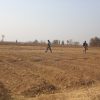
Rising Temperatures Devastate Agricultural Eden of India’s Kashmir Region
Abdul Hameed Sheikh sowed his crop, working tirelessly for days in his paddy field. The 52-year-old farmer, from central Kashmir’s Budgam area, religiously irrigated his 3-acre plot to keep the soil well hydrated. He waited for the rain, but days passed and it didn’t come.
Dying for a Cause: Environmental Defenders in the Firing Line
In 2017, South African activist Nonhle Mbuthuma took a stand against the powerful oil giant Shell, halting their plans to explore the pristine Wild Coast. Despite facing death threats, she refused to back down. As a co-founder of the Amadiba Crisis Committee and a 2024 Goldman Prize winner, Mbuthuma continues to fight for her community’s rights and the environment. Her bravery reflects the countless risks land and environmental defenders face across the globe.
Flooding and Armed Conflict Aggravates Sudan’s Cholera Epidemic
Sudan has been plunged into a deadly cholera outbreak in the midst of the Sudanese Civil War. Sudan is currently home to an approximate 15 million people, many of which have had to bear the brunt of hostilities between warring parties, widespread food insecurity, mass displacement, and extreme weather anomalies. Flooding, in particular, has been very damaging, leading to the collapse of critical infrastructures that ensure sanitation. This has caused the cholera outbreak to become a national concern.
Tripling Renewables Powered by State-Owned Power Companies and Utilities
The climate community, meeting this week once again on the margins of the UN General Assembly, is continuing to explore ways to triple the world’s installed renewable generation capacity by 2030, a target agreed at last year’s COP 28 international climate negotiations. Much of this discussion has been about mobilizing finance and otherwise getting the private sector, with its massive resources and competence, to step up to the challenge … and what government policies and incentives are needed to spur more investment.
The Crucial Connection Between Climate Change and Mental Health
“Young people today are growing up with enormous uncertainty about their future. Climate change is a major driver of that uncertainty, but we weren’t talking enough about how the climate crisis impacts mental health,” researcher Dr. Emma Lawrance told IPS from her family home in Australia.
Tanzania’s Maasai Women Adopt Climate-Smart Solutions To Tame Drought
In the scorching sun of Mikese village in Tanzania’s eastern Mvomero district, 31-year-old Maria Naeku tirelessly tends to her small vegetable patch. Each time she pulls a weed, the red soil stains her hands as she guides the trickle of water from a maze of pipes through an elevated bed to nurture her plants. In a drought-stricken area, Naeku's small garden is a lifeline for her family, giving them food and income.
Violence, Displacement, and Hunger Plagues Somalia
Somalia is currently in the midst of a dire humanitarian crisis that threatens to destabilize the nation’s security. This crisis is a result of the Somali Civil War, which began in 1991. Altercations between clan-based operations have caused a host of issues over the years, including over 596 civilian casualties, according to the United Nations Assistance Mission in Somalia (UNSOM). Tensions have greatly intensified in 2024, with levels of internal displacement and food insecurity increasing rapidly.
Carbon Emissions from AI and Crypto are Surging– and Tax Policy Can Help
What do crypto assets and artificial intelligence have in common? Both are power hungry. Because of the electricity used by high-powered equipment to “mine” crypto assets, one Bitcoin transaction requires roughly the same amount of electricity as the average person in Ghana or Pakistan consumes in three years. ChatGPT queries require 10 times more electricity than a Google search, due to the electricity consumed by AI data centers.
Net Zero by 2050 Delays Needed Urgent Climate Action
Net zero emissions by 2050 prioritise mitigation for climate stabilisation. Pledges to achieve this still distant target have grown but inadvertently delay urgently needed climate action in the near term.
Summit of the Future: Youth Driven Action Needed to Tackle Nuclear and Climate Crises
Driving the Summit of the Future’s core messages of international solidarity and decisive action are young people who are determined to address the intersecting issues that the world contends with today.
It Is Time to Save The Deep Sea
This week’s United Nations General Assembly marks nearly 20 years since the body first resolved to restrict bottom trawling on the world’s seamounts, submarine mountains that rise thousands of feet above the sea floor and comprise some of the most biologically rich marine ecosystems on the planet.
Summit of the Future: On the Need for Civil Society to Make Its Voice Count at the UN
In a context of shrinking civic space that threatens civil society participation in an increasing number of countries and all the way to some UN processes, world leaders will gather to discuss the “multilateralism we want” at the Summit of the Future at the United Nations headquarters in New York.
Forest Fires in the Amazon Threaten Earth’s Stability
This year has been the worst for the Amazon rainforest in almost two decades. Although there has been a measured decline in deforestation when compared to 2023, forest fires have ravaged acres of critical ecosystems. For the first eight months of this year, the Amazon has seen routine forest fires, totalling to over 53,000 recorded instances.
Typhoon Yagi Devastates Southeast Asia
In early September, Typhoon Yagi, a deadly tropical cyclone, hit Southeast Asia and Southern China, causing widespread destruction. According to the United Nations (UN), wind speeds, reaching 213 kilometers per hour, as well as heavy flooding and severe landslides, have devastated affected areas. Yagi is the strongest natural disaster to hit the South China Sea in three decades, leaving over 500 people killed, 38 missing, and 1,900 injured.
Amid Great Challenges, Hope Reigns As More Children Reached with Education Support
Amid unprecedented global challenges and a growing list of countries in crisis, there is an existential threat to decades of development gains—with the global community marked by intensified armed conflict, forced displacements, and the debilitating effects of climate crises.« Previous Page — Next Page »





Through our global network of local writers, we are continuing our award-winning coverage of global and local environmental challenges, with a focus on the people for whom the ecosphere matters in a direct way: rural dwellers who have little means to protect themselves against adverse conditions; communities that need to switch to sustainable development in order to survive; poor women and children, who are the most vulnerable in natural disasters. Sponsored by the United Nations Environment Program (UNEP), the United Nations Development Program (UNDP) and The World Bank (WB), IPS also maintains the award-winning Tierramérica, a specialised information service on environment and development.

The Week with IPS

Tracking global progress towards a sustainable world


