
Sunday, November 22, 2026



News and Views from the Global South
Environment
Ecobreves – CHILE: Demands to Legalize Mapuche Health System
The Network of Mapuche Health Organizations, made up of nine entities from Chile's most numerous indigenous group, is drafting a proposal so that their health system will be recognized by Chilean law.CLIMATE CHANGE-LATIN AMERICA: Frightening Numbers
The countries of Latin America and the Caribbean need billions of dollars to deal with the economic impact of climate change - funding that is not easily found on the international market.SOUTHERN AFRICA: Groundwater: How Much Is There?
A shortage of trained specialists who can assess and manage groundwater resources is a factor inhibiting its use in the Southern Africa region.FINANCE: China Takes Lead on Green Investing
China's efforts to green its financial sector have earned a thumbs-up from U.S. environmentalists, who say regulators here could learn from Beijing's recent success in stimulating investments that don't despoil the planet.CLIMATE CHANGE: Talks Could Learn From Indigenous Groups
As the United Nations readies for a key climate change meeting in Poland next month, a London-based human rights group warns that any new deal on global warming would be seriously compromised if the most vulnerable groups, specifically indigenous peoples, are shut out of the negotiations.
HONDURAS: Inventory of Mitch’s Cultural Destruction
When Hurricane Mitch thrashed Honduras and a large portion of Central America in 1998, the scale of the disaster clouded awareness that the winds and rains had also taken a heavy toll on cultural, artistic and historic heritage.ENVIRONMENT-INDIA: Sanitation Concerns Shift Into Space
India may be grappling with problems of basic sanitation but, at another level, its top scientists are turning their attention to human pollution in space.DEVELOPMENT-VIETNAM: Rare Criticism of Dams Surface
While arguments against the development of hydropower dams on the Mekong River and its tributaries have from time to time emerged in Vietnam’s state-controlled press, rarely have government officials been as open with their criticism as they have in recent months.
CLIMATE CHANGE: Hot Days and Nights in Mexico 2090
Climate change will dramatically increase the number of hot, dry days in Mexico in the coming decades, while coastal regions like the Yucatán, in the southeast, will be swamped by sea levels that are half a metre higher than today, a new study has found.
ENVIRONMENT-CHILE: Patagonia Dams On Hold
Environmental groups in Chile welcomed the decision by the HidroAysén energy company to seek a nine-month extension of the environmental impact assessment phase of a controversial project to build five hydroelectric dams in wilderness areas in the south of the country.ENVIRONMENT-ARGENTINA: Still Felling Forests, Despite Law
One year after a law was passed to preserve native forests in Argentina, environmentalists say that deforestation has continued, although at a slower pace. They blame the situation on the government’s delay in creating a compensation fund for provinces that take action against the clearing of forests.
CLIMATE CHANGE: World Willing to Pay More for Green Energy
A new poll by WorldPublicOpinion.org, a global network of research centres, finds that a majority of people in 21 nations support greater use of alternative energies like wind and solar and modifications to make buildings more energy efficient, even if costs more in the short term.U.S.-MEXICO: Fence to Carve Up Fragile Border Preserve
Another chapter in U.S.-Mexico border relations is about to close. In the waning days of the George W. Bush administration, the U.S. Department of Homeland Security is completing construction of a 22-kilometre triple fence along the San Diego-Tijuana border.
PERU: My Mining Deposits Are Under Your House
"Just imagine you’re told you have to leave your house, your livestock, the graves of your loved ones, and then they take you to an unfamiliar place without even asking you what you think about it. How would you feel?" asks Eduardo Sueldo, the local environment delegate in a highlands village in southern Peru.DEVELOPMENT-AFRICA: Groundwater: Protecting a Hidden Resource
Groundwater - water located beneath the ground in soil or rock formations - is a secure source of water that if properly managed can last for centuries. The challenge is how to locate it and monitor the effects of its use.ECONOMY: Don’t Bank On Them
Public confidence in Belgian banks has eroded considerably over the past few months. A series of multi-billion euro rescue plans, reports of lavish executive bonuses and investigations into whether shareholders were misled about solvency levels have fuelled fears that the savings of the hard-pressed ordinary citizen are anything but safe.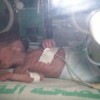
MIDEAST: On Top of Humanitarian Disaster, A News Blackout
Israel has imposed a virtual news blackout on the Gaza Strip. For the last ten days no foreign journalists have been able to enter the besieged territory to report on the escalating humanitarian crisis caused by Israel's complete closure of Gaza's borders for the last two weeks.
ARGENTINA: Companies Pocketing Gas Subsidy for the Poor
Companies that produce and distribute liquefied petroleum gas (LPG) in Argentina are benefiting from large government subsidies aimed at bringing down the price of the fuel, which 40 percent of the population depends on for cooking and heating.
Hot Days and Nights in Mexico 2090
In 2090, there will be just three or four cool days per year in Mexico, predicts a study by Oxford University, financed by the UNDP.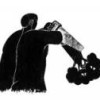
The Amazon Possible
The Amazon is a privileged space where we can also achieve the invention of a sustainable policy, writes Marina Silva, former environment minister of Brazil, in this exclusive column for Tierramérica.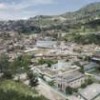
Inventory of Mitch's Cultural Destruction
Historians, restoration experts, filmmakers and geographers are researching and documenting the damage caused by Hurricane Mitch a decade ago to the cultural heritage of Honduras.« Previous Page — Next Page »


Through our global network of local writers, we are continuing our award-winning coverage of global and local environmental challenges, with a focus on the people for whom the ecosphere matters in a direct way: rural dwellers who have little means to protect themselves against adverse conditions; communities that need to switch to sustainable development in order to survive; poor women and children, who are the most vulnerable in natural disasters. Sponsored by the United Nations Environment Program (UNEP), the United Nations Development Program (UNDP) and The World Bank (WB), IPS also maintains the award-winning Tierramérica, a specialised information service on environment and development.

The Week with IPS

Tracking global progress towards a sustainable world


