
Sunday, November 22, 2026



News and Views from the Global South
Environment
Ecobreves – BRAZIL: Decree Authorizes Destruction of Caves
A presidential decree in Brazil published Nov. 10 authorizes the destruction of caves. This country has 4,629 identified caves -- a total which grows 300 each year. Only the caves considered important will be protected.Ecobreves – ARGENTINA: Observatory of Cosmic Rays
Ten years after laying its cornerstone, the Pierre Auger Observatory, in Argentina, the only one in the southern hemisphere for studying cosmic rays hitting the Earth's atmosphere, will open its doors this month.Ecobreves – MEXICO: Researching a Male Contraceptive
Mexican researchers are developing a pharmaceutical that could be used as a male contraceptive, and which also promises to be an effective method to control populations of rats, dogs and cats.ENVIRONMENT-BURMA: Conflict Threatens Karen Biodiversity
On top of 60 years of military occupation, the Karen people of Burma are now facing severe impairment of their environmental and cultural foundations, say activists.
SOUTH-EAST ASIA: Opposition to Mekong Dams Overflows at Meet
In what looked like a blitzkrieg rally, about a dozen hand-held 'No Dams' signs appeared out of nowhere in the packed conference hall at a public forum here on the construction of dams in the Mekong region.EU-RUSSIA: Arms Overshadow Talks
Brinkmanship over weapons overshadowed a summit between the European Union and Russia held in the French city Nice Nov. 14.BOOKS: Finding Humour and Tragedy in That Daily Ritual
We each spend, on average, three years of our lives going to the toilet - assuming we have one, that is.
ENVIRONMENT: Where That “Recycled” E-Waste Really Goes
Is your old TV poisoning a child in China? Or your old computer contaminating a river in Nigeria?
LATIN AMERICA: Elusive Right to Land Inflames Indigenous Protests
In the past two decades Latin America has made advances in signing international and national instruments that recognise and protect the rights of indigenous peoples. The problem is that these laws are not always heeded by governments, and the lack of enforcement has fuelled protests.VENEZUELA-RUSSIA: Business Deals Consolidate Alliance
"Tovariches! Comrades! Today I feel I must say to you: let us work to find gas and oil under these waters!" said Alexander Medvedev, deputy chairman of the Russian firm Gazprom, when drills on the Escorpión Vigilante marine platform finally perforated the Venezuelan sea bed.
ENVIRONMENT: Haiti Can’t Face More Defeats
The worst natural disaster that Haiti has suffered requires far-reaching solutions in order to reduce this Caribbean country's environmental fragility, say officials and humanitarian workers.
TRADE-CAMEROON: Borders – Where Two Economies Meet
No one pays full price for petrol in northern Cameroon, not when there's cheaper Nigerian contraband available. In Garoua town for example, there are about 4,000 commercial motorcycles which all depend on "zoa zoa" or "federale" as this highly cherished liquid is generally referred to.
HEALTH: Haj Pilgrims Get Polio Drops in Int'l Eradication Plan
As the first batches of Haj pilgrims from Pakistan arrived at Saudi Arabia’s Jeddah airport for the current pilgrimage season they were, regardless of age, administered oral polio vaccine (OPV).CUBA: No Choice but to Adapt to Storms
Three hurricanes have caused a total of 10 billion dollars in damages in Cuba in less than three months, according to the latest official estimates, while highlighting the vulnerability of Cuban housing to storms.
CLIMATE CHANGE: Science Proves Warming of Antarctica
The Antarctic holds the world’s largest amount of fresh water in its icy grip, and it is most certainly warming as a result of greenhouse gases, say new scientific studies.
ENVIRONMENT-AUSTRALIA: Harvesting Stormwater as Drought Bites Hard
With large parts of southern and eastern Australia enduring an ongoing drought, the regional centre of Orange - some 260 km west of the nation’s largest city, Sydney - is developing Australia’s first scheme to harvest stormwater in order to service the town’s requirements.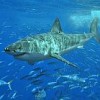
BIODIVERSITY: Ten-Year Probe Reveals Oceans in Peril
A thousand points of light are being shone into the dark ocean depths as scientists from 82 countries work to complete the decade-long global research effort called the Census of Marine Life.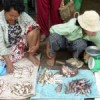
DEVELOPMENT-CAMBODIA: Women Take to Fishing As Catches Decline
Cambodia’s fishing industry may still be viewed as a male bastion, but as household fish catches decline, putting pressure on food security, women are rising to the challenge and becoming involved in growing numbers.BIODIVERSITY: The Real Price of Farmed Salmon
Salmon aquaculture is devastating the world's oceans and an international coalition of scientists, Canadian First Nations and tourism operators have called for a global moratorium.
MEXICO: Cyclists Speed Up Transportation Changes
Cyclists in the Mexican capital who pedal nude once a year and organise tours through the city have overcome the suspicions of city officials and are now participating in designing plans to benefit this environmentally-friendly mode of transportation.ARGENTINA: Newspaper Brings to Light Abuses against Poor Farmers
Small farmers in the northern Argentine province of Santiago del Estero are publishing their own newspaper in an attempt to raise awareness about the constant abuses they suffer at the hands of wealthy landowners, who are encroaching on their small plots of land.« Previous Page — Next Page »


Through our global network of local writers, we are continuing our award-winning coverage of global and local environmental challenges, with a focus on the people for whom the ecosphere matters in a direct way: rural dwellers who have little means to protect themselves against adverse conditions; communities that need to switch to sustainable development in order to survive; poor women and children, who are the most vulnerable in natural disasters. Sponsored by the United Nations Environment Program (UNEP), the United Nations Development Program (UNDP) and The World Bank (WB), IPS also maintains the award-winning Tierramérica, a specialised information service on environment and development.

The Week with IPS

Tracking global progress towards a sustainable world


