
Sunday, November 22, 2026



News and Views from the Global South
Environment
Ecobreves – BRAZIL: African Palm to Reforest the Amazon
An agreement between Brazil's ministries of Agriculture and Environment authorizes utilizing the African palm (Elaeis guineensis) and other exotic species for recuperating forests in the country's Amazon region.Ecobreves – HONDURAS: New Environmental Rules Announced
The Honduran government has announced new environmental regulations two years after the free trade agreement with the United States, known as CAFTA, entered into force.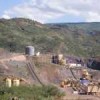
MEXICO: Peasants Seek Ways to Block Canadian-Run Mine
The Canadian mining corporation Minefinders has explored a rural area of the northern Mexican state of Chihuahua for 14 years. But as it gets ready to begin mining gold and silver there, its plans are threatened by peasant farmers' protests.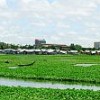
RIGHTS-CAMBODIA: Mass Evictions May Follow Lake Grab
A plan to redevelop Phnom Penh’s largest remaining natural lake into a residential and shopping precinct has ignited a storm of protests and claims that it could result in the largest eviction in Cambodia’s post-war history.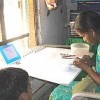
SRI LANKA: ‘Animal Tracks’ Lead Villagers Out of Poverty
An impoverished village in southern Sri Lanka is slowly pulling out of poverty by churning out terra cotta moulds of animal footprints for tea connoisseurs all over the world.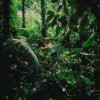
ENVIRONMENT: Amazon Increasingly Oily
More than 180 oil and natural gas fields extend across the western Amazon, shared by five South American countries and threatening biodiversity and indigenous lands, warns a study by U.S.-based organisations.
ICELAND: Filling Up on Hydrogen
Earlier this year, the Icelandic whale-watching boat Elding was fitted with a hydrogen-powered generator that fuels its lighting system, electric equipment and navigation machinery. It is the first of its kind in the world.INDIA/US: Nuclear Deal Headed for Fiasco
As the tortuous negotiations for the United States-India nuclear deal enters its final stage, it becomes clear that India seriously underestimated the discomfort and opposition the agreement would arouse in many countries because of the special privileges granted to India, largely on New Delhi's terms.POLITICS: Iran Could Reap Benefits of U.S.-Russian Tensions
Iran could emerge as a big winner, at least in the short term, from the rapidly escalating tensions between the United States and Russia over Moscow's intervention in Georgia, according to analysts here.SOUTH AFRICA: Rights Work Hampered by Closure Threat
The University of KwaZulu-Natal (UKZN) last week lifted a funding ban on its Centre for Civil Society (CCS) after national and international intellectuals protested loudly against the leftist centre’s potential closure. Yet, the uncertainty of the past few weeks has already impacted negatively on CCS’ operations.DEVELOPMENT: Africa Still Hampered by Lack of Geographical Data
Geographic Information Systems (GIS) could play a vital role in improving agriculture and boosting food security in Africa. However, only a few African countries are capable of developing such systems, partly because of a lack of basic geographical data.SIERRA LEONE: Activists Cry Foul Over Mining Policy
In December 2007, unrest broke out in the diamond mining region of Kono in the east, between kimberlite mining corporation Koidu Holdings and locals in the lease area. The company had promised to relocate hundreds of community residents to make way for its mining operation but the slow pace of implementation of this pledge, coupled with the repeated blasts of dynamite in underground mining sites set the company and its hosts on a collision course.BRAZIL: The Complications of Coming into Sudden (Oil) Wealth
Brazil's social and economic future may depend, according to experts, on the way it ultimately handles the sudden oil wealth discovered deep under the Atlantic ocean off the country's southeastern coast.
BRAZIL: Producing Guitars and Luthiers in the Rainforest
Cuban instrument-maker or luthier Raúl Lage came for six months, but has already spent seven and a half years in Manaus, the city in the heart of the Brazilian Amazon. "The project is really fantastic," he says, explaining why he plans to renew his work contract again in September.ENVIRONMENT-ARGENTINA: Scarce Water Threatened by Gold Mine
For nearly a year and a half, local residents in the northwestern Argentine province of La Rioja have been blocking the road that climbs up to the Nevados de Famatina mountain to protest a gold mining project that they say will pollute the water in the country’s driest district.
ENVIRONMENT: Conservation as Artists' Muse
Pulled-together socialites and not-so-sloppy artists recently gathered for an atypical art exhibition in San Diego that combines art with wilderness conservation, using contemporary art to investigate vanishing worlds and the people that inhabit them.CHINA: The Air Hasn’t Quite Cleared
While China's dramatic last-minute measures to cut pollution during the Beijing Olympics grabbed headlines, a little publicised Norwegian project in Guizhou province shows just how difficult it will be to make lasting changes.
Amazon Increasingly Oily
Oil and natural gas exploration permits are multiplying in the Amazon region, especially in its most remote and biodiverse corners, say researchers.
Mexican Peasants Seek Ways to Block Canadian-Run Mine
In the Western Sierra Madre mountains of Mexico, a very common conflict these days in Latin America is heating up: the booming mining industry versus local residents.Ecobreves – BRAZIL: São Paulo Sets Climate Change Goals
The city government of São Paulo, Brazil's most populous city, has set a goal to reduce municipal emissions of greenhouse gases by 30 percent, with a deadline of 2012 -- ahead of the federal government's target date.Ecobreves – HONDURAS: Universities Commit to the Environment
The 20 universities in Honduras signed an environmental pledge on Aug. 18 that includes reforms in their programs and greater participation in managing threatening situations, research and policies.« Previous Page — Next Page »


Through our global network of local writers, we are continuing our award-winning coverage of global and local environmental challenges, with a focus on the people for whom the ecosphere matters in a direct way: rural dwellers who have little means to protect themselves against adverse conditions; communities that need to switch to sustainable development in order to survive; poor women and children, who are the most vulnerable in natural disasters. Sponsored by the United Nations Environment Program (UNEP), the United Nations Development Program (UNDP) and The World Bank (WB), IPS also maintains the award-winning Tierramérica, a specialised information service on environment and development.

The Week with IPS

Tracking global progress towards a sustainable world


