Languages
Sunday, November 8, 2026



News and Views from the Global South
Featured

Transgender People Face Growing Violence, Discrimination in Pakistan
“The problems transgender people face start from their homes as their parents, especially fathers and brothers, look them down upon and disrespect them,” says 20-year-old Pari Gul.
Latin America Must Regulate the Entire Plastic Chain
Countries in Latin America and the Caribbean have made progress towards partial regulations to reduce plastic pollution, but the problem is serious and environmental activists are calling for regulations in the entire chain of production, consumption and disposal of plastic waste.
Pharma Giant’s TB Drug Decision Welcomed, But Not All Developing Countries Benefit
In a surprise move, pharma giant Johnson and Johnson (J&J) has agreed not to enforce some of its patents on a lifesaving TB drug, making generic versions available in many low- and middle-income countries (LMICs).
‘It’s Time UN Turned Ideas to ‘UNMute’ Civil Society into Action’
How do you get a seat at the table when you can’t even access the building? This question loomed as activists, faith-based leaders, and NGO representatives gathered at the NY Ford Foundation. They discussed how to amplify the voice of civil society organizations at the UN Headquarters across the street.
Eswatini: Election with No Democracy on the Horizon
Eswatini heads to the polls soon, with elections scheduled for September. But there’s nothing remotely democratic in prospect. The country remains ruled by King Mswati III, Africa’s last absolute monarch, who presides over Eswatini with an iron fist. Mswati dissolved parliament on 11 July, confident there’s little chance of people who disagree with him winning representation.
Wagner Mutiny Could Push a Weak Russia Closer to Iran
Iran is not interested in a highly powerful Russia that could block Iranian ambitions in the South Caucasus and Middle East. At the same time, a too weak Russia would constitute a dangerous development paving the way for greater Western influence along Iran’s northern border and potentially even leading to the reversal of Moscow’s dependence on Tehran.
New Machine Learning-Based Model Boosting Africa’s Preparedness and Response to Climate Change
Scientists have recently unveiled a first-ever weather forecasting model using artificial intelligence (AI) and machine learning solutions to help vulnerable African countries build resilience to climate impacts.
Water Stress, a Daily Problem in the Agro-Exporting South of Peru
Living without water in a desert area is part of the daily life of Ortensia Tserem, a member of the indigenous Wampis people from the Amazon rainforest of northeastern Peru, who came three years ago to the outskirts of the coastal city of Ica with the dream of better economic opportunities for her family.
Financing Biggest Hurdle to Providing Children with Quality Education in Crisis Situations – ECW
If you want lasting peace, the best investment you can make is in education, said Education Cannot Wait’s Executive Director Yasmine Sherif in an exclusive interview with IPS.
Transforming Africa’s Food Systems: Challenges & Opportunities
Q: As the African Union Special Envoy for Food Systems, what is the scope of your mandate and what should Africans expect from you? The role of special envoys of the AU is primarily to tackle a critical issue for which the AU needs support. A special envoy does not seek to replace or take over the responsibilities of the AU or the AU Commission (AUC). Instead, their role is to support and enhance their work by bringing additional value.

Lawmakers’ Vital Roles in Ensuring Dignity for Aging Populations
Countries with falling population growth face twin dilemmas: Ensuring their aging population live healthy and fulfilling lives and removing barriers to parenthood. This was the focus of a recent workshop in Thailand reviewing the ICPD30 process and preparation for the Summit for the Future slated for next year (2024).
Ukraine War ‘Intrinsically Linked’ to Sustainable Development Goals
The Ukrainian Minister of Foreign Affairs, Dmytro Kuleba, held up a child’s glittery, crimson-red diary as he addressed the Member States at the 88th plenary meeting of the General Assembly on Tuesday.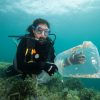
New Research Seeks Breakthrough in Understanding Global Warming and the Ocean
The Canada-based Ocean Frontier Institute is very clear about the significance of a new collaborative ground-breaking ocean research program. Global warming cannot be effectively tackled, and human life cannot survive on Earth without the ocean.
Climate Justice – Is Litigation a Good Way Forward?
For years, the concept of climate justice has been built on the understanding that countries and communities contributing the least to global warming are disproportionately bearing the impacts of climate change.
Mandela Day Reminder to Stand Witness to Human Rights Defenders
As human rights increasingly deteriorate, rights defenders are being violently suppressed. Abducted, detained, tortured, and humiliated, many now live one day at a time. They have been told, in no uncertain times, that anything could happen. They are now asking the global community to stand as a witness.
Seizing the Moment for a More Resilient Asia & the Pacific
The world faces a disaster emergency, yet nowhere is the threat more immediate than in Asia and the Pacific. Ours is a region where climate change-induced disasters are becoming more frequent and intense. Since 1970, two million people have lost their lives to disasters.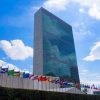
Most UN Agencies Lack Access to Information Policies, Survey Finds
Less than half of United Nations agencies have access to information policies, according to a survey by Eye on Global Transparency. Of 27 UN bodies surveyed, 13 have access policies. So, 14 UN agencies lack access policies. Setting a poor example, the UN Secretariat still lacks an access to information policy.
Guns for Hire? A Season for Mercenaries
Just after a band of mercenaries tried to oust the government in the Maldives back in 1988, I asked a Maldivian diplomat, using a familiar military catch phrase, about the strength of his country's “standing army.” "Standing army?", the diplomat asked with mock surprise, and remarked perhaps half-jokingly, "We don't even have a sitting army."
‘Spending Money on Education is Investing in Humanity’
As the 2030 deadline for achieving the Sustainable Development Goals (SDGs) looms, Education Cannot Wait's director Yasmine Sherif warned, "We are failing the promises we made on everything in the sustainable development goals, but especially on education because, without education, we cannot achieve any of the other sustainable development goals.”
‘Passion Seeds’ Fertilize Brazil’s Semiarid Northeast
Zé Pequeno cried when he learned that the heirloom seeds he had inherited from his father were contaminated by the transgenic corn his neighbor had brought from the south. Fortunately, he was able to salvage the native seeds because he had shared them with other neighbors.
Marginalising Key Populations Impacting Efforts to End HIV/AIDS Epidemic
A report released this week has highlighted how continuing criminalisation and marginalisation of key populations are stymying efforts to end the global HIV/AIDS epidemic.« Previous Page — Next Page »





The Week with IPS

NEXT STOP - SDGs
Tracking global progress towards a sustainable world
Tracking global progress towards a sustainable world
