Languages
Thursday, November 12, 2026



News and Views from the Global South
Featured
Can UN Development Be Reformed? Not at This Rate
Like his predecessors, United Nations Secretary-General António Guterres has been pushing a reform program to help the organization adjust to the demands of contemporary global governance.
Australia’s Bushfires Bring Mounting Pressure to Reduce Greenhouse Gases
As nature's fury wreaked havoc across Australia, reducing to ashes all that came in its way - people, flora, fauna, picturesque historic towns and villages once popular with local and overseas tourists – it was unlike anything the country had witnessed before. The staggering scale and intensity of the devastation could best be summed up as apocalyptic.
Women’s Groups Applaud Gender Action Plan Following COP 25
After nearly two weeks of negotiations at COP 25 climate negotiations in Madrid last month (2-13 December), governments will be adopting a new 5-year Gender Action Plan (GAP) that progressively builds upon the first GAP, and works to address many of the concerns raised by women and gender groups at the Framework Convention on Climate Change (UNFCCC), including calls for greater focus on implementation and scaling up gender-just climate solutions.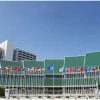
Let’s Give Trade a Chance
Imagine going through the day without consuming or using some product, service, data, technology, personal contact, or payment which has not – at least in some part – crossed one or more national borders before reaching you.
How Gender-based Violence Should be Reported in the Media
Sexual and gender-based violence terrorizes women and girls around the world, affecting as many as one in three women. Reporters play an essential role in bringing these cases to light so that authorities can take action and prevent further abuses. Yet reporting on gender-based violence comes with serious risks to survivors.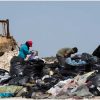
Not all Trade is Good – the Case of Plastics Waste
Currently, approximately 300 million tons of oil-based plastic waste are produced every year. A significant amount of plastic waste ends up in the oceans, having a detrimental effect on marine ecosystems and coastal communities. Most of this waste originates from the Asia-Pacific region.
India’s Citizenship Law Triggered by Rising Right-Wing Ideology
“Fire bullets at the traitors of the country,” chanted mobs of Bharatiya Janata Party, or BJP, supporters wrapped in Indian flags in Delhi last week.
2020: a Year Full of Danger
Let’s face what lies ahead with open eyes: 2020 is going to be a very tough year for the world, and developing countries in particular. The infant decade has already begun with the harbingers of climate disaster as thousands fled to beaches in Australia from raging bush fires, and the Middle East braced for more conflict after a U.S. air strike in Baghdad killed Iran’s top general.
Reflections for a New Year
In a world shaken by so many problems, it is difficult to look at 2020 and not make some kind of holistic analysis. While enormous progress has been made on many fronts, it is clear that the tide has turned, and we are now entering – or have already entered – a new low point in the history of humankind..
Child Marriages Unlikely to End by UN’s 2030 Deadline
“Right now, I don’t want to get married. I have a long life and a dream in front of me”, a 14-year-old young girl from Bangladesh told her parents as she was just not ready to get married.
In Mauritania, Imams take to Radio Waves to say Child Marriage is Against Islam
"I refused to marry off my daughter for a simple, good reason: I want my daughter to be empowered,” said Lemeima mint El Hadrami, 49. "I don't want her to go through the same difficulties I did when I was young." El Hadrami was married when she was only 13.
2020 Is the Decade of Action & It Has to Be a Sprint
Happy New Year, Kenya. 2020 marks a decade of action towards the realization of the Sustainable Development Goals by 2030. Peace and development are inextricably linked, with each making the achievement of the other far more likely. This puts the conflict-prevention and development work of the UN at the heart of the agenda in East Africa, but in a multi-agency and programme environment, making meaningful progress is challenging.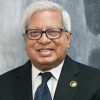
A Tribute to Sir Fazle Hasan Abed (1936 – 2019)
“When I think about Bangladesh, I think about everybody. Not everybody is enjoying Rabindranath and the great literature and culture that Bangladesh has. But I think everybody has got the right to have this experience”, deeply felt by late Sir Fazle Hasan Abed, founder of BRAC (Building Resources Across Communities), a unique, integrated development organization that many have hailed as the most effective anti-poverty organization in the world; who passed away December 20, 2019at the age of 83.
Plastic: The Largest Predator in Our Oceans
Plastic pollution is currently the largest global threat to marine life. Each year, 10-20 million tonnes of plastic ends up in our oceans, killing approximately 100,000 marine mammals and over a million seabirds.
More Women in Tech Will Lead to Peaceful Gender Equal World
It will take around 100 years for the world to reach gander parity according to the Global Gender Gap Report 2020 just published by World Economic Forum.
UN Chief Warns of Rising Misogyny, Xenophobia, Discrimination, Racism & Hate Speech
As we prepare to bid farewell to 2019, we must take a clearsighted look at the global situation and the new challenges we face. Our world is undergoing a shift. It is no longer bipolar or unipolar. But it is not yet truly multipolar. Balances of power are changing, creating new and dangerous risks.
Q&A: Initiative Starts Mental Health Sessions for Bangladeshi Garment Workers
Nearly seven years ago, garment workers in Bangladesh were victims of one of the gravest man-made disasters in history -- a factory collapse that left more than 1,100 workers dead, and rendered thousands with injuries -- in many cases lifelong ones. For many of the workers from Rana Plaza, the trauma remains real even to this day.
Carbon Markets Can Provide a Crucial Part of the Solution to the Climate Crisis
One of the main discussions at the COP25 climate change talks was Article 6, which is designed to provide financial support to emerging economies and developing countries to help them reduce emissions by using global carbon markets. Carbon pricing is an essential piece of the puzzle to curb emissions. Without a value on carbon, there is less incentive to make positive changes, especially in the private sector. The most efficient way to carry this forward is to allow trading of carbon both nationally and internationally, which will ensure the lowest cost of mitigation for participants globally.
Education for Constructive Change
We saw a hugely diverse selection of world leaders - from civil society, politics and business - seeking positive change at the UN General Assembly in New York in September. But the global reality is a political and economic environment that is increasingly divided. Boycotts. Protests. Narratives of hate.
Arab Region’s Largest Youth Gathering Focuses on New Tech
On late Monday morning, a motley group of more than a thousand youth gathered in a hall in Sharm el-Sheikh, Egypt, to listen to Sophia — a humanoid robot capable of displaying humanlike expressions and interacting with people. Yahya Elghobashy, a computer science engineering student from Cairo, sat excitedly in the audience. A few meters away from him, also in the audience, was Abdel Fattah el-Sisi — the President of Egypt.
Lithium and Clean Energy in Argentina: Development or Mirage?
The intense white brightness of the salt flats interrupts the arid monotony of the Puna in northwest Argentina, resembling postcards from the moon. Beneath its surface are concealed the world's largest reserves of lithium, the key mineral in the transition to clean energy, the mining of which has triggered controversy.« Previous Page — Next Page »





The Week with IPS

NEXT STOP - SDGs
Tracking global progress towards a sustainable world
Tracking global progress towards a sustainable world
