Languages
Thursday, November 12, 2026



News and Views from the Global South
Featured

Women in Politics: Adornments and Witches
Some world leaders try to prove their alpha male status by presenting attractive and submissive wives as tokens won in virile scrambles with other potent stags. A recent example of such puerile machismo was exposed in a twitter battle between the Brazilian president Jair Bolsonaro and his French equivalent Emmanuel Macron. Since taking office in January, Mr Bolsonaro has railed against what he considered to be foreign meddling in Brazilian environmental politics. Wild fires raging in the Amazonian rain forest have generally been blamed on a rampant deforestation said to be endorsed by Bolsonaro´s regime. Emmanuel Macron tweeted a photo of burning Amazonian forestland with the comment: ”Our house is burning. Literally.” Bolsonaro reacted immediately and accused Macron of supporting an international alliance intending to take control over Amazonia while treating Brazil like a ”colony”. Bolsonaro twittered:
Achieving Global Consensus on How to Slow Down Loss of Land
Expectations are high, perhaps too high, as the 14th Conference of the Parties (CoP 14) of the United Nations Convention to Combat Desertification (UNCCD), now into the third day of its two-week session, is being held outside the smog-filled Indian capital of New Delhi.
SME’s the Main Drivers of Africa’s Food Economy
Viola Kiptanui, a resident of Langas estate in the outskirts of Kenya’s Eldoret town, has discovered a new way of life – eating only what she knows the source – thanks to a new smallholder entrepreneurship venture.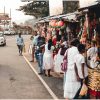
Sri Lanka Faces Major Challenges on UN’s 2030 Development Agenda
On the road to sustainable development, Sri Lanka provides an interesting case study. Having overcome a three-decade domestic conflict, Sri Lanka has begun its transformation towards a sustainable and resilient society. The extreme poverty rate ($1.90 a day) dropped to 0.8 per cent in 2016. The unemployment rate is below 5 per cent since 2010.
U.N. Criticised for Link-up with Saudi Prince MBS
The United Nations is under growing pressure to scrap an event it is co-hosting with the private foundation of Saudi Arabia’s crown prince Mohammad bin Salman, who has been linked to the killing of journalist Jamal Khashoggi.
They Call it Multistakeholderism. Where Does That Leave the UN?
Global governance is slipping away from the United Nations. Whether it is in managing the Internet, where the UN’s governing structure offers only an advisory role for governments; or climate change, where the most exciting actions are now corporate-led partnerships outside the UN Framework Convention on Climate Change; or the Gates Foundation-sponsored Gavi, The Vaccine Alliance, which is in a tug of war with the World Health Assembly on who sets health policy in developing countries, the institutional basis for global decision-making is changing.
Ensuring Fairer International Corporate Taxation
Large transnational corporations (TNCs) are widely believed to be paying little tax. The ease with which they avoid tax and the declining corporate tax rates over the decades have deprived developing countries of much needed revenues besides undermining public faith in the tax system.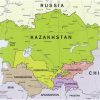
Central Asia Has Always Been Important for Europe
The EU has presented a new strategy for Central Asia. The first one has been adopted in 2007 and revised in 2015. Where do you see improvements?
Eastern Caribbean Embarks on Strategy Towards a Blue-Green Economy
 Micro, small and medium enterprises as well as niche markets and experiences such as bee tourism may well hold the key for the Organisation of Eastern Caribbean States as countries of that sub-region, known as the OECS, ramp up efforts to build economies that are resilient to the impacts of climate change.

Animal Welfare: Where Does India Stand?
We have the potential to lead the world in animal welfare, but the tendency to look at the issue in a vacuum has prevented this movement from being taken seriously.
Why Governments Must Prioritise Sustained Tobacco Control Investment in Low- & Middle-Income Nations
Trends in global consumption of cigarettes haven’t improved since the World Health Organization’s (WHO) Framework Convention on Tobacco Control (FCTC) came into force, according to a study published in the British Medical Journal (BMJ) earlier this summer.
Is the UN’s High Seas Treaty Heading Towards Troubled Waters?
The world’s high seas, which extend beyond 200 nautical miles, are deemed “international waters” to be shared globally-- but they remain largely ungoverned.
Ugandan Students Turn Waste to Wealth
Namugongo is a lush, forested community in central Uganda where tall trees are home to colourful birds and noisy monkeys. The community has a tragic place in history: on 3 June 1886, 22 Ugandan Christian converts were publicly executed, on the orders of King Mwanga II of the Buganda Kingdom, in an attempt to ward off the influence of colonial powers with whom the Christians were associated.
How the African Development Bank Plans to Mobilise Funds for Climate Adaptation
IPS Correspondent Isaiah Esipisu reports from the Climate Change and Development in Africa Conference taking place at the African Union headquarters in Addis Ababa, Ethiopia. 
The Arctic: Earth´s Last Frontier
The last frontier for utilizing and maybe even exhausting Earth´s natural resources is opening up in the Arctic and some of the world´s wealthiest nations are trying to secure their piece of the cake. Some act openly, others are more secretive – recently one of the competitors entered the game in a remarkably unwieldy manner.
Festival Pays Tribute to Singer, Civil-Rights Icon Nina Simone
It must be a daunting prospect to sing songs made famous by the incomparable Nina Simone, but performers Ledisi and Lisa Fischer brought their individual style to a BBC Proms concert in London, honouring Simone and gaining admiration for their own talent.
Triumph of the Right is Changing the World Order
The crisis of regional and multilateral institutions goes hand in hand with the international rise of right-wing populism. In the US, the UK, Russia, Italy, Poland, Hungary, Turkey, the Philippines and Brazil, we are experiencing the rise of right-wing populist politicians who throw headline-grabbing barbs at global compromises and the negotiating processes of supranational institutions such as the UN.
UNICEF’s Goodwill Envoy a Messenger of ill-Will, Complain Critics
When two-time Wimbledon tennis champion Boris Becker, a UNICEF goodwill ambassador, refused to make a commitment not to play in South Africa, a country blacklisted for its apartheid policies, the UN children’s agency stripped him of the prestigious title, back in October 1987.
Our Food Systems Need Transformation
The right to food is a universal human right. Yet, over 820 million people are going hungry, according the latest edition of the State of Food Security and Nutrition in the World (SOFI 2019). In addition, 2 billion people in the world are food insecure with great risk of malnutrition and poor health” 1.
Let’s Walk the Talk to Defeat Climate Change – African Leaders Told
African leaders have been asked to walk the talk, and lead from the front, in order to build resilience and adaptation to the adverse impacts of climate change on the continent.
Let the World’s Future Not Turn into Ashes
With the record rate blaze in the Amazon that struck Indigenous communities, the world is confronted by a humanitarian crisis in the midst of an ever-worsening political-economic condition.« Previous Page — Next Page »





The Week with IPS

NEXT STOP - SDGs
Tracking global progress towards a sustainable world
Tracking global progress towards a sustainable world
