Languages
Thursday, November 12, 2026



News and Views from the Global South
Featured

Disaster Risk Resilience: Key to Protecting Vulnerable Communities
The past five years have been the hottest on record in Asia and the Pacific. Unprecedented heatwaves have swept across our region, cascading into slow onset disasters such as drought. Yet heat is only part of the picture. Tropical cyclones have struck new, unprepared parts of our region and devastatingly frequent floods have ensued. In Iran, these affected 10 million people this year and displaced 500,000 of which half were children. Bangladesh is experiencing its fourth wave of flooding in 2019. Last year, the state of Kerala in India faced the worst floods in a century.
Close the Door on Nuclear Testing
Everybody knows that nuclear weapons have been used twice in wartime and with terrible consequences. Often overlooked, however, is the large-scale, postwar use of nuclear weapons:
Kenya: The troubles of a science PhD from the West
Graduate students of the London School of Economics and Political Science gathered at Kenya’s coast in September 2018, where the Secretary-General of the United Nations Conference on Trade and Development (UNCTAD) Dr Mukhisa Kituyi told them: “With your international credibility, it is easier and tempting to leave and take out of the continent the little intellectual resource that could solve problems their countries face.”
Pushing For a Green Economy & Clean Energy
Africa is grappling with myriad environmental and climate challenges, from drought to loss of biodiversity, cyclones and plastics pollution.
Sudan Transition an “Opportunity” to End Darfur Crisis
Sudan’s transition to civilian rule offers a chance to end the ethnic violence that plagues the western province of Darfur and end a peacekeeping mission there, a top United Nations official said Monday.
Trade, Currency War Weapons Double-Edged
The US-China trade war has flared up again less than two weeks after US President Donald Trump delayed new tariffs of US$160 billion on Chinese imports until December, purportedly to avoid harming the holiday shopping season.
What Would It Really Take to Plant a Trillion Trees?
Tree planting is capturing the minds of those who look for fast climate action. Earlier this month, the Ethiopian Government announced a new world record: thousands of volunteers planted 353 million trees in one single day. This came shortly after a team of scientists identified suitable places in the world where up to 1 trillion new trees could be planted. Such a massive effort could absorb about 20 years’ worth of global greenhouse gas emissions. And on 8 August 2019, the Intergovernmental Panel on Climate Change launched a Special Report on the importance of land use for the climate. About 23 per cent of all emissions come from the agriculture, land use and forest sector. The Intergovernmental Panel on Climate Change outlines land management opportunities with benefits for food security, biodiversity, and the climate, such as agroforestry.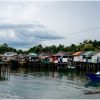
Malaysia Vastly Undercounting Poverty
Malaysia lays claim to the world’s lowest national poverty rate by using an unduly low poverty line that does not reflect the cost of living and by excluding vulnerable populations from its official figures.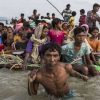
After Two Years of Horrors in Burma, the U.S. Is Still Doing Too Little, Too Late
Monsoon season is currently wreaking havoc on the more than 911,000 Rohingya refugees displaced from their homeland in Burma (Myanmar) to the ramshackle camps of Cox’s Bazar, Bangladesh.
Hong Kong Protests: A Peaceful and Violent Weekend
 As protests in Hong Kong continue over the weekend, thousands of people joined hands to form a human chain that stretched across the city on Friday. It was yet another demonstration – this one entirely peaceful – in a series of protests that have rocked the former British colony for the past 12 weeks.

Two Million Children in West and Central Africa Robbed of an Education Due to Conflict
Fourteen-year-old Fanta lives in a tent in a settlement in Zamaï, a village in the Far North Region of Cameroon with her mother and two brothers. They came here more than a year ago after her father and elder brother were murdered and her elder sister abducted by the extremist group Boko Haram.
Amazon Fires Heat Up Political Crisis in Brazil
August is the month of major political crises in Brazil, but no one suspected that an environmental issue would be the trigger for the storms threatening the government of President Jair Bolsonaro, just eight months into his term.
Little Hope of Justice for Rohingya, Two Years after Exodus
Two years after the start of an exodus of Rohingya civilians from genocide-like attacks in Myanmar, members of the mainly Muslim minority have little hope of securing justice, rights or returning to their homes, according to the United Nations and aid groups.
G7 Leaders Urged to Promote Gender Empowerment
As leaders of the seven major industrialised nations (G7) meet in the coastal seatown of Biarritz in the south west of France, one of the world’s leading women’s organisations is calling for the protection and advancement of women worldwide.
How Tibet has Successfully Reduced Poverty
 According to the Tibet's Social Science Academy’s Institute of Rural Economic Studies, the number of Tibetans still living in poverty has been brought down from 850,000 a few years ago to 150,000.
Tibetan officials say the government is committed to reducing that number to zero by the end of this year.

Why Can’t Dynamic Asia-Pacific Beat Poverty?
Asia and the Pacific is lauded globally for its rapid economic growth over recent decades and has lifted 1.1 billion people out of extreme poverty since 1990. Nevertheless, the region continues to have the largest number of poor people in the world.
How to Bring the Indus Delta Back to Life – Give it Water
Gulab Shah, 45, is having sleepless nights. He and his family are worried about their imminent migration from their village in Jhaloo to a major city in Pakistan, thanks to the continued ingress of sea water inland.
The Syrian Tragedy
As I often do, I recently discussed the Syrian Civil War with a friend of Lebanese origin. He is far from supporting the Syrian regime, which occupied his country of origin between 1989-2008. My friend assumes the Syrian government was behind the assassination of Lebanon´s prime minister Bachir Gemayel, who in 1982 together with 26 others were blown to pieces by a bomb planted at the headquarters of the Lebanese Forces. He also suspects Syria was behind the death of former prime minister Rafik Harari, who in 2005 was killed in a car bomb explosion. However, this does not make my friend an admirer of Israel or the U.S., which together with Russia, Turkey, Iran, and Saudi Arabia meddle in Syria´s bloody internal strife. It is an almost impossible task to disentangle the mess of warring fractions guided by corrupt politicians, religious fanatics, liberal politicians, bandits, Mafiosi and/or foreign commercial and strategical stakeholders.
A ‘Cure’ for Ebola but Will it Stop the Outbreak if People Won’t Get Treatment?
While people in the Democratic Republic of Congo (DRC) are slowly being made aware that scientists have discovered two drugs that are effective in treating Ebola, letting go of the fear and anxiety that has prevailed across the country this year will require more work.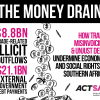
Southern African Development Community Loses Billions in Illicit Outflows
The Southern African Development Community (SADC), which comprise 16 member states, loses about 8.8 billion dollars in trade-related illicit outflows and about 21.1 billion dollars in external government debt payments annually, according to a new report released here.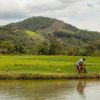
Solving the Climate Crisis is Beyond Governments
Throughout my ten years working in international development and climate policy, I’ve mostly heard colleagues talk about the private sector as if it was this intangible, multifaceted medusa with its own business lingo that is impossible for us policy experts to tackle: “the ‘private sector’ needs a return on investment in order to act on climate” or “the ‘private sector' does not have the right incentives, but we need ‘private’ capital to solve this crisis”
« Previous Page — Next Page »





The Week with IPS

NEXT STOP - SDGs
Tracking global progress towards a sustainable world
Tracking global progress towards a sustainable world
