Languages
Thursday, November 12, 2026



News and Views from the Global South
Featured

India Promotes South-South Cooperation, but Key Questions Unaddressed
At his speech at the United Nations Convention to Combat Desertification (UNCCD) summit in Delhi, Prime Minister Narendra Modi emphasised South-South cooperation and technology solutions, but issues of land ownership dog the ongoing negotiations. As the second week of the UNCCD Conference of Parties (COP) kicked off in Delhi, Indian Prime Minister Narendra Modi highlighted South-South cooperation and issues of land degradation.
Eritrea Tops Watchlist of World’s Most-Censored Countries
Eritrea has the world’s highest levels of censorship and the most active government in jailing reporters and stifling newspapers, radio and television, a study by the Committee to Protect Journalists (CPJ) watchdog says.
The Costs of Heightened Conflict in the Himalayas
As a series of conflicts in the Hindu Kush Himalayan region come into sharp focus, sidelining local populations, the long-term environmental costs may leave the region degraded, poor and desperate.
Awareness Should be the Priority in Public Health Efforts against Leprosy
Increasing awareness of the continuing existence of Hansen’s Disease (leprosy) is critical to sustaining effective public health efforts against the disease, eliminating the social stigma associated with it, and halting its transmission.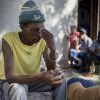
Farm Workers Paying the Price for Cheap South African Wine
Systembolaget, the Swedish government-owned alcohol monopoly, promises fair conditions – but it also uses its purchasing power to put a downward pressure on prices. At the major South African wine producer Leeuwenkuil, workers suffer as the company tries to cut costs. So far, none of the South African suppliers have been stopped due to violations against Systembolaget’s code of conduct.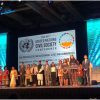
Civil Society Urges Inclusive, Resilient & Sustainable Urban Areas of the Future
The United Nations held its first major international conference in one of America’s mountain states, bringing scores of civil society organizations (CSOs) to discuss ways on making “cities and human settlements inclusive, safe, resilient and sustainable by 2030.”
Why Prosecuting Human Traffickers in Nigeria is Nothing More than a Mirage
 Hope Oyiza, a Nigerian human trafficking survivor has said the Nigerian authority in charge of preventing the trafficking of persons, as well as punishing offenders, is lagging behind in her duties because many of the officials collect bribes from arrested human traffickers. Then, release them.

Kashmir: How Modi’s Aggressive ‘Hindutva’ Project has Brought India and Pakistan to the Brink – Again
August is immensely important in the history of the Asian subcontinent, marking the month that India and Pakistan gained independence from the British in 1947. Now, in 2019, it has once again proved momentous, when, ten days before India’s Independence day celebrations, prime minister Narendra Modi’s government revoked the autonomy of Indian-administered Kashmir – a status provided for under the Indian Constitution.
What Research Reveals about Drivers of Anti-immigrant Hate Crime in South Africa
Mobs have attacked foreign-owned businesses on the streets of at least three South African cities in recent days. This has caused outrage across Africa. There have even been retaliatory attacks. The South African government, under pressure to protect her large international migrant community, quickly defused the attacks.
Litigation, a Mechanism to Ensure Justice and End Stigma for Hansen’s Disease
Professor Ai Kurosaka remembers the day she first interacted with a person affected by Hansen’s disease. It was 2003 and Kurosaka, then a graduate student of sociology at the Saitama University in Japan, had been assigned to interview ex-patients and their family members to document what kind of discrimination they faced. It was a very difficult task because nobody wanted to speak or identify themselves.
The Business of Social Enterprise
Organisations supporting people affected by Hansen’s disease (leprosy) have social rather than capitalist aims, but they need to take a business-minded approach to their work if they wish to be sustainable, experts at a global conference in Manila, Philippines said.
Global Network Key to Strengthening Leprosy Organisations
Organisations of people affected by Hansen’s Disease or leprosy agree that a global network of volunteer groups is key to eradicating the disease, but concrete steps need to be taken to move the idea from an often-discussed concept to a reality.
First Global Forum of Leprosy-Affected People’s Organisations Kicks off in Manila
Being part of a platform where leprosy-affected people from all over the world can freely interact, exchange and share opinions, ideas, experiences and strategies was always something Tasfaye Tadesse dreamt of.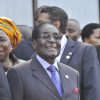
Zimbabwe’s ex-President Robert Mugabe Leaves a Mixed Legacy
Former Zimbabwe strongman Robert Mugabe, who died this week, aged 95, leaves a mixed and divisive legacy.
Desertification Costs World Economy up to 15 trillion dollars – U.N.
Forest fires, droughts and other forms of land degradation cost the global economy as much as 15 trillion dollars every year and are deepening the climate change crisis, a top United Nations environment official said Friday.
Are 9-to-5 Jobs Fast Becoming History – Even at the UN?
With the rapid leap in digital technology – including increased access to conference calls, e-translations, skype, text messaging and emails—more and more offices in the United States are providing employees with an option to “work from home”.
A Global Forum to Encourage Dialogue and Share Solutions
 Professor Takahiro Nanri is the executive director of the Sasakawa Health Foundation, co-organiser of the Global Forum of People’s Organisations on Hansen’s Disease, which will take place from Sept. 7 to 10 in the Philippines.

Is America Defeated in Afghanistan?
Following the 11 September 2001 terrorist attacks on American soil, the United States and their allies went to Afghanistan to “smoke out” Osama bin Laden and his Taliban protectors. The most fundamental primary mistake was to let all terrorists flee to Pakistan instead of sealing the border and capturing their main figures.
Exclusive: Winnie Byanyima Speaks about Inequality in Africa and Next Steps at UNAIDS
While the 28th World Economic Forum (WEF) on Africa is being held in Cape Town, South Africa this week, the international aid and development charity Oxfam released its latest report: A tale of two continents: fighting inequality in Africa. 
UN’s Upcoming Summits May Foreshadow a Revival of Multilateralism or an Obituary for World Order
The United Nations will be hosting six high level plenary meetings –- unprecedented even by its own standards—during the beginning of the 74th session of the General Assembly in late September.
Is There Discrimination Against Women in Healthcare in India?
In an inaugural lecture at the Radcliffe Institute at Harvard University, Amartya Sen began with a swipe at Queen Victoria who complained to Sir Theodore Martin in 1870 about & quote: this mad, wicked folly of 'Woman's Rights’ ", as in her rarefied world nobody could trample upon her rights. The world has of course changed dramatically and women’s rights are widely acknowledged but injustices persist. Our concern here is with health injustices that are widely prevalent in India. These take multiple forms: female foeticide, widespread morbidity and denial of access to good quality healthcare until a critical condition develops. Our focus here is on vulnerability of women to non-communicable diseases (NCDs) and their limited access to good quality healthcare in India.« Previous Page — Next Page »





The Week with IPS

NEXT STOP - SDGs
Tracking global progress towards a sustainable world
Tracking global progress towards a sustainable world
