Languages
Sunday, November 8, 2026



News and Views from the Global South
Featured

No Turning a Blind Eye to Protection of Dominican Republic’s Natural Resources, Says Environment Minister
In 2020, general elections were held in the Dominican Republic. This took place while the COVID pandemic was becoming an increasingly serious threat, causing severe social and economic disruption. The elections were two months late as a result of the initial chaos COVID caused. The governing Dominican Liberation Party’s 16-year rule ended after the Modern Revolutionary Party’s candidate, Luis Abinader, received a majority of the votes. Elections are now scheduled for May 19 this year and IPS took the opportunity to ask Miguel Ceara Hatton, the country’s Minister of Environment and Natural Resources, how he perceived the past four years' efforts to mitigate a global crisis that now threatens us all, namely climate change and environmental degradation.
Can Preserving Goa’s Khazans Address Climate Threats?
Growing up in a khazan ecosystem, the traditional agricultural practice followed in the south-western Indian state of Goa, Elsa Fernandes would love sitting in a koddo, a woven bamboo structure for storing paddy. Her family members would pour paddy around her and with the growing pile, she would rise to the top and then jump down with joy.
Taking Charge: Three Actions to Help Combat Climate Change and Save Amazonia
Climate change is the defining crisis of our time––it is the ultimate equalizer from which no one is immune. The Earth's ecosystems are on the brink of collapse, threatening biodiversity and human societies in unprecedented ways at a global scale.
‘The World Is Bigger than 5’
The title of this piece is not mine. It’s from the President of Turkiye calling for a reform of the United Nations Security Council. It has since become a motto in the UN reform campaign encapsulating the shared resentment at a global system that gives the five Permanent members – The P5 of the UN Security Council – the United States, France, Britain, China and Russia – unfair and often destructive veto powers that undermines the very ideals for which the UN was established.
India’s Farmers Could Use Better Monsoon Forecasts
Agriculture in India need not 'gamble' with the monsoons if accurate weather and climate forecasts are proactively made available to farmers, according to the results of a new experimental study conducted by the University of Chicago.
UN Security Council Holds Rare Nuclear Disarmament Debate
Japan chaired a rare, high-level UN Security Council meeting on nuclear disarmament and nonproliferation on March 18. Although the meeting underscored the urgency of addressing the growing threats posed by nuclear weapons, it also highlighted the chronic divisions among key states on disarmament and nonproliferation issues.
“I’m More Optimistic than Before Regarding the Goal of Ending Hunger in Latin America”
"I'm more optimistic than before" about the goal of ending hunger included in the 2030 agenda for Latin America and the Caribbean, said FAO regional representative Mario Lubetkin in an interview with IPS.
Climate Change: the Partnership with Asian & Pacific Small Island Developing States
Stories of growing vulnerability make regular headlines across all Asian and Pacific small island developing States (SIDS). With tens of thousands of people displaced every year due to climate and disaster-related events, there are continued concerns about the costs of climate-related hazards.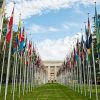
UN in Geneva to Partially Shut Down— for Second Time— Due to Cash Flow Crisis
Faced with a continued cash flow crisis, the United Nations in Geneva (UNOG) will partially close down – for the second time since December last year— as it scales back its operations, including building closures, official travel restrictions, and budgetary cuts on spending. The UN is studying plans to close the Palais des Nations beginning 22 April. Only conferences would run, but some of the offices would shut.
Made in Africa: Africa’s Fashion Redefining Narratives About the Continent
It is a new dawn as Africa’s high fashion industry enters an era defined and driven by young African fashion designers. As they take to the global stage, the young creatives are showcasing the continent in all its majesty through unique weaving techniques and patterns that combine their rich African heritage with contemporary styles.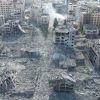
Biden Quietly OKs More 2,000-Pound Bombs & Warplanes for Israel
Despite growing worldwide calls for an arms embargo, the Biden administration in recent days has approved the transfer of billions of dollars worth of new weapons shipments to Israel, including warplanes and 2,000-pound bombs that have been dropped on densely populated areas of Gaza with devastating results.
WHO Calls for More Data on Violence Against Older Women and Women With Disabilities
Older women and women with disabilities experience abuse that is unique to their demographics, yet they are underrepresented in national and global databases, according to findings shared by the World Health Organization (WHO).
Why Farmers in India and Pakistan Are Shifting to Natural or Regenerative Farming
Nine years ago, farmer Sultan Ahmed Bhatti gave up tilling the soil and using most fertilizers and pesticides on his farm in Doober Bhattian, Pakistan. His brothers at first derided him. But soon, his first experiment with growing wheat on raised beds was a runaway success. “We produced more wheat than what we grew on ploughed, flat land,” he said.
The Impact of Climate Change on a Biodiversity Hot Spot
If there is a place where the interlinkages and dependencies between the effects of climate warming and biodiversity loss are clearly at display, it’s Nepal. There is clear evidence on the impact of climate change on the country’s ecosystem considering the fact that Nepal is an important biodiversity hotspot.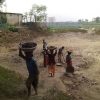
Revival of Hope: How a Remote Indian Village Overcame Water Scarcity
The people of Patqapara Village, a hamlet in India's West Bengal State, were until recently reeling under absolute distress due to water scarcity. The lack of irrigation facilities in this far-flung and inaccessible hamlet had resulted in a steady decline in agricultural activities. With a population of around 7,000, as per government estimates, the village primarily depends on agriculture for its livelihood. However, in recent years, drastic changes in weather patterns, including unseasonal rainfall, delayed monsoons, and soaring temperatures above normal levels, led to the drying up of irrigation canals and wells in the village. This left the local population in chaos, as their cultivable fields were bereft of any irrigation facilities.
The Gambia Must Not Repeal FGM Ban
Earlier this month, a UNICEF report on the prevalence of female genital mutilation (FGM) showed that while some success is taking place, the pace of progress remains slow - lagging behind population growth, especially in places where FGM is most common.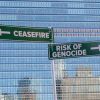
Global Governance: Time for Reform
At last the UN Security Council has passed a resolution calling for an immediate ceasefire in Gaza. While stopping short of demanding a permanent end to the violence, it goes further than the world’s peak peace and security body had so far managed since the start of the current brutal phase of conflict in October. But the time it’s taken to get to this point signals an ongoing failure of global institutions to uphold human rights.
Abandoned Children Growing Problem in Northern Syria
Wael Al-Hassan was returning from work in the Syrian city of Harim when he heard the sound of a baby crying. He was returning from work on December 10, 2023. He stopped momentarily, turned on his mobile phone flashlight to investigate, and spotted a baby girl, around one month old, wrapped in a white blanket, lying by the roadside.
Child Malnutrition in Peru Driven Up by Poverty and Food Insecurity
Quechua farmer Felipa Noamesa, who lives in the southern Peruvian department of Cuzco, prepares a cream of fava bean soup for breakfast every morning with bread and vegetable soup with noodles. Her children are grown up, so her priority is that her five-year-old granddaughter does not suffer from anemia or malnutrition, two problems she frequently sees in her community.
UN Security Council’s Ceasefire Resolution in Gaza Welcomed
After nearly six months of a devastating war in Gaza, the UN Security Council has at last adopted a resolution calling for an immediate humanitarian ceasefire. The resolution calls for the ceasefire to come into effect for the month of Ramadan, demands the unconditional release of all hostages and ensures humanitarian access.
Will Israel Defy Another Security Council Resolution?
The UN Security Council (UNSC) resolution for a temporary cease-fire in the ongoing conflict in Gaza— adopted by a 14-0 vote with the US abstaining –- marks a significant step forward in momentarily halting the five-month-old fighting which has claimed the lives of over 32,000 Palestinians and 1,200 inside Israel. But a lingering question remains: how will Israel respond? Clearly, Israel has had a longstanding notoriety for flouting UNSC resolutions ---and still never having to pay a price for such violations—primarily because of the unyielding support of the United States.« Previous Page — Next Page »





The Week with IPS

NEXT STOP - SDGs
Tracking global progress towards a sustainable world
Tracking global progress towards a sustainable world
