
Monday, October 19, 2026



News and Views from the Global South
Gender Violence

Marooned in Bangladesh, Rohingya Face Uncertain Future
Hundreds of thousands of Rohingya refugee women from Myanmar are currently living in the cramped camps along Bangladesh Myanmar border. Victims of sexual and physical violence in the Rakhine state, women have been disproportionately affected by this crisis and these women’s perils are far from over in the host country as they continue to face multifaceted challenges.
Perpetrators of Crimes against Humanity Must be Brought to Justice
On the occasion of the 2017 International Day of Human Solidarity observed on 20 December, the Chairman of the Geneva Centre for Human Rights Advancement and Global Dialogue Dr. Hanif Hassan Ali Al Qassim calls for peace for and human solidarity with, the Rohingya minority in Myanmar.
SLIDESHOW: Tales of the 21st Century – Rohingyas Without a State
 The world has witnessed innumerable images of the long walk to 'freedom' of Rohingya women, children and men. Some trudged for endless hours and days, many carrying elderly parents and babies in baskets, with the women suffering the unimaginable trauma having been victims of rape, torture and harassment.

Rohingya Refugees Endure Lingering Trauma
Twelve-year-old Rubina still struggles with the horrors she witnessed in her homeland in Myanmar before fleeing to neighbouring Bangladesh three months ago.
A Responsibility to Prevent Genocide
Almost 70 years since the Genocide Convention was adopted, the international community still faces a continued and growing risk of genocide.
Pakistan Gets Its First One-Stop Shop for Women Fighting Violence
Sliced noses, broken ribs, fractured fingers, slashed arms, bruised and bloodied faces with teeth missing and eyes swollen... Sana Jawed, 30, has been witnessing these brutalities for over a decade.
“Banging on the Door” – Women Fight for a Voice and Space in Civil Society
The space for civil society organizations is shrinking around the world, with particular impacts on women activists and human rights defenders who face additional barriers due to their gender or sexual orientation.
Rohingya Refugees: The Woes of Women (Part Two)
Under pouring rain, hundreds of young and expectant mothers stand in line. With her bare feet and the bottom of her dress covered in mud, Rashida is one of them, clutching her emaciated infant. She lost her husband on the treacherous trek from Myanmar to Bangladesh, and with nowhere to go and her resources exhausted, rain-drenched and standing in this long, muddy line for food and medicine for her child is her only hope.
Rohingya Refugees: The Woes of Women – Part One
Afia* lines up her bucket every morning in the refugee camp for water delivery from humanitarian relief workers. On one particularly sweltering day, she kept four water pitchers in a row with gaps between them, hoping to insert another empty container in the space when the water arrived.
Rohingya Exodus Is a “Major Global Humanitarian Emergency”
In less than four months, over 600,000 Rohingya refugees have fled brutal persecution in Myanmar to seek safety across the border in Bangladesh. They are now crowded into camps across a stretch of 30 kms in Cox's Bazar, a southeastern coastal region of the small South Asian nation.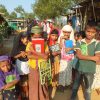
Rohingya Refugees Face Fresh Ordeal in Crowded Camps
Mariam Akhtar, 23, is desperately searching for her young daughter two weeks after arriving from Myanmar in Cox’s Bazar, a southeastern coastal district in Bangladesh.
New Safety Handbook by IAWRT
Hopefully female journalists have read it by now “What if…? Safety Handbook for Women Journalists”. The handbook, written by renowned safety trainer Abeer Saady, an Egyptian, and published by The International Association for Women in Radio and Televison (IAWRT), provides hands on tips on what to do when caught in a crossfire , when stopped at checkpoints, arrested during coverage, or kidnapped and held hostage.
Shattered Future: Sexual Violence and Child Exploitation in the Eastern Democratic Republic of Congo
I rent a tent for five dollars a week, and pay 30 as a monthly fee to access an artisanal mining camp of more than 900 miners. To get there takes a two-hour climb from the nearest trading centre. I sleep with about six male workers, each of whom pays about three dollars per session. Sometimes a miner pays for an entire overnight session for five dollars. I have four children that I left with my mother in the provincial capital, which is about three hours’ drive from this site. Every month I spend three weeks on top of this hill providing sex services within the camp, then for a week I go check on the children and bring money for their upkeep...
Clicktivism & Real Life Activism Potent Instruments Against Sexual Violence
It’s the fifth day of the 16 days campaign on violence against women but I feel like the campaign started months ago because of the powerful #MeToo campaign. While I applaud this campaign, I have some thoughts that I believe could make this a truly global watershed moment in the fight against sexual and gender-based violence.
“Every Day Is a Nightmare”
Parul Akhtar,* a Rohingya woman in her mid-twenties, may never wish to remember the homeland she and her children left about three weeks ago.
Women Activists are Targets of Gender-Biased Violence
Veiled and direct threats, defamation, criminalisation of activism, attacks on their private lives, destruction of property and assets needed to support their families, and even murder are some forms of gender violence that extend throughout Latin America against women defenders of rights.
Education, Not Condemnation, Say Women Leaders Who Survived Violence
Sally Mboumien remembers the day she pressed a steaming hot stone against her chest. In Bawock, the rural community of western Cameroon where she grew up, young girls often had their young, sprouting breasts flattened with a hot iron or a hammer or spatulas that had been heated over burning coals.
Dr. Al Qassim: “The success of a society relies on its ability to eliminate all forms of violence against women and girls”
The Chairman of the Geneva Centre for Human Rights Advancement and Global Dialogue H. E. Dr. Hanif Hassan Ali Al Qassim calls for the elimination of all forms of violence adversely affecting women and girls. Dr. Al Qassim’s appeal was made in relation to the observation of the 2017 International Day for the Elimination of Violence against Women.
Will DNA Data Base Deter Sexual Abuse at UN?
The United Nations is fighting a losing battle against the widespread – and continued – sexual exploitation and abuse (SEA) by UN peacekeepers and civilian staff resulting in relatively few convictions amidst daunting problems in tracking abusers and nailing down paternity claims.
Conservative Onslaught Undermines Gender Advances in Latin America
A "conservative and fundamentalist onslaught" in Latin America against a supposed "gender ideology" is jeopardising advances in the fight against violence towards women, feminist activists complain.
Why UN’s Global Compact on Refugees Must Address Needs of Young People
An estimated seven million refugees – about one-third of the global refugee population – are between 10 and 24 years old, yet this demographic is often overlooked in humanitarian and development responses. At a critical time in their lives, these young refugees experience the stress of displacement, which can impact their future development and success.« Previous Page — Next Page »





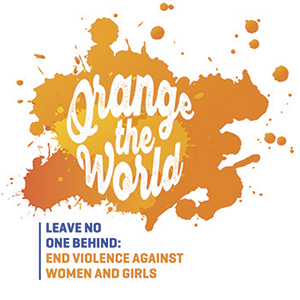
One in three women around the world have been subject to violence. Women face physical, sexual, and psychological violence in both public and private. Taking forms such as violence in the intimacy of a relationship, human trafficking, and sexual exploitation, gender violence is an issue that affects women in all countries. Only two-thirds of countries have outlawed domestic violence, leaving millions of women unprotected from abuse including from marital and de facto partners in many cases. Additionally, through human trafficking countless women are subjected to sexual exploitation and sexual violence, including horrific acts such as genital mutilation. Today many actors from individuals, to multinational organizations work to address these issues. These articles help to shed light on the violence that women experience every day and how its is being addressed.

The Week with IPS

Tracking global progress towards a sustainable world
