Languages
Monday, November 16, 2026



News and Views from the Global South
Gender
CHILE: Goodbye to the Gender Wage Gap?
Gabriela, 32, is delighted with Chile’s new law establishing equal wages for men and women doing the same work. But the discrimination she has experienced in the workplace makes her wary of premature optimism.
LEBANON: Women Battle for Citizenship Rights
One can be born in Lebanon and live here all one's life, and still not be a Lebanese citizen. Lebanon is one of few remaining countries in the Middle East where a mother is unable to pass citizenship to her children.
RELIGION: New Family Law for Sunni Women in Bahrain Not for Shiites
A new family law for Sunnis, which protects the rights of women in Shariah (Islamic) law courts, was approved by Bahrain’s King Hamad bin Isa Al Khalifa, on May 27. Women’s activists have pledged to continue their fight for a just law for the Gulf Arab kingdom’s Shiites.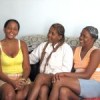
RIGHTS-CUBA: “Going to the Police Never Crossed My Mind”
Mercedes Toyo has finally started to smile again after many years of tears and violence. But the bad memories linger. "Now I’m being courted by a 50-year-old man who tells me I’m too wary, that I don’t let anyone get too close," she told IPS in the living room of her house.
Q&A: “Indigenous Women Are Growing in Numbers and Influence”
The Canadian province of British Columbia is home to more than 200 native communities, or First Nations, ranging from about 20 people to over 3,000. As their size and level of remoteness varies, so does their economic development.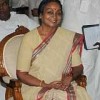
POLITICS-INDIA: Woman Bags Speaker’s Job
India’s list of top women politicians grew Wednesday after the country’s Parliament elected Meira Kumar as the speaker of its powerful lower house.HEALTH-BOLIVIA: Subsidy to Cut Maternal-Child Mortality
A new Bolivian government programme will provide special payments to pregnant women and mothers with children up to the age of two, with the aim of cutting the country’s maternal and infant mortality rates.
INDIA: Computers Bring Jobs to Rural Women
What strikes a visitor entering the Source for Change business processing centre (BPO) in rural Rajasthan, a deeply conservative state where women are veiled and child marriage still rampant, is the near absence of men in the building.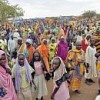
SUDAN: Civilians Under Siege in Refugee Camps
A report by the United Nations that the Sudanese Air Force bombed northeastern Chad near a refugee camp has sparked strong condemnation from the Save Darfur Coalition (SDC) following military and paramilitary attacks over the past week.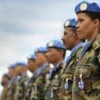
POLITICS: U.N. Women Peacekeepers in Short Supply
Even as U.N. peacekeeping operations in the world’s battle zones continue to expand, women soldiers, police and civilian support staff remain a small minority – something that sorely needs to change, U.N. officials say.
POLITICS-PAKISTAN: Women in Parliament Push for Space
"Politics is no rocket science," says Yasmeen Rehman, a woman parliamentarian in Pakistan’s Lower House, adding, "It is not as difficult as it is made out to be."
FRANCE: Sharing a Recipe for Peace
Fourteen women are gathered in a Jewish kosher bakery on a sunny afternoon in Creteil, a multi-ethnic commune southeast of Paris. Bent over bowls of flour, tubs of butter and cartons of eggs, the women share jokes and anecdotes, speaking in both French and Arabic, as they knead dough and crack eggs open.
EGYPT: ‘They Ogle, Touch, Use the Filthiest Language Imaginable’
As night falls over Egypt’s capital, youth gather along the banks of the Nile where a carnivalesque atmosphere prevails.MEXICO: Indigenous Rape Victims Fight Military Impunity
The aberrations of Mexican justice were clearly visible in the cases of rape and torture allegedly committed by soldiers in 2002 against two indigenous women, Inés Fernández and Valentina Rosendo. But their experiences are not exceptional in rural areas of the southern state of Guerrero.
HEALTH-NEPAL: Baby Boom in Maoist Army
At the annual military parade of the People’s Liberation Army, Nepal’s ex-guerrillas, curious bystanders saw a young woman clad in military fatigues kiss and cuddle a baby before handing her back to an older woman.
HEALTH-INDIA: On the Rag Amidst Riches
For millions of Indian women the colloquial phrase 'going on the rag' can literally mean that, or using just about anything available to stay dry during menstrual periods for lack of access to modern sanitary pads.URUGUAY: Women Breaking Out of Political Corset
When Uruguay returned to democracy in 1985, "a political corset was put on women," said a member of the opposition Colorado Party.NICARAGUA: Total Ban on Abortion Violates Human Rights, Says UN
The United Nations Committee against Torture (CAT) described the criminalisation of abortion under any circumstances in Nicaragua as a violation of human rights.
POLITICS-LEBANON: Family History Counts for Women in Race to Parliament
In Lebanon’s Jun. 7 parliamentary poll, women represent only two percent of the candidates, many of them with family names that have been appearing on ballots for generations.EUROPE: Traffickers Still Looking East
Eastern Europe has been a major source of trafficking for sexual labour since the fall of communism. Now, other forms of exploitation are catching up.
POLITICS-MAURITANIA: 'Justice and Equality for All'
As Mauritania prepares for presidential elections on June 6, women's groups have outlined a clear and compelling agenda for women. The trick will be getting the country's mostly male politicians to listen.« Previous Page — Next Page »


Women make up half the world's population, but don't nearly share half of the world's wealth, well-being and opportunity. Two-thirds of the world poor are women, disproportionally exposing women to precarious living conditions, disease and unmitigated natural disasters. The media, meanwhile, remains a male-dominated sector in much of the world, contributing to women's voices lacking a crucial amplifier to put their concerns on political agendas and unleash the development potential of their ingenuity. Rather than then stereotypical victims of local and global forces, women are also organizer, innovators, conservators and community builders. These are some of their stories.

The Week with IPS

NEXT STOP - SDGs
Tracking global progress towards a sustainable world
Tracking global progress towards a sustainable world
