Languages
Monday, November 16, 2026



News and Views from the Global South
Gender
HEALTH-BRAZIL: Birth Centres vs. Hospitals
The recent closure of a birth centre, which offered a more "human" touch with its focus on natural childbirth, in this Brazilian city revived the controversy over such practices, which have the backing of the Health Ministry but are opposed by the medical associations.DEVELOPMENT-ZIMBABWE: Investor Absence Fuels Retrenchments
Forty-year-old Thelma Dube was this month told by her long-time employer to stay home. She will be called back to work when business picks up. Her husband got the same instruction, as did hundreds of other workers at the company Textile Mills in Zimbabwe’s second largest city.
NICARAGUA: Women Bear the Brunt of the Crisis
"Don’t worry, your job will be here when you come back," Lorena Castillo’s supervisor reassured her when she asked to take a day off for a gynaecologist appointment. She had been working at the textile factory for the past six months and it was the first time she asked for a day off. It turned out to be her last.
RIGHTS-UGANDA: You Are Worth Nothing
Widespread gender-based violence against women and children in the conflict zones of the Great Lakes region has received some attention in recent years; less well-known is the extent of sexual violence against men.POLITICS: Women’s Groups Seek Gender Equity at U.N. Summit
An international coalition of non-governmental organisations (NGOs), mostly comprised of women’s groups, is calling for a "gender equitable" response to the global financial crisis, which is to be debated at a U.N. summit of world leaders next week.HEALTH-KENYA: Family Planning Not Only For Women
In a makeshift room inside an unfinished building in the Manyatta slums in the Western Kenyan city of Kisumu, the neighbourhood’s men regularly congregate to discuss community matters, usually in the presence of the area chief.POLITICS-LATIN AMERICA: Gender Equality Requires Quotas
Laws stipulating a minimum number of women in public posts are essential for achieving gender equality, according to a meeting of women legislators from Latin America and the Caribbean, held this week in Madrid.RIGHTS: Sexual Violence in War Hauled Out of the Shadows
On Jun. 19, 2008, the U.N. Security Council passed Resolution 1820, expressly addressing the problems of sexual violence in conflict situations. One year later, three experts in the field gathered to speak at the United States Institute of Peace to evaluate the implementation of 1820 and consider how it might better prevent this widespread crime.
LEBANON: Law to Stop Violence Against Women Takes Time
There was some good news for women’s activists in Lebanon last week.
VENEZUELA: Grassroots Empowerment for Women
In Venezuela "women have passionately embraced community activism, taking on a more committed and active role, and this is reflected in the increasing female participation in neighbourhood assemblies," Alba Rojas, spokeswoman for a community council in Tacagua, a township that spreads along the Caracas-La Guaira highway, told IPS.DEVELOPMENT: Global Campaign to Salvage U.N.’s Health Goals
The global economic crisis, which has pushed millions more into extreme poverty, is threatening to have a devastating impact on the health of women and children.
JAMAICA: For an Abortion Law That Reaches the Poor
When a Jamaican women’s group Sistren realised the voices of poor women were missing in a national debate on abortion rights, they boldly staged a play before parliamentarians reviewing a draft law that seeks to clarify when abortion can be deemed legal.HEALTH-KENYA: Two Dollars And Change: Enough To Save a Mother’s Life
At the age of 14, Zulekha Mumma delivered her first child. At 21, the birth of her seventh child killed her. She died from excessive bleeding in her home in Nyalenda, a slum on the outskirts of Kisumu city in western Kenya, some 400 kilometres from Nairobi.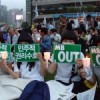
SOUTH KOREA: Schoolgirls at Forefront of Street Protests
Hundreds of teenagers, many of them female, were out on the streets Wednesday demanding a public apology from the Lee Myung-bak government for the tragic death of former president Moo-hyun Roh, who committed suicide last month.LATIN AMERICA: “Sexuality Is an Essential Part of Humanity”
In an effort to promote the free enjoyment of human sexuality, separate from reproduction, the International Planned Parenthood Federation (IPPF) launched the world's first declaration of sexual rights in the Argentine capital on Wednesday.
RIGHTS-UGANDA: ‘When a Man Hurts a Woman, There’s Nothing She Can Do’
Mary Atimango left the war-ravaged Gulu district to come and live in Kampala during the peak of the northern Ugandan conflict over fifteen years ago. The 59-year-old now lives in the small peri-urban village of ‘Acholi Quarters’ on Kireka Hill, on the outskirts of the Ugandan capital.RIGHTS-COLOMBIA: Trafficking Victims’ Ordeal Never Over
A mixture of rage, impotence and terror is evident behind the sadness in María’s* eyes. It’s been five months since she escaped from her captors in the United States, where she was taken under a false job contract, and she still can’t shake off her fear.
INDIA: Farm Suicides Turn Children Into Farmers
Eleven-year-old Digambar Rathod looks older than his age. Shy and uncertain, he stares disconcertedly at the garlanded photograph of his father Jaideep, a 42-year-old cotton farmer who committed suicide on Jan. 1, 2009 in Tiwsala village, in eastern Maharashtra state’s suicide-torn Yavatmal district.
AGRICULTURE: Liberia’s Land Just for Some
After watching the murder of her husband and his three other wives by Charles Taylor’s rebels, Fatu Bonah and her seven children fled into the dense forest to hide. "The rebels burned down our home and when I returned my in-laws had taken the land," she says. "I went to the town chief, who tried to resolve it, but the family refused, saying they had already taken over the land."URUGUAY: ‘Just Like a Daughter’ – Until You Exert Your Rights
"If you protest or stand up for your rights, they start playing little psychological games with you. You immediately go from being the darling of the household, ‘just like a daughter,’ to being treated rudely, and sometimes they even accuse you of stealing."RIGHTS: Honour Pledges on Reproductive Health
In 1994, the International Conference on Population and Development (ICPD) proposed a groundbreaking shift in the approach to reproductive health: women's reproductive capacity was to be transformed from an object of population control to a matter of women's empowerment to exercise personal autonomy.« Previous Page — Next Page »


Women make up half the world's population, but don't nearly share half of the world's wealth, well-being and opportunity. Two-thirds of the world poor are women, disproportionally exposing women to precarious living conditions, disease and unmitigated natural disasters. The media, meanwhile, remains a male-dominated sector in much of the world, contributing to women's voices lacking a crucial amplifier to put their concerns on political agendas and unleash the development potential of their ingenuity. Rather than then stereotypical victims of local and global forces, women are also organizer, innovators, conservators and community builders. These are some of their stories.

The Week with IPS

NEXT STOP - SDGs
Tracking global progress towards a sustainable world
Tracking global progress towards a sustainable world
