Languages
Monday, November 16, 2026



News and Views from the Global South
Gender
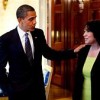
U.S.: Obama Picks Latina Judge as First Supreme Court Nominee
In a nomination that will almost certainly be approved by the U.S. Senate, President Barack Obama Tuesday announced the selection of Sonia Sotomayor, a federal appeals court judge whose parents were from Puerto Rico, to the nine-member Supreme Court.EUROPE: More to Trafficking Than Prostitution
The condition of victims of forced labour worldwide may be unrecognised because many states and organisations see it only in the light of a fight against prostitution.
IRAN: Lawyers Seek Reversal in Second "U.S. Spy" Case
In a case that human rights activists say echoes that of recently released journalist Roxana Saberi, the Iranian government has imprisoned a woman employed by a U.S.-based non-profit organisation working to improve child and maternal health in the country, alleging that she acted as a spy for the United States.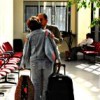
MIGRATION-BOLIVIA: Women’s Remittances Come at High Cost
The income earned by Bolivian women migrants in Spain, which enables them to support the families they left behind and build a nest egg, comes at a high price: low wages, long hours, no benefits and few or no days off.MEXICO: Avalanche of Anti-Abortion Laws
In the last 13 months, 12 of Mexico's 32 states have approved amendments to their state constitutions defining a fertilised human egg as a person with a right to legal protection, and seven other state parliaments are taking steps in the same direction.
Q&A: How an Alcohol Ban Revived an Aboriginal Community
In 2007, a group of aboriginal women from Fitzroy Crossing in Western Australia decided that the only thing that could save their community from going under was to impose a complete ban on the sales of takeaway alcohol.KUWAIT: ‘Gender-Bender’ Election Raises Optimism
Despite the reappointment of the Kuwaiti ruler’s nephew as premier, the results of last week’s elections - the historic victories of women candidates, and the decline of Islamist representation in parliament - are being perceived as a vote for change in the Gulf state.EUROPE: Trafficking Rises as Incomes Fall
The economic crisis sweeping Eastern Europe is leading to a sharp increase in people trafficking as people look to migrate for work amid rising unemployment and growing economic hardship, migration watchdogs and women's rights groups warn.LESOTHO: Cultural Beliefs Threaten Prevention of Mother-Child HIV Transmission
A health centre in one of Lesotho’s poorest districts has scored significant success in implementing a prevention of mother-to-child HIV transmission (PMTCT) programme, but health experts warn that a number of factors, including cultural beliefs and stigma, threaten to derail it.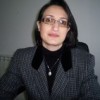
Q&A: 'More Women Need to Judge'
Thuraya Judi Alwazir is one of few women judges sitting on the Palestinian Authority's Judicial Authority. Alwazir speaks here to IPS about her experiences in a largely male-dominated environment, on the rights of women in regard to honour killings and domestic violence, and on the death penalty as applied in the West Bank.
SOUTH AFRICA: Finally Owning the Land That They Have Been Tilling
Bathed in sunlight on a crisp autumn morning, the Welgemeen farm in the Ceres district in the Western Cape province is a shining example in the otherwise patchy track record of land reform in South Africa.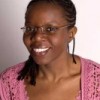
Q&A: Uncertainty of Hope: Portrait of Survival
Valerie Tagwira, a Zimbabwean doctor living in London, chose Operation Murambatsvina as the backdrop for her first novel, a painful story of domestic abuse, poverty and the fragility of survival in Zimbabwe's high-density suburbs.
Q&A: Women Suffer ‘Hidden Genocide’ in Latin America
Counting cases of machista or sexist violence separately shows that "what is happening is practically a genocide, and a hidden one at that," says Susana Chiarotti, coordinator of the Committee of Experts on Violence (CEVI) which is following up on implementation of the Convention of Belém do Pará.
POLITICS-INDONESIA: More Women Lawmakers, But Change Not Their Agenda
Indonesia’s direct legislative election in April was a resounding success for women candidates. But instead of rejoicing, activists and political observers say it is unlikely to help the cause of women’s rights.
POLITICS-SOUTH AFRICA: 'One Miracle at a Time'
The African National Congress comfortably won almost two-thirds of the total vote in South Africa's recent elections, to retain power at the national level and in eight of the country's nine provinces.INDIA: Women Hold Key to Hung Poll Verdict
As exit polls predict a hung verdict to India's month-long general elections, results for which are expected late Saturday, the only certainty is that a handful of top female politicians firmly hold the keys to the formation of the next government.
PERU: Microbusiness Helps Women Weather Crisis
Microenterprise is an escape valve for social tension at times of crisis, and microbusinesses do a better job of weathering the storm than bigger companies because they are used to overcoming difficulties – a positive effect that is further multiplied when it involves women.RIGHTS-ZIMBABWE: Women Call for Truth, Justice and Reconciliation
Women’s rights groups have urged the establishment of a Truth, Justice and Reconciliation Commission in Zimbabwe as part of bringing to justice people who committed human rights violations - including sexual abuse against women - during the run-up to a second-round presidential vote in June 2008.
LIBERIA: Rural Women Confront Hunger Gap, Their Own Way
Three brightly-clothed women walk slowly around the fallen, charred trees strewn haphazardly across the blackened clearing, each carrying snail shells filled with indigenous rice seed to bury in the rich soil.HEALTH-KENYA: Contraceptives: Stock-Outs Threaten Family Planning
Kenya's new national plan for reducing maternal mortality recognises the importance of a steady supply of contraceptives across the country. In principle, contraceptives are already available for free or heavily-subsidised at government clinics and hospitals, but for women who rely on public health system, the reality is somewhat different.
EGYPT: Thanks to Facebook, Young Women Take to Political Activism
In recent years, Egypt has witnessed increasing participation by women in grassroots political activism. Local civil rights advocates attribute the phenomenon to novel means of communication and organisation, especially the social networking website Facebook.« Previous Page — Next Page »


Women make up half the world's population, but don't nearly share half of the world's wealth, well-being and opportunity. Two-thirds of the world poor are women, disproportionally exposing women to precarious living conditions, disease and unmitigated natural disasters. The media, meanwhile, remains a male-dominated sector in much of the world, contributing to women's voices lacking a crucial amplifier to put their concerns on political agendas and unleash the development potential of their ingenuity. Rather than then stereotypical victims of local and global forces, women are also organizer, innovators, conservators and community builders. These are some of their stories.

The Week with IPS

NEXT STOP - SDGs
Tracking global progress towards a sustainable world
Tracking global progress towards a sustainable world
