Languages
Tuesday, November 17, 2026



News and Views from the Global South
Gender
POLITICS-THAILAND: Women Power Anti-Gov’t Protests
At 64 years, women may prefer going to bed early, relax with grandchildren or spend time pursuing a new hobby. But not Somchit Suwanasay, who sacrifices such pleasures to join anti-government protests in the Thai capital.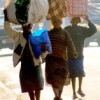
DEVELOPMENT-ZIMBABWE: Ground Realities Stall Basket Fund Take Off
In 2006, there was shared concern among donors and women’s organisations over the fragmented approaches to gender and women’s empowerment programmes in Zimbabwe.MEXICO: Native Women Mobilise for Their Rights
If the Mexican government has not addressed the demands of indigenous women in the southern state of Oaxaca by the end of the first week of September, 10,000 native women will travel to the capital to directly pressure President Felipe Calderón. "We are fed up," said one of the leading activists.
Q&A: "Where Women Can't Thrive, MDGs Are in Jeopardy"
Ines Alberdi has worked for over 25 years on gender issues and in politics.
SRI LANKA: ‘Animal Tracks’ Lead Villagers Out of Poverty
An impoverished village in southern Sri Lanka is slowly pulling out of poverty by churning out terra cotta moulds of animal footprints for tea connoisseurs all over the world.MEXICO: Conservatives Lose Key Battle Against Abortion
The Mexican government, Catholic Church and conservative groups lost a crucial battle Wednesday in their fight against abortion, which was legalised in the capital in April 2007.
POLITICS-US: Women Take the Platform at Dem Convention
From the party platform ratified by delegates between speeches Monday, to primetime, headlining speeches by two heavy hitters in the election - Sen. Hillary Clinton and first-lady hopeful Michelle Obama - the initial two days of the Democratic National Convention were dominated by women.RIGHTS-SWAZILAND: Women Challenge King Mswati
Hard on the heels of the signing of the Gender Protocol at the Southern African Development Community (SADC) heads of state summit, Swazi women have challenged King Mswati III on the monarchy's lavish lifestyle in the face of abject poverty and disease.SIERRA LEONE: Commission Launches First Human Rights Report
A barefoot girl watches expressionless as men clad in expensive suits and women in designer clothes make their way on foot to the Community Centre in Kroo Bay, Freetown. They are here to launch the first ever State of Human Rights Report for Sierra Leone; Zainab, 12, is in the midst of another day on the narrow, muddy streets of the area, selling groundnuts to help support her family.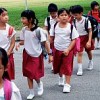
SINGAPORE: Population Decline – Enter the Matchmaker
After failing to induce young people to marry early and raise families with tax breaks and ‘baby bonus’ schemes, the government appears ready to fall back on the matchmaker to give the stork a chance.BURMA: Suu Kyi – A Living Legend
Nyo Ohn Myint still remembers the moment, 20 years ago, when the legend of Aung San Suu Kyi began. He was there when she gave a stirring speech and became the symbol of hope for a country under the oppressive grip of military rule since 1962.AUSTRALIA: Combined Effort to Tackle Human Trafficking
A new collaborative approach among Australian government, police and non-governmental organisations (NGOs) is being developed to tackle the scourge of human trafficking.RIGHTS-ZIMBABWE: Towards Parity For Women In Politics
In a highly contested election marred by violence and held under very difficult economic conditions, Zimbabwean women politicians defied the odds to participate as candidates in the March 29th elections.POLITICS-SOUTHERN AFRICA: Ground-breaking Gender Protocol Signed
Gender activists breathed a sigh of relief when a long-delayed gender protocol was signed at the Southern African Development Community (SADC) summit this weekend. Women bear the brunt of social injustice and problems on the African continent, ranging from access to clean water, poor health care, access to economic opportunities or adequate protection before the law.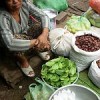
CAMBODIA: 'Getting Decent Jobs for Women – The Challenge'
‘Women are cloth, men are gold’. This traditional Khmer saying is quoted by many studies on gender in Cambodia as emblematic of the different value accorded to men and women in this country of 14 million.
POLITICS-ANGOLA: Ambitious Plans For Women's Participation
Nearly a third of candidates in Angola's upcoming parliamentary elections are female, thanks to a new quota imposed by the government. The 30 percent rule was designed to bring more women into the country's parliament, but as campaigning gets under way, women continue to stay in Angola's political shadows, barely visible at rallies and with few holding senior party positions.HEALTH: Conflicts Make Women More Vulnerable to HIV
"I’m a survivor, and if I can live through all that has happened to me, so can other women," said Floride Nyiraneza, 42, who is HIV positive and a widowed mother of four.
HEALTH: Global Village or Sexual Minority Ghetto?
Dealing with transgenders (TGs) can be confusing. Even the organisers of the 17th International AIDS Conference underway in this city failed to accommodate the third gender by providing them separate toilets.
HEALTH: Time To Base Public Policy On Rights
Preaching abstinence to the young has not worked, nor has sex work been eradicated. Experts gathered here for the 17th International AIDS Conference say it is time to put public policies under the microscope and see why they have failed.
Q&A: “Condoms Have To Be Used To Be Useful”
Of the over 30 million people living with HIV, half are women and the rate of infections in women is rising, particularly in sub-Saharan Africa. What’s more, women’s rights groups say gender inequalities are fuelling the epidemic - there is an irrefutable feminisation of HIV.
Q&A: “Policy Incoherence” Frustrates Funding for Gender Equity
Inequality between men and women "is not always linked to poverty. We must not postpone action until we are rich and happy, because we may get rich without achieving gender equality," Roberto Bissio, coordinator of the international network Social Watch, told IPS.« Previous Page — Next Page »


Women make up half the world's population, but don't nearly share half of the world's wealth, well-being and opportunity. Two-thirds of the world poor are women, disproportionally exposing women to precarious living conditions, disease and unmitigated natural disasters. The media, meanwhile, remains a male-dominated sector in much of the world, contributing to women's voices lacking a crucial amplifier to put their concerns on political agendas and unleash the development potential of their ingenuity. Rather than then stereotypical victims of local and global forces, women are also organizer, innovators, conservators and community builders. These are some of their stories.

The Week with IPS

NEXT STOP - SDGs
Tracking global progress towards a sustainable world
Tracking global progress towards a sustainable world
