Languages
Tuesday, November 17, 2026



News and Views from the Global South
Gender
UGANDA: Women Wield Fair Trade Tools to Beat Poverty
Producing baskets and mats in central Uganda has traditionally been women’s work. Women made these items for use in homes. The National Association of Women Organisations in Uganda (NAWOU) has changed this practice into a powerful force fighting poverty.LATIN AMERICA: Quotas Alone Won’t Give Women Equal Power
A collection of studies published in Argentina shows that quotas for women on electoral candidate lists have been successful in achieving a certain level of gender balance in the parliaments of many Latin American countries. However, it says that more tools are needed to accelerate the process.DEVELOPMENT: Huge Gender Gap Between Rhetoric and Reality
When over 150 world leaders attend a summit meeting next week to discuss the status of the U.N.'s eight Millennium Development Goals (MDGs), one of the primary issues on the agenda will be goal number 3: promoting gender equality and gender empowerment.
RIGHTS: Women Fight to Put Violence on Global Agenda
Joyce and Tanya - two women of different ages, nationalities, cultures and religions - share something: both became victims of a missing goal.DEVELOPMENT: Millions More Children Attending School
Despite the world not being on track to meet the Millennium Development Goals (MDGs), there has been real progress - even in some of the world's poorest countries.
RIGHTS-AFRICA: Prisons Under the Magnifying Glass
"Prisons worldwide face the same crises and problems as those in Africa," says Jeremy Sarkin. Chronic overcrowding, unsafe and unhealthy living conditions, lack of resources, and violence can be found on every continent.
POLITICS-MAURITIUS: Women Still Seeking the Political Kingdom
Mauritius - along with Botswana, Malawi and Madagascar - did not sign the Gender Protocol at the Southern African Development Community (SADC) summit in August. While the island nation has made some recent progress in political representation of women at the level of Parliament, much remains to be done to allow women to enjoy their full rights in the political arena.KENYA: Ready For New Abortion Law?
In May 2008, a group of civil society activists launched a campaign to reform Kenya's archaic abortion laws, sparking a countrywide debate. Now, as a new draft bill on women's reproductive health and rights seeking to decriminalise abortions is set to be tabled in parliament, the battle lines between opponents and advocates of abortion are clearly drawn.
PERU: Birthing Houses Combine Native Traditions, Modern Medicine
"Ashaninka women give birth at home, in accordance with tradition," declares José Ponce, the head of the health committee in Puerto Ocopa, a village of 253 Ashaninka indigenous families deep in the central Peruvian jungle.
RIGHTS-PAKISTAN: Live Burial of Women – Activists Demand Action
Prominent civil rights activists are demanding that the government act against those responsible for the burial alive of five women in Balochistan, in July, that politicians from the province have defended as an age-old custom.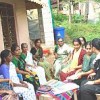
INDIA: Empowering Women is About Basic Funding
Kudumbasree (Family Prosperity) is India’s one success story in getting down to the job of helping poor women take care of their own basic needs - from health care and housing to self-employment.SOUTH AFRICA: Will Gender Protocol Help Business Women?
South African women in business welcomed the recently-signed South African Development Community (SADC) Gender and Development Protocol, but are sceptical about its ability to truly achieve greater gender equality in business and trade.BRAZIL: Parties Fielding Too Few Women in Local Elections
There are still too few women on the lists of candidates for Brazil’s municipal elections in October - another example of the distance between political parties and society which has led to the loss of credibility of political institutions.
TRADE-KENYA: A Woman Navigating the Obstacles to the ‘Big Money’
‘‘I enjoy the trade,’’ says Sonia Gateri as she ushers me into her office next to the Yaya Centre in the Kenyan capital. It is a hot afternoon and she has been busy most of the morning, preparing for a trip to Tanzania later in the evening.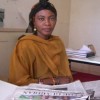
Q&A: "We Will Write About Them"
While formal publishing companies in Nigeria languished through the economic crises that accompanied the structural adjustment programmes of the late 1980s and early 1990s, young Hausa writers began writing about their lives and contemporary problems they faced. Bypassing formal publishers, they self-published their novels, often with the help of a writers' cooperative.
RIGHTS: Swazi Law And Custom Under Pressure
When the women's movement in the southern African kingdom of Swaziland took to the streets in August to challenge what they called extravagance by the royal family, Swazi traditionalists were livid.
RIGHTS-SOMALIA: Building Women’s Leadership
The moderator raps her pen on the table to hush the boisterous assembly of Somali women gathered in Bagamoyo, on the Indian Ocean coast of Tanzania. Their voices drop for a moment before the sound level rises again to a heated crescendo.
Q&A: 'Our Voices Have Been Heard'
As the Third High Level Forum on Aid Effectiveness draws to a close in the Ghanaian capital, gender activists are reflecting on the way ahead.
DEVELOPMENT-CAMEROON: Microfinance Succeeding Despite Obstacles
Mrs Adjoumi Hamidou is the President. One of three surviving widows of Ali Hamidou, she heads Akoldiningnal, a collective that runs a multi-cereal mill at Gashiga village, 15 kilometres from the capital of Cameroon's North Province, Garoua.
DEVELOPMENT: Accra Agenda for Action – A Step Backwards?
Ahead of the Third High Level Forum on Aid Effectiveness (HLF3), opening in Accra on September 2nd, representatives of civil society at a parallel forum have raised concerns that the HLF could represent a step backwards in efforts to improve aid effectiveness.
DEVELOPMENT: Peace Baskets Bring Hope to Rwandan Women
In the courtyard of a red brick home in the district of Gitarama outside Kigali, three women sit together on a bench, laughing and gossiping as they wrap lengths of crimson twine around a curl of bunched straw. While it may seem like little more then Rwandan tradition, these weavers represent an economic success the tiny landlocked country has earned by the hands of its women.« Previous Page — Next Page »


Women make up half the world's population, but don't nearly share half of the world's wealth, well-being and opportunity. Two-thirds of the world poor are women, disproportionally exposing women to precarious living conditions, disease and unmitigated natural disasters. The media, meanwhile, remains a male-dominated sector in much of the world, contributing to women's voices lacking a crucial amplifier to put their concerns on political agendas and unleash the development potential of their ingenuity. Rather than then stereotypical victims of local and global forces, women are also organizer, innovators, conservators and community builders. These are some of their stories.

The Week with IPS

NEXT STOP - SDGs
Tracking global progress towards a sustainable world
Tracking global progress towards a sustainable world
