Languages
Tuesday, November 17, 2026



News and Views from the Global South
Gender
POLITICS-KENYA: Broken Bodies, Unbroken Spirit
It was a sad occasion, and an occasion to rejoice. Sad, said Dr Ludeki Chweya, introducing Flora Terah's new book, because her heart-wrenching story shows that physical abuse and torture are a weapon of choice to deter women's participation in electoral politics in Kenya.MALAYSIA: Emerging Trend in Trafficking Tribal Women
An emerging trend in the trafficking of tribal people, mostly young girls, is raising concern among government officials, rights organisations, migration experts and human rights lawyers.
POLITICS-NAMIBIA: Gender Equality – Making The Numbers Count
Namibian gender activists applaud the goal of a 50/50 split of women and men in government by 2015, but warn that the real work is only just beginning.RIGHTS-PAKISTAN: Civil Society United Against 'Honour' Killings
The current campaign against "honour" killings in Pakistan led by anti-death penalty NGOs has support from lawmakers and lawyers pressing for modifications of Islamic law to prevent perpetrators from evading justice.
POLITICS-GUINEA: "Sheep Who Vote?" Women Say No
Long absent from the top posts in the civil service and under-represented in political parties, Guinean women are calling for changes during legislative elections planned for December.
POLITICS-SIERRA LEONE: The Ups And Downs Of Zainab Bangura
Her reputation as a fiery orator is enhanced whenever she takes the podium, her punch softened by her broad smiles and gorgeous attires in West African style.
ARGENTINA: Women Create Food and Jobs in Wetlands
Wearing a cap and a white apron, Melina Lucero cuts the heads and tails off fish caught in the Paraná River, before skilfully filleting them. Her co-workers will process and package the fish to sell as traditional, small-scale fish preserves at food fairs along the banks of the river in Argentina.
UGANDA: Radio Drama Strengthens Women’s Voices
Fifteen-year-old Taboni's parents are in a bind. Their daughter has been raped by the commandant of the squalid internally-displaced persons camp they call home, and they do not know what to do.
POLITICS-SWAZILAND: Struggling Against Tradition
The crowd ululated, whistled and danced. Their candidate had won! Last Sunday, the people of Mbabane East returned Esther Dlamini to Swaziland's House of Assembly for a second term.
POLITICS-ANGOLA: Boys’ Club No Longer
Something looked very different at the inauguration of Angola’s newly elected parliament, held Tuesday at the Talatona Convention Centre in Luanda, the capital - this is not a boys' club any longer.SOUTH SUDAN: Growing Women's Power in Government
When Sabrina Dario Lokolong, the Speaker of South Sudan's Eastern Equatoria State Assembly, enters or leaves Parliament, all the other members of parliament must stand up.
RIGHTS-PAKISTAN: Rape Survivor Families Struggle Against Odds
Rape and sexual violence are endemic in Pakistan, but cases are rarely registered. Few survivors and their families can withstand the pressure to compromise with the assailants over the years the cases drag on.LABOUR-ASIA: Migrant Women’s Success Adds To Brain Drain
Liana Garcellano was teaching in a private school here in the Philippines when she got an offer to teach English in Singapore. Though quite happy with her job in her home country, the promise of higher pay and career advancement spurred Garcellano to try her luck overseas.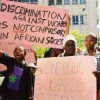
POLITICS-ZIMBABWE: Now To Share Power With Women
The ink was barely dry on the power-sharing agreement signed by Zimbabwe’s main political parties on Sep. 15 when women activists demanded a fair share of power.DEVELOPMENT: Social Cost of Migration Hits Women, Families
Carla Danao is hit by guilt and pain every time she comes home to the Philippines for a visit. This was especially true in August, when she returned to realise that she had been far away and unavailable for her 12-year-old daughter when she had her first menstrual period.
DEVELOPMENT-TANZANIA: Lighting Up Women’s Lives
Anneth Laizer shoved her kerosene lantern onto the top shelf and switched on the lights after her home in Tanzania's third-largest city, Arusha, was connected to electricity earlier this year.DEVELOPMENT: Presidents Boost Maternal and Child Health
As world leaders gather at the United Nations to discuss progress toward achieving the Millennium Development Goals (MDGs), Presidents Michelle Bachelet of Chile, Tarja Halonen of Finland, and Jakaya Mrisho Kikwete of Tanzania are calling for more attention to be paid to maternal and child health.
DEVELOPMENT: Poverty Hearings Show People Behind the Numbers
Benjamine Agbodjan Ablavi of Togo says she scraped together the money to pay her own school fees by selling fruit.LABOUR: Abuse, Alienation Daily Fare for Women Migrants
Sexual abuse, harassment, poor living conditions and disconnection with their families and own cultures - these are real-life stories that Sharu Joshi Shrestha hears from many Nepali, Bangladeshi and Sri Lankan women migrants who come to her office each day.RIGHTS-US: Asylum Courts Mishandled Gender Violence Case
A woman who was denied asylum in the U.S. despite her fears that she would suffer additional female genital mutilation if she was deported to her native Mali has been given a second chance.
POLITICS-ZIMBABWE: Blazing a Trail For Women Politicians
You could spot her easily in the evening newscasts: the only woman among the grey-suited men daily accosted by reporters as they emerged, tense and tight-lipped, from the closed-door meetings.« Previous Page — Next Page »


Women make up half the world's population, but don't nearly share half of the world's wealth, well-being and opportunity. Two-thirds of the world poor are women, disproportionally exposing women to precarious living conditions, disease and unmitigated natural disasters. The media, meanwhile, remains a male-dominated sector in much of the world, contributing to women's voices lacking a crucial amplifier to put their concerns on political agendas and unleash the development potential of their ingenuity. Rather than then stereotypical victims of local and global forces, women are also organizer, innovators, conservators and community builders. These are some of their stories.

The Week with IPS

NEXT STOP - SDGs
Tracking global progress towards a sustainable world
Tracking global progress towards a sustainable world
