Languages
Saturday, November 7, 2026



News and Views from the Global South
Gender

To Achieve Gender Equality Within, the UN Must Do More to Tackle Sexual Harassment
In September 2017, Secretary-General António Guterres launched the “System-wide strategy on gender parity”, which set the goal of reaching gender parity within the United Nations by 2028 and outlined a strategy on how to achieve this, including the introduction of special measures, senior appointments, targets and accountability, amongst other things.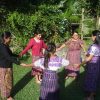
To Achieve Progress on Gender Equality, Gender Data Must Be at the Forefront
In 1995, world leaders gathered in Beijing for the Fourth World Conference on Women and adopted the Beijing Declaration and Platform for Action. This marked a significant turning point for the global agenda for gender equality. This week, a high-level event will take place as part of the United Nations General Assembly to celebrate the meeting’s 25th anniversary. However, despite ambitious commitments to gender equality, nearly 25 years later, progress still lags far behind.
Q&A: How Fast Fashion Sits at the Crucial Intersection of Environmental & Gender Justice
Racism “keeps the global north oblivious to the effect of fast fashion addiction on the global south” say environmental and gender justice experts.
Judgment Free Online Platform Key to Helping Suicidal People, Says Survivor
Romana Hoque had it all, a comfortable life, a happy family. Despite this, the 43-year-old second-generation immigrant from Indonesia living in the United States was depressed enough to contemplate suicide.
Why Is Women’s Leadership Not in the Headlines?
The question has never been whether women can lead as capably as men. Women have always led, and women will always lead, especially when the times are hard, and their communities are in need. The question that we need to ask is, why is women’s leadership invisible? Why is their potential and their power stifled?
Central Sahel – Shaping peace together with women and young people Statement for International Peace Day
The countries of Central Sahel—Burkina Faso, Mali, and Niger—face an unprecedented crisis, marked by violent extremism, forced displacement, and rising insecurity. The sharp increase in armed attacks on communities, health centres, schools and other public institutions and infrastructure has disrupted livelihoods and access to social services. The impact on affected people is devastating.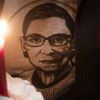
Ruth Bader Ginsburg Forged a New Place for Women in the Law and Society
Justice Ruth Bader Ginsburg’s death has generated an outpouring of grief around the globe. Part of this grief reflects her unparalleled status as a feminist icon and pioneer for women in the legal profession and beyond.
After 75 Years, UN Claims 50:50 Gender Parity, But Falls Short of its Ultimate Goals
When the United Nations was dominated by men, holding some of the highest positions in the staff hierarchy, women staffers were overwhelmingly administrative secretaries seen pounding on their Remington typewriters seated outside their bosses’ enclosed offices.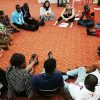
The Culture of Peace: Change our World for the Better in the Age of COVID 19
Last year, we paid tribute to the 20th Anniversary of the 1999 Declaration of the Program of Action on a Culture of Peace. Today, we need to ask ourselves if we had genuinely carried out our moral responsibilities to transition from a culture of hatred and violence to a culture of tolerance and peace.
Impact of COVID-19 on Women and Children
The impacts of crises are never gender-neutral and COVID-19 is no exception. The pandemic has resulted in increased rates of violence against women and has exacerbated challenges in accessing justice. Women are losing their livelihoods faster than men.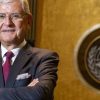
INTERVIEW: the top diplomat shepherding the General Assembly through its 75th year
The Turkish diplomat elected to be the president of the 75th session of the UN General Assembly, Volkan Bozkir, is taking on the role as the Organization grapples with an unprecedented pandemic, and questions surrounding the future direction it should take.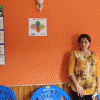
Acidic Masculinity
The recent attack on 22 year old Pavitra Karki has yet again stoked the discourse on acid attacks and gender based violence in Nepal. Pavitra is one of the many young women in Nepal who were targeted by young males, a tragic but more and more common occurrence in the country and elsewhere in South Asia.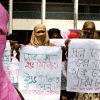
UN Women Calls for Accelerating its Unfinished Business
Twenty-five years ago, the Fourth World Conference on Women in Beijing set a path-breaking agenda for women’s rights. As a result of the two-week gathering with more than 30,000 activists, representatives from 189 nations unanimously adopted the Beijing Declaration and Platform for Action.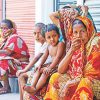
Women’s access to stimulus packages and post Covid-19 gender equality
All crises—natural disasters, wars, pandemics—affect different sections of people in different ways. Like any other crisis, Covid-19 has differing impacts on society. It has affected men and women, rich and poor, and adults and children differently. Since the ramifications of the coronavirus pandemic vary across people, measures towards the recovery from this crisis should also be focused towards each section of society distinctively.
Technology Meets Creativity on Women’s Empowerment Platform
Eight years ago, at the age of eleven, Fuzia co-founder Riya Sinha decided to start a writing club for school girls. Stemming from this initiative a few years later Sinha, along with co-founder Shraddha Varma, decided to start the online platform for women. Their story and Fuzia's DNA are intrinsically wrapped around each other – and highlight how even in the age of feminism where women’s voices tend to be drowned out, a platform for them can become a global success.
Amazon ‘Women Warriors’ Show Gender Equality, Forest Conservation Go Hand in Hand
On an early December morning last year in the state of Maranhão, Brazil, half a dozen members of the Indigenous Guajajara people packed their bags with food, maps and drone equipment to get ready for a patrol. They said goodbye to their children, uncertain when, or whether, they would see them again. Then, they hoisted their bags over their shoulders and set out to patrol a section of the 173,000 hectares (428,000 acres) of the primary rainforest they call home.How Two Young Women Are Working to Improve Access to Contraception in Trinidad and Tobago
According to a 2016 Guttmacher Institute study, 60% of girls ages 15-19 in developing countries who want to avoid pregnancy do not have access to modern contraceptive methods. Women Deliver Young Leaders Kizanne James and Khadija Sinanan dive deeper into stigma around contraceptive use in their home country of Trinidad and Tobago as part of their projects as World Contraception Day Ambassadors.
How Women & Girls are Forced to Trade Sex for Water
There is an intimate connection between corruption and COVID-19. This pandemic is making everyday life more desperate, especially in poorer communities, and that means more opportunities for those preying on vulnerable people.
Put Gender Equality at the Heart of the Post-COVID-19 Economic Recovery
The pandemic is disproportionately affecting women workers. Governments should prioritize policies that offset the effects the COVID-19 crisis is having on their jobs.
Report Shows Sri Lanka has Escalation of Violence During COVID-19 Lockdown
The coronavirus pandemic has resulted in the escalation of violence against women and children in Sri Lanka.
Sudan May Have Banned FGM, but the Harsh Practice Continues
Just four months ago, Sudan took the monumental step to ban female genital mutilation, a painful, unnecessary and dangerous procedure that leaves lasting scars. Generally carried out on girls before they reach puberty, genital mutilation is now punishable in Sudan by up to three years in prison and subject to a fine.« Previous Page — Next Page »





Women make up half the world's population, but don't nearly share half of the world's wealth, well-being and opportunity. Two-thirds of the world poor are women, disproportionally exposing women to precarious living conditions, disease and unmitigated natural disasters. The media, meanwhile, remains a male-dominated sector in much of the world, contributing to women's voices lacking a crucial amplifier to put their concerns on political agendas and unleash the development potential of their ingenuity. Rather than then stereotypical victims of local and global forces, women are also organizer, innovators, conservators and community builders. These are some of their stories.

The Week with IPS

NEXT STOP - SDGs
Tracking global progress towards a sustainable world
Tracking global progress towards a sustainable world
