Languages
Friday, November 20, 2026



News and Views from the Global South
Global Geopolitics
Q&A: ‘Nuclear Energy Is Not a Solution to Climate Change’
As the threat of nuclear weapons looms large over the very existence of life on earth, Dr Sue Wareham, International Campaign to Abolish Nuclear weapons’ (ICAN) Australian board member, is calling for a speedy abolition of these weapons and the rejection of nuclear power as a solution to climate change.AFGHANISTAN: Troop Surge Spurs Obama’s Popularity
A poll released today finds that support among the United States public for President Barack Obama’s troop "surge" in Afghanistan has risen sharply since he delivered his speech last week. But, a plurality of the U.S. public do not believe Obama will follow through on his commitment to begin a withdrawal of U.S. forces in 18-months.
CLIMATE CHANGE: No Closed Doors at Parallel Summit
Two blocks from the Metro station on the busy M-1 Line, the first indication that pedestrians are slipping into the space-time continuum known as the "Free City" is the ubiquitous graffiti and occasional "boom!" of small explosive devices like M-80s echoing through the cobbled streets.GENDER: U.N. Women’s Treaty Weakened by Slew of Reservations
A landmark U.N. treaty on women’s rights, which will be 30 years old next week, is in danger of being politically undermined by a slew of reservations by 22 countries seeking exemptions from some of the convention’s legal obligations.
CLIMATE CHANGE: Latin America Between Hope and Realism
Latin America has come to Copenhagen with the goal that the wealthy nations of the North pay their climate debt by reducing greenhouse gas emissions and providing resources to developing nations. But facing the risk that this strategy could fail, the Latin American representatives are also willing to accept some compromises.
CLIMATE CHANGE: Deal On Forests Likely, But…
As debate ratchets up ahead of working out a climate change deal, a Dutch study says emissions from deforestation and land degradation are far lower than has been assumed. Will this have an impact on a deal to protect forests in Africa?
OIL: A Market Psychology of Fear?
With or without a binding deal at the climate talks in Copenhagen this month, it seems the world may have to cut its oil consumption, as emerging geological and economic trends limit the availability and affordability of petroleum.US-SRI LANKA: Senate Report Urges Warmer Ties
Despite ongoing concern about the country’s human-rights situation, the United States should seek a more positive relationship with strife-torn Sri Lanka, primarily for geo-political reasons, according to a new report released here Monday by the Senate Foreign Relations Committee.
CLIMATE CHANGE: Beware of Carbon Trading Trap Warn Activists
As the climate change summit in the Danish capital moves into a second day, environmental groups warn that by pushing carbon offsetting and trade, governments of developed countries are bypassing their responsibility to significantly reduce domestic emissions and provide aid to developing countries.POLITICS-ASIA: Inter-religious Forum Calls for Nuclear Abolition
For the global religious community, the use of nuclear arms is an overwhelmingly important ethical issue for the human family. Thus, nothing less than the immediate abolition of such weapons is needed from the highest levels, said speakers at the Parliament of the World’s Religions currently underway in this Australian city.AFGHANISTAN: Gov’t and Donors Fail to Protect Women’s Rights
Attention over the past week has focused on United States President Barack Obama’s decision to "surge" troop levels in Afghanistan to 30,000 and begin a drawdown in 18-months, but a new report calls attention to the failure of the Afghanistan government and international donors to protect women’s rights.CLIMATE CHANGE: Greenhouse Gases Endanger Public Health – EPA
Twelve years after the climate change meetings in Kyoto, a much changed U.S. will show up at the Copenhagen conference this week, and, following recent developments in Washington, their ability to offer and agree to international climate actions has likely never been higher.US: Whistleblower Psychiatrist Warns of Soldier on Soldier Violence
Kernan Manion, a psychiatrist who was hired last January to treat Marines returning from war who suffer from post-traumatic stress disorder (PTSD) and other acute mental health problems borne from their deployments, fears more soldier-on-soldier violence without radical changes in the current soldier health care system.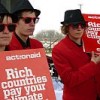
CLIMATE CHANGE: Rich Nations Resist Binding Commitments
Betrayal and backsliding by rich countries marks the beginning of the final negotiations for a global climate treaty, according to many developing world participants at the U.N.-sponsored talks here.TRADE: A Lost Decade for the WTO?
Ten years ago, the Seattle Ministerial of the World Trade Organisation (WTO) flashed over into a ‘Battle of Seattle' before the eyes of a startled world.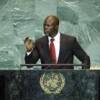
Q&A: “Copenhagen Should Target the Developed World”
Although a professional actor by trade, Djimon Hounsou takes his role as a campaigner against climate change at the U.N. seriously, and hopes to see a strong mandate reached in Copenhagen that puts the spotlight on developed countries to reduce their greenhouse gas emissions.
CLIMATE CHANGE: Hunger Strikers in “Moral Call to Action”
Hoping to emotionally engage world leaders and ordinary citizens, hundreds of people from around the globe have entered their fifth week of fasting at the start of the Copenhagen Climate Conference.
Q&A: ‘Economic Growth Is Making us Poorer’
Dinner one evening when he was a kid put William Rees on track to becoming a sustainability pioneer. It was after a day at work on the family farm when he was nine or 10. He saw he had had a hand in growing everything on his plate. That brought a fascination with a connection to earth that would never leave him.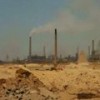
CLIMATE CHANGE: Carbon Projects Waiting to Exhale
Initiatives to reduce Egypt's greenhouse gas emissions could get a big push if world leaders and environment officials meeting in Copenhagen for climate talks that start Monday agree to maintain or enhance the carbon trading framework.CHINA: One Green Leap Forward, Two Steps Backward
With low carbon seen as the new buzzword for government promotion and backed by Beijing as the new economic growth engine, China is poised for a green leap forward.
Q&A: ‘Asia Can Set Its Own Carbon Emissions Target’
As the Climate Change Conference opens today in Copenhagen, excitement— even anxiety—is steadily building over the potential outcome of one of the most awaited events of the year.« Previous Page — Next Page »


Is the world dominated by three great empires -- the U.S.A, China and the European Union? How much power do the great behemoths of the south -- India, Brazil, and South Africa -- wield? And where does Russia fit in that equation? Are we in the middle of a new Cold War? What are the implications of the armed conflict with Georgia? What about the new axis: Venezuela-Russia? And what role does Turkey play? What about issues like Climate Change and other global forces like the food crisis and the high energy prices? How is all this reshaping the world's forces? IPS looks for some answers.

The Week with IPS

NEXT STOP - SDGs
Tracking global progress towards a sustainable world
Tracking global progress towards a sustainable world
