Languages
Monday, November 23, 2026



News and Views from the Global South
Global Geopolitics
TRADE: ''Doha Collapse Won't Mean Suffering for The Poor''
At the heart of the collapse of the World Trade Organisation’s Doha Round last week are the different opinions on liberalisation and its relation to development. Developed countries promote the idea that liberalisation will bring about development and thus that the failure of the Round constitutes a blow for the poor.
Q&A: "Seven Million People Still Lack AIDS Treatment"
A greater commitment to universal access to anti-HIV therapies and to the defence of health workers in impoverished countries are two achievements noted by Argentine physician Pedro Cahn as president of the scientific society that organised the XVII International AIDS Conference.
HEALTH: Time To Base Public Policy On Rights
Preaching abstinence to the young has not worked, nor has sex work been eradicated. Experts gathered here for the 17th International AIDS Conference say it is time to put public policies under the microscope and see why they have failed.MEDIA-AUSTRALIA: TV Network Denies Censor Role in China
An electronic paper trail indicates that one of Australia’s leading television networks may be involved in dissuading foreign media in China against covering "forbidden" topics.HEALTH: Not Enough AIDS Funds and Not Always Well Spent
Developing countries are in need of large sums of money to fight diseases like HIV/AIDS, but international aid will not entirely cover their needs.
Q&A: “Condoms Have To Be Used To Be Useful”
Of the over 30 million people living with HIV, half are women and the rate of infections in women is rising, particularly in sub-Saharan Africa. What’s more, women’s rights groups say gender inequalities are fuelling the epidemic - there is an irrefutable feminisation of HIV.RIGHTS: Human Rights in the Age of Counter-Terrorism
Member states of the U.N. have frequently disregarded international human rights laws and principles in the name of counter-terrorism, an expert panel here found.
Q&A: “Policy Incoherence” Frustrates Funding for Gender Equity
Inequality between men and women "is not always linked to poverty. We must not postpone action until we are rich and happy, because we may get rich without achieving gender equality," Roberto Bissio, coordinator of the international network Social Watch, told IPS.TRADE-CHINA: Food Security Prompted Tough Line at Geneva
China's tough stance at the 'Doha' trade talks in Geneva has less to do with political posturing than with the country's long-standing obsession with food security, experts here suggest.TRADE-AFRICA: Safeguards for Small Farmers Straw That Broke Doha
Safeguards to protect small farmers’ livelihoods in African and other developing states, as opposed to subsidies for commercial agricultural interests in rich countries, remained an insurmountable obstacle in the World Trade Organisation (WTO) talks, leading the Doha Round to collapse last week.HEALTH: Stepping Up the Response to AIDS
It is necessary to evaluate the current global architecture for responding to the AIDS epidemic, move forward with studies on HIV rates, and implement effective prevention strategies, said the experts meeting at the 17th International AIDS Conference, which opened Sunday in Mexico.RIGHTS-US: ‘When You Have To Leave America To Be Free’
Nearly three years after the U.S. government failed to convict Palestinian activist and former college professor Sami Al-Arian of any charges in one of the most high-profile terrorism trials following the 9/11 terrorist attacks, he continues to be held in federal prison - where, if convicted in an upcoming trial on criminal contempt charges, he faces the prospect of remaining for decades.HEALTH: March Sets Tone For AIDS Conference
The rain gods failed to dampen spirits of activists gathered at the old city centre of Zocalo to protest discrimination against those with the HIV virus. Hundreds of activists dressed in bright tribal costumes, women dressed as skeletons and one gay man wearing tights assembled ahead of the six-day XVII International AIDS conference, Aug. 3 to 8.TRADE-INDIA: Mixed Feelings Over WTO Failure in Geneva
The collapse of the World Trade Organisation (WTO) negotiations at Geneva has left Indian analysts with mixed feelings. One view is that no deal is better than a bad one. The other is that because the alternative for developing countries is far worse, India should have been more flexible.
Q&A: “The Momentum of AIDS Prevention Is Waning”
Mexican virologist Dr. Luis Soto Ramírez, co-chair of the 17th International AIDS Conference, which opens Sunday in the Mexican capital, says that ramping up prevention efforts is the most urgent step to be taken in the fight against HIV/AIDS.TRADE: New World Order in Doha’s Wake
The standoff between China and India, the world’s two fastest growing economies, and the United States not only buried the last attempt to save the Doha Round, but also demonstrated changes in the balance of power since the WTO was created in 1995, say observers.
Q&A: Nuclear Arms Are No Longer "Necessary Evils"
As citizens of Hiroshima and Nagasaki are painfully reminded of the horrors of atomic bombings that devastated the two Japanese cities in August 1945, one of the country's most influential peace organisations is intensifying its longstanding efforts for nuclear disarmament.
AGRICULTURE: The Climate Costs of a Glass of Milk
A simple glass of milk on the breakfast table can carry high environmental costs. Because of this, some farmers and scientists are looking for ways to reduce the impacts of agriculture and livestock, which are responsible for 12 to 14 percent of global emissions of greenhouse gases.HEALTH: People Living with HIV Lead the Fight for Life
Anuar Luna was diagnosed with HIV 17 years ago. "I had to overcome feelings of guilt, fear and shame before I became a leader in the HIV-positive community," she said Thursday at the opening of Living 2008: The Positive Leadership Summit, in the Mexican capital.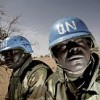
POLITICS: U.N.’s Darfur Force Left Stranded, Critics Say
As the U.N. Security Council debated the wording of a resolution extending the peacekeeping force in Darfur, Sudan for another year, a coalition of human rights groups and NGOs criticised the world body and the international community for failing to back up the mission with basic equipment.BOOKS-US: A Path Out of the Wilderness
Helena Cobban's new book, "Re-Engage! America and the World After Bush", is not aimed at a target audience of officials, policy wonks and Washington elite think-tank types. So much is clear from a tagline running across the bottom of the cover: "An informed citizen's guide."« Previous Page — Next Page »


Is the world dominated by three great empires -- the U.S.A, China and the European Union? How much power do the great behemoths of the south -- India, Brazil, and South Africa -- wield? And where does Russia fit in that equation? Are we in the middle of a new Cold War? What are the implications of the armed conflict with Georgia? What about the new axis: Venezuela-Russia? And what role does Turkey play? What about issues like Climate Change and other global forces like the food crisis and the high energy prices? How is all this reshaping the world's forces? IPS looks for some answers.

The Week with IPS

NEXT STOP - SDGs
Tracking global progress towards a sustainable world
