Languages
Saturday, September 26, 2026



News and Views from the Global South
Global Geopolitics
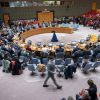
What Does the End of Assad’s Regime Mean for Syria and the Middle East?
The fall of Syrian President Bashar al-Assad came about following a series of coordinated offensive missions spearheaded by the Syrian opposition which resulted in the seizure of the capital city Damascus. In the days following the fall of Assad’s government, the Syrian Civil War has reached a phase of heightened insecurity, plunging Syria into a state of nationwide insecurity.
New Geopolitics Worse for Global South
The new geopolitics after the first Cold War undermines peace, sustainability, and human development. Hegemonic priorities continue to threaten humanity’s well-being and prospects for progress.
U.S.-Backed Israel-Hezbollah Ceasefire Comes Into Effect
A ceasefire between Israel and Hezbollah comes into effect early on Wednesday morning (November 27). It is hoped that this will mark an end to a 13-month-long period of hostilities between the two parties in Lebanon. News of the ceasefire came from United States President Joe Biden, who made a televised announcement on Tuesday afternoon that an agreement had been reached between the Israeli and Lebanese governments. Biden remarked that the ceasefire was expected to be a “permanent cessation of hostilities” from both sides of the conflict.
Western Finance Ruining Economies of the Rest
Western financial policies have been squeezing economies worldwide. After being urged to borrow commercial finance heavily, developing countries now struggle with contractionary Western monetary policies.
Between Harris and Trump, More Doubts Than Certainties for Latin America
Migration, trade, the defence of democracy, the confrontation with China and the collapse of multilateralism are issues that shed more doubts than certainties on Latin America's expectations of the imminent presidential elections in the United States.
Multilateral Systems in Urgent Need of Reform, Says UN Secretary General
As the United Nations gears up to host the international community for the high-level meeting week, the UN chief appeals to world leaders to commit to universal agreements to work towards solutions.
UN’s Five Major Leaders Skip Key Summit
The United Nations, over the last year, has been relentlessly promoting the upcoming Summit of the Future – scheduled for September 22-23—as a landmark event. And rightly so. But, surprisingly, the provisional list of speakers, released early this week, reflects notable absentees for a high-level summit-- the five permanent members (P5) of the Security Council -- whose representatives do not include any head of state (HS) or head of government (HG).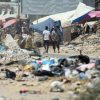
UN Expert Says Impunity for Israel Must End as ‘Genocidal Violence’ Spreads to West Bank
An independent United Nations expert has warned that "Israel's genocidal violence risks leaking out of Gaza and into the occupied Palestinian territory as a whole" as Western governments, corporations, and other institutions keep up their support for the Israeli military, which stands accused of grave war crimes in the Gaza Strip and West Bank.
Israel’s Goal: Smashing Palestinian Legitimacy
Most people think that Israel’s main goal in Gaza is to recover the hostages seized by HAMAS on October 7, 2023 with an announced follow-up mission to eliminate HAMAS as a threat. If you thought that, you would be wrong. Substantial evidence reveals a different strategic aim—destroying every shred of Palestinian legitimacy as a nation.
World Leaders Who Opted to Skip the United Nations
When the high-level segment of the UN General Assembly took place last September, there were several key world leaders missing in action (MIAs)—including, most importantly, leaders of the four of the five permanent members of the Security Council, the most powerful political body at the United Nations.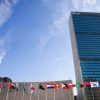
US Support of UN Organizations Must Remain Unabated
During Donald Trump's presidency, the United States withdrew from several international organizations. These include the United Nations Relief and Works Agency for Palestine Refugees (UNRWA), the World Health Organization (WHO), the United Nations Educational, Scientific and Cultural Organization (UNESCO), and the United Nations Human Rights Council (UNHRC).
VIETNAM: ‘Human Rights Conditions Will Likely Worsen as the Country Descends into a Police State’
CIVICUS discusses recent leadership changes in Vietnam with David Tran, coordinator of the Alliance for Vietnam’s Democracy, a civil society platform that promotes democracy in Vietnam and the region through international cooperation and the strengthening of local civil society.

Is the UN Ready for a Second Trump Presidency?
The Communist Manifesto of a bygone era, authored by Karl Marx and Friedrich Engels, begins with an implicit warning: "A specter is haunting Europe—the specter of Communism." And today another specter is haunting-- this time at the United Nations — the specter of a second Trump presidency.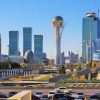
Kazakhstan Takes Lead in Global Push for Nuclear Disarmament Amid Heightened Tensions
In a world increasingly shadowed by the threat of nuclear conflict, Kazakhstan is stepping up its efforts in the global disarmament movement. On August 27-28, 2024, in collaboration with the United Nations Office for Disarmament Affairs (UNODA), Kazakhstan will host a critical workshop in Astana. This gathering, the first of its kind in five years, is set to reinvigorate the five existing Nuclear-Weapon-Free Zones (NWFZs) and enhance cooperation and consultation among them.
US Fed- Induced World Stagnation Deepens Debt Distress
For some time, most multilateral financial institutions have urged developing countries to borrow commercially, but not from China. Now, borrowers are stuck in debt traps with little prospect of escape.
A Nuclear-Armed European Union? A Proposal Under Fire
The continued veiled threats from Russia, warning of nuclear attacks on Ukraine, have prompted some politicians in Europe to visualize a nuclear-armed European Union (EU).
South Suffering Due to Powerful Nations’ Policies
The World Bank expects the international economic slowdown to be at its worst in over four decades in 2024. This is mainly due to powerful Western nations’ contractionary macroeconomic and geopolitical policies.
Chronicle of a Catastrophe Foretold
The IMF warns of a decade ahead of ‘tepid growth’ and ‘popular discontent’, with the poorest economies worst off. But as with inaction on Gaza, little is being done multilaterally to avert the imminent catastrophe.
Tensions with China Drive Investors Towards Vietnam
In recent months, several European representatives embarked on trade missions to Vietnam. German President Steinmeier visited Hanoi in January. The Netherlands sent Prime Minister Mark Rutte, with the Dutch royal couple, King Willem-Alexander and Queen Máxima, soon to follow suit. Notably, the Netherlands stands as the most significant European investor in Vietnam.
IMF Urges Non-alignment in Second Cold War
The IMF no. 2 recommends non-alignment as the best option for developing countries in the second Cold War as geopolitics threatens already dismal prospects for the world economy and wellbeing.
Industrial Policy, East or West, for Development or War?
Developing countries wanting to pursue industrial policy were severely reprimanded by advocates of the ‘neoliberal’ Washington Consensus. Now, it is being deployed as a weapon in the new Cold War.« Previous Page — Next Page »


Is the world dominated by three great empires -- the U.S.A, China and the European Union? How much power do the great behemoths of the south -- India, Brazil, and South Africa -- wield? And where does Russia fit in that equation? Are we in the middle of a new Cold War? What are the implications of the armed conflict with Georgia? What about the new axis: Venezuela-Russia? And what role does Turkey play? What about issues like Climate Change and other global forces like the food crisis and the high energy prices? How is all this reshaping the world's forces? IPS looks for some answers.

The Week with IPS

NEXT STOP - SDGs
Tracking global progress towards a sustainable world
Tracking global progress towards a sustainable world
