Languages
Wednesday, November 11, 2026



News and Views from the Global South
Global Governance

Culture of Peace Takes Big Stride as UN Observes 20th Anniversary of Norm-Setting 1999 Decision
It has been a long, arduous journey – a journey ridden curiously with obstacles and indifference. Two decades have passed by since the UN General Assembly (UNGA) adopted, by consensus and without reservation, its landmark and norm-setting resolution 53/243 on the Declaration and Programme of Action on a Culture of Peace in 1999.
Kashmir: How Modi’s Aggressive ‘Hindutva’ Project has Brought India and Pakistan to the Brink – Again
August is immensely important in the history of the Asian subcontinent, marking the month that India and Pakistan gained independence from the British in 1947. Now, in 2019, it has once again proved momentous, when, ten days before India’s Independence day celebrations, prime minister Narendra Modi’s government revoked the autonomy of Indian-administered Kashmir – a status provided for under the Indian Constitution.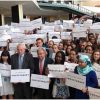
Are 9-to-5 Jobs Fast Becoming History – Even at the UN?
With the rapid leap in digital technology – including increased access to conference calls, e-translations, skype, text messaging and emails—more and more offices in the United States are providing employees with an option to “work from home”.
Is America Defeated in Afghanistan?
Following the 11 September 2001 terrorist attacks on American soil, the United States and their allies went to Afghanistan to “smoke out” Osama bin Laden and his Taliban protectors. The most fundamental primary mistake was to let all terrorists flee to Pakistan instead of sealing the border and capturing their main figures.
Exclusive: Winnie Byanyima Speaks about Inequality in Africa and Next Steps at UNAIDS
 While the 28th World Economic Forum (WEF) on Africa is being held in Cape Town, South Africa this week, the international aid and development charity Oxfam released its latest report: A tale of two continents: fighting inequality in Africa.

UN’s Upcoming Summits May Foreshadow a Revival of Multilateralism or an Obituary for World Order
The United Nations will be hosting six high level plenary meetings –- unprecedented even by its own standards—during the beginning of the 74th session of the General Assembly in late September.
Achieving Global Consensus on How to Slow Down Loss of Land
Expectations are high, perhaps too high, as the 14th Conference of the Parties (CoP 14) of the United Nations Convention to Combat Desertification (UNCCD), now into the third day of its two-week session, is being held outside the smog-filled Indian capital of New Delhi.
U.N. Criticised for Link-up with Saudi Prince MBS
The United Nations is under growing pressure to scrap an event it is co-hosting with the private foundation of Saudi Arabia’s crown prince Mohammad bin Salman, who has been linked to the killing of journalist Jamal Khashoggi.
They Call it Multistakeholderism. Where Does That Leave the UN?
Global governance is slipping away from the United Nations. Whether it is in managing the Internet, where the UN’s governing structure offers only an advisory role for governments; or climate change, where the most exciting actions are now corporate-led partnerships outside the UN Framework Convention on Climate Change; or the Gates Foundation-sponsored Gavi, The Vaccine Alliance, which is in a tug of war with the World Health Assembly on who sets health policy in developing countries, the institutional basis for global decision-making is changing.
Is the UN’s High Seas Treaty Heading Towards Troubled Waters?
The world’s high seas, which extend beyond 200 nautical miles, are deemed “international waters” to be shared globally-- but they remain largely ungoverned.
Reimagining ‘Crazy Rich Asians’ as Social Commentary on Inequalities in Asia-Pacific
It’s 1962, and in a modest Hong Kong neighborhood, a poetic love story unfolds. Filmed almost twenty years ago, Wong Kar-wai’s seminal movie In the Mood for Love captured the world’s imagination about lifestyle in the region.
Triumph of the Right is Changing the World Order
The crisis of regional and multilateral institutions goes hand in hand with the international rise of right-wing populism. In the US, the UK, Russia, Italy, Poland, Hungary, Turkey, the Philippines and Brazil, we are experiencing the rise of right-wing populist politicians who throw headline-grabbing barbs at global compromises and the negotiating processes of supranational institutions such as the UN.
UNICEF’s Goodwill Envoy a Messenger of ill-Will, Complain Critics
When two-time Wimbledon tennis champion Boris Becker, a UNICEF goodwill ambassador, refused to make a commitment not to play in South Africa, a country blacklisted for its apartheid policies, the UN children’s agency stripped him of the prestigious title, back in October 1987.
Close the Door on Nuclear Testing
Everybody knows that nuclear weapons have been used twice in wartime and with terrible consequences. Often overlooked, however, is the large-scale, postwar use of nuclear weapons:
Sudan Transition an “Opportunity” to End Darfur Crisis
Sudan’s transition to civilian rule offers a chance to end the ethnic violence that plagues the western province of Darfur and end a peacekeeping mission there, a top United Nations official said Monday.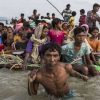
After Two Years of Horrors in Burma, the U.S. Is Still Doing Too Little, Too Late
Monsoon season is currently wreaking havoc on the more than 911,000 Rohingya refugees displaced from their homeland in Burma (Myanmar) to the ramshackle camps of Cox’s Bazar, Bangladesh.
Hong Kong Protests: A Peaceful and Violent Weekend
 As protests in Hong Kong continue over the weekend, thousands of people joined hands to form a human chain that stretched across the city on Friday. It was yet another demonstration – this one entirely peaceful – in a series of protests that have rocked the former British colony for the past 12 weeks.

Two Million Children in West and Central Africa Robbed of an Education Due to Conflict
Fourteen-year-old Fanta lives in a tent in a settlement in Zamaï, a village in the Far North Region of Cameroon with her mother and two brothers. They came here more than a year ago after her father and elder brother were murdered and her elder sister abducted by the extremist group Boko Haram.
Little Hope of Justice for Rohingya, Two Years after Exodus
Two years after the start of an exodus of Rohingya civilians from genocide-like attacks in Myanmar, members of the mainly Muslim minority have little hope of securing justice, rights or returning to their homes, according to the United Nations and aid groups.
G7 Leaders Urged to Promote Gender Empowerment
As leaders of the seven major industrialised nations (G7) meet in the coastal seatown of Biarritz in the south west of France, one of the world’s leading women’s organisations is calling for the protection and advancement of women worldwide.
Why Can’t Dynamic Asia-Pacific Beat Poverty?
Asia and the Pacific is lauded globally for its rapid economic growth over recent decades and has lifted 1.1 billion people out of extreme poverty since 1990. Nevertheless, the region continues to have the largest number of poor people in the world.« Previous Page — Next Page »





The Week with IPS

NEXT STOP - SDGs
Tracking global progress towards a sustainable world
Tracking global progress towards a sustainable world
