Languages
Wednesday, November 18, 2026



News and Views from the Global South
Global Governance
Should Sadiq Khan`s Faith Matter?
Sadiq Khan`s brilliant victory as London mayor is a feather in the cap of Jeremy Corbyn and the Labour Party, which the leftist leader is striving to lick into an agreeable shape. How is it of use to be reminded profusely that Khan is a Muslim or is of Pakistani extraction? Parochial exultations here will necessarily smack of hypocrisy and are disingenuous.Refugees and Migrants: A Crisis of Solidarity
This September, the United Nations General Assembly will bring together world leaders to address one of the leading challenges of our time: responding to large movements of refugees and migrants.Identity Politics?
Sadiq Khan is London`s new mayor. Today is his first day in office. Or, as the world`s press would have it, he is London`s first Muslim mayor; the first Muslim mayor of a European capital. As results rolled in on Friday, to show that he had beat the Conservative Party`s Zac Goldsmith 57pc to 43pe, global news headlines began trickling in, with Khan`s religious identity inevitably the adjective of choice.
UN Releases Plan to Increase Refugee Responsibility Sharing
The UN wants to create a new Global Compact to encourage countries to share the responsibility for hosting the 19 million refugees who have fled their home countries.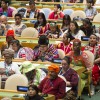
Asia’s Indigenous Communities Marred by Militarisation
Militarisation in indigenous territories in Asia is exacerbating conflict and human rights violations, said Secretary-General of the Asia Indigenous Peoples Pact Joan Carling at an event during the UN Permanent Forum on Indigenous Issues (UNPFII) held here Monday.
MSF Withdrawal Part of Ongoing Debate Over Humanitarian Aid
Aid organisations have differing views about the upcoming World Humanitarian Summit, after Médecins Sans Frontières (MSF) pulled out last week some still hope the Summit will help bring about much needed change.
Let’s Not Forget Disaster Risk as we Rush to Adapt to Climate Change
Helping at-risk communities adapt to climate change impacts is an important part of the Paris Climate Change agreement, but adaptation will not be complete without considering disaster risk.
Nobel Peace Laureates to Help Achieve Food Security
The Food and Agriculture Organisation (FAO) believes that ongoing military conflicts, which have also devastated agricultural crops and livestock, are one of the primary causes of food shortages in war zones in Africa and the Middle East.May Day Hijacked by Politicians
Workers of the world – or at least in Sri Lanka – ‘Divide’. The rallying call of the International Workers, from the barricades as they romantically say, for workers of the world to ‘Unite’ is now a thing of the past. The interests of the working class have been submerged by the interests of the political class.
In 2016 Islamophobia is a Political Tool
 When the blasphemous anti Islam cartoons published in 2006 by a Danish newspaper left 205 people dead, the then Secretary General of the Organization of Islamic Cooperation, Ekmeleddin Mehmet Ihsaoglu, went to see Javier Solana who was responsible for foreign affairs of the European Union. The position of the EU was that there was no islamophobia at all, and this was an isolated incident. Since then, this has been more or less the position of the European institutions.

No Farmers, No Food — True But Not Enough
Agriculture is the primary sector of all economies. It is the sector responsible for granting food and nutrition security to all human beings. Consequently it is responsible for social stability and health. And it provides work opportunities to families, men, women and youth, and largely contributes to the country Gross Domestic Product (GDP).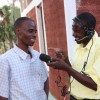
Deteriorating Protection of Journalists’ Sources a Global Problem
The freedom of the press is a universally cherished democratic right, but what may have been overlooked as the World Day Freedom of Information was celebrated on Wednesday is that the ability of journalists to protect their source is increasingly coming under attack by authorities.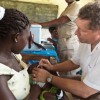
Religious Leaders Can End Harmful Cultural Practices & Advance Women’s Empowerment
Any views expressed in this article are those of the author and not of Thomson Reuters Foundation.
Farmers Hold Keys to Ending Poverty, Hunger, FAO Says
With recent data showing that 793 million people still go to bed hungry, ending hunger and poverty in 15 years is the next development challenge that world leaders have set for themselves.
A Region’s Eyes Turn to Healthy Nutrition
After its remarkable success in reducing hunger, Europe must now rise to the challenge of making sure food assures more than survival and furnishes healthy lives. As head of a global hunger-fighting organization, nothing gives me more satisfaction than to see a vast region of the world achieving food security for its people.
Is the System Broke or Broken?
Though the upcoming World Humanitarian Summit may seem timely, a debate ensues on an important question: is the world humanitarian system broke or broken?World Celebrates 250 Years Since First Freedom of Information Act
Press freedom is not just a beautiful idea but a very concrete thing, included in the UN's Sustainable Development agenda which is meant to lead the humankind to sustainable development, UNESCO's director general, Irina Bokova, said at the opening of the World Press Freedom Day here Tuesday.
On World Press Freedom Day, A View From Asia
Travel in many parts of Asia, as I do, and you are likely to find everyone looking at their smartphones – even in remote areas - hungry for information wherever they can find it.
Could the UN be Doing More to Protect Journalists?
As the world commemorates World Press Freedom Day, a coalition of some 35 press freedom groups is calling on the 193-member General Assembly to appoint a Special Representative of the Secretary General to monitor and oversee the safety of journalists worldwide.
Analysis: The Role of the Free Press in Sustainable Development
This year’s World Press Freedom Day marks the 250th anniversary of the first-ever freedom of information law, enacted in what are now Sweden and Finland. 3 May, 2016 is more than just an important anniversary, however; this is the first celebration of World Press Freedom Day since the adoption of the United Nations’ Sustainable Development Goals. Securing a free press is essential for progress towards achieving these ambitious goals for people and planet by the year 2030.Odd Situation in the “Paradise” of Press Freedom
A strange situation has emerged in Finland where some people feel that the press freedom is currently jeopardised. The small Nordic country is a press freedom celebrity leading the index kept by Reporters Without Borders since 2009 and hosting the UNESCO World Press Freedom Day on May 3.« Previous Page — Next Page »


The Week with IPS

NEXT STOP - SDGs
Tracking global progress towards a sustainable world
Tracking global progress towards a sustainable world
