Languages
Thursday, November 26, 2026



News and Views from the Global South
Global Governance
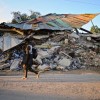
HAITI: Behind the Closed Doors of Port-au-Prince “Reconstruction”
Almost 17 months after the Jan. 12, 2010, earthquake that devastated Port-au-Prince and three other cities, reconstruction of the capital's downtown appears stalled, and over 800,000 people still live in tents – some 30,000 of them right across from the collapsed National Palace.Rule of Law Strongest in Rich Nations, Weakest in Poor
The rule of law - a critical element of good governance - thrives best in Norway, Sweden, and New Zealand and worst in Pakistan, Liberia, Cameroon, Cambodia, Kenya and Venezuela, according to the latest edition of a four-year-old index released Monday by the World Justice Project (WJP).Reducing Soot and Smog Would Help Stabilise Climate
Clean the air, cool the planet and prevent millions of deaths with fast action on soot and smog, a new report urges.Corporate Influence Clouds Vaccine Pledging Conference
Between 2011 and 2012, 6.4 million children could die of preventable diseases, a number greater than the total population of Denmark or Norway.
Biodiverse Venezuela Flunking Basic Conservation
Threats to biodiversity, spreading pollution, degraded river basins and disappearing forests are problems in oil-rich, megadiverse Venezuela, where climate change is knocking on the door.JAPAN: Aid Cut to Hit Health Campaigns
International campaigns against AIDS, tuberculosis and malaria are headed for cuts in funding assistance, now that Japan is reducing its Overseas Development Assistance (ODA) budget in the wake of the disaster that hit the country in March.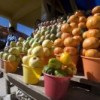
Industrial Food Production Fuels Spread of E. Coli
In the 1998 medical thriller "Toxin" by U.S. novelist Robin Cook, the ground beef in hamburgers is contaminated with a deadly strain of the Escherichia coli or E. coli bacterium, unleashing a massive epidemic. The novel was inspired by a real outbreak that had taken place several years earlier.
Q&A: “Women Have Yielded the Cooking Profession to Men”
"Women didn't want to be slaves any more, or work professionally at what they were trying to liberate themselves from," renowned Venezuelan chef Helena Ibarra told IPS, explaining why women have taken so long to compete in a workplace as symbolically feminine as the kitchen.Canada Spurns Kyoto in Favour of Tar Sands
Canada was roundly criticised by other nations at a major U.N. climate meeting last week after being caught underreporting carbon emissions from its tar sands oil production facilities, one of the country's biggest and fastest growing sources of global warming gases.CUBA: South-South Diplomacy Props Up Economic Modernisation
The diplomatic offensive undertaken by Cuba in recent weeks is propping up the most important medium-term development programmes implemented as part of what the Raúl Castro government describes as the "updating" of the economic system without abandoning socialism.OP-ED: Global CO2 Emissions Reach a New Record High
The alarm bells this time are not being rung by climate scientists or by environmental activists. They are being rung by none other than the International Energy Agency (IEA) - the institution established in the 1970s to defend the interests of Western oil consuming nations.OP-ED: The War in Libya: The African Union’s Mistake of Policy and Principle
Africa's handling of the Libyan crisis at the United Nations has been timorous and confusing, but it presents an opportunity as well as a challenge for the continental body on how it defines its future strategic interests.AIDS Funding Gap Threatens Treatment Targets
A staggering nine million people are still awaiting HIV treatment, yet the 22 billion dollars the Joint United Nations Programme on HIV/AIDS (UNAIDS) says is needed to give them access to medicine and care has far from materialised.
ZIMBABWE: Import of Second Hand Japanese Cars to be Banned
For Mathew Marufu, who has a disabled 10-year-old son, owning a second hand Japanese car has been an ‘answer from God’.MALAWI: Village Hands Join to Save Forest for Juice
Seventy kilometres outside Malawi's commercial capital, Blantyre, a profitable cooperative enterprise is providing villagers jobs and preserving forests.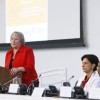
Thirty Years On, AIDS Epidemic a Women’s Battle
As world leaders gather in New York for a high-level conference on HIV/AIDS, United Nations agency heads, goodwill ambassadors and activists alike hope they will remember the virus's most vulnerable victims: women and girls.Russia, China Shield Syria from Possible U.N. Sanctions
A resolution inspired by Western nations critical of civilian killings in politically-beleaguered Syria is facing threats from two veto-wielding permanent members of the Security Council: Russia and China.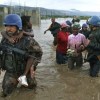
Millions May Soon Be Fleeing the Floodwaters
Mass migration will inevitably be part of human adaptation to climate change, experts agree, since parts of the world will become uninhabitable in the coming decades.
BRAZIL: Haiti Is Here
In the powerful verses of the song "Haiti", Brazilian musicians Caetano Veloso and Gilberto Gil described similarities between two countries at different ends of the development spectrum in Latin America, summed up by the words "Haiti is here".Turning Toward the Sun for Energy
One key component of the Plan B climate stabilisation strategy is solar energy. Solar is even more ubiquitous than wind energy and can be harnessed with both solar photovoltaics (PV) and solar thermal collectors.OP-ED: Religion, Revolution and Two Languages
The elderly Venerable Tep Vong, the Supreme Patriarch of the Buddhist community in Cambodia, traveled to Jaffna in Sri Lanka in the midst of the recent civil war. In a broken city under siege, he joined others - Buddhists, Hindus, Muslims and Christians - to try to bring a peaceful end to the violent separatist conflict.« Previous Page — Next Page »


The Week with IPS

NEXT STOP - SDGs
Tracking global progress towards a sustainable world
