Languages
Friday, November 27, 2026



News and Views from the Global South
Global Governance
Arab Uprisings Break Down Media Stereotypes
Exhaustive media coverage of the wave of popular revolts sweeping the Middle East and North Africa has helped to dispel myths and stereotypes of Arabs and Muslims, and foster better cultural understanding, media experts said during a conference in Cairo on Wednesday.World Bank Chief Calls for Economic Reforms in Mideast
World Bank President Robert Zoellick on Wednesday pressed a Middle East and North Africa in the midst of the "Arab Spring" to promote vibrant civil societies and urged international financial and development institutions to hold its client governments in the region more accountable, if sustainable growth rates and more integrated economies are to take hold.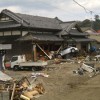
EXCLUSIVE: Report from Fukushima
 My decision to visit Fukushima - the area worst hit by the massive quake, tsunami and nuclear power accident on Mar. 11 - was taken one afternoon last week after a long meeting with scientists.
Oil Giants Need To Think Beyond Profits
The uprisings in the Middle East and North Africa have shaken the petroleum industry, triggering oil price hikes and forcing the sector to go on the defensive. But critics say the industry carries some of the blame for the current crisis.
WORLD HEALTH DAY-BRAZIL: First Map of Clusters of Antibiotic Resistance
Scientists in Brazil have created the first map of clusters of antibiotic resistance in Brazil, linking the phenomenon to abuse of the drug and opening doors to guide public policies for antibiotic prescription and sales.MIDEAST: Turkey Relishes Role as Mr. Fixit
In the course of 24 hours earlier this week, Turkish Foreign Minister Ahmet Davutoğlu met a top envoy from Libya, dispatched a senior Turkish official to Tripoli and traveled to Bahrain and Syria, all struggling to survive the pro- democracy Arab spring.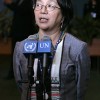
CLIMATE CHANGE: World Bank Under Fire for Role in New Global Green Fund
The World Bank is facing mounting opposition from a broad network of green and grassroots activists over its role in a new global Green Climate Fund (GCF) aimed at helping developing countries combat the ravages of climate change.NATO Vows to Protect Misurata Amid Criticism
NATO has vowed to protect Libya's civilian population and give priority to the besieged city of Misurata, a day after rebel fighters accused the military alliance of acting too slowly.U.S. Defends Role in Cote d’Ivoire Crisis
As Cote d'Ivoire enters its fourth month of post-election violence with intensified fighting and bloodshed, the White House is defending its efforts thus far to shepherd a solution to the stalemate between incumbent Laurent Gbagbo and Alassane Ouattara, the internationally-recognised winner of last fall's elections.
WORLD HEALTH DAY: The Ten-Year Timeline for Antibiotics Burnout
Though the World Health Organisation (WHO) has focused this year's World Health Day Apr. 7 on prioritising the struggle against the global spread of antimicrobial resistance (AMR), scores of international researchers and scientists fear this decision is coming too late, with 2011 already shadowed by the failure of pharmaceutical antibiotics to curb the proliferation of diseases.
Brazil Beefs Up Nuclear Emergency Plans
The Brazilian government is tightening safety procedures at its two nuclear power stations. Although this South American country is not prone to earthquakes or tsunamis, it is not exempt from natural disasters like landslides and flooding that could jeopardise evacuation plans if a radiation leak occurred.U.N. Chief Proposes Budget-Cutting Austerity Drive
Armed with a sharp knife, U.N. Secretary-General Ban Ki-moon is on an austerity drive seeking deep cuts, amounting to about 155 million dollars, in the U.N.'s 2012-2013 budget, which comes into effect next January.
ARGENTINA-BOLIVIA: Gas Pipeline to Boost Development, Revenues – But Not for Everyone
"The pipeline will carry gas to Bolivia and seven provinces in Argentina, but we who live in Campo Durán, where the pipeline starts, will not have gas," Julio Palavecino told IPS.SOMALIA: Manifestation of Stealth Trusteeship
Somalia is currently under what James Fearon and David Laitin of Stanford University call "a neo-trusteeship system". Various external powers, while disagreeing among themselves, make the important decisions for the Somali people.COTE D’IVOIRE: Pro-Ouattara Forces Launch Palace Assault
Heavy fighting is continuing in Abidjan where forces loyal to Côte d'Ivoire's presidential rivals are battling for control of the country's main city.LATIN AMERICA: Tracking Down Radioactive Food Imports
Rather belatedly, Latin America is beginning to test products imported from Japan to check that they are not contaminated with radioactivity from the Fukushima nuclear power station that was severely damaged by the Mar. 11 earthquake and tsunami.NGOs Call for IMF Gold Profits to Cancel Debts of Poorest Countries
Nearly 60 international civil society organisations urged the executive board of the International Monetary Fund (IMF) Monday to earmark some 2.8 billion dollars in profits from the agency's gold sales for cancelling the debts of the world's poorest nations.
U.N. Member States Falter in Protecting Staffers, Peacekeepers
The United Nations has remained virtually helpless as hundreds of its staffers, mostly peacekeepers, are killed, kidnapped or victimised by unbridled violence worldwide.MIDEAST: Goldstone’s Volte-Face Gladdens Israelis, Angers Palestinians
Israelis have breathed a national sigh of relief following the publication of an absolutely unexpected article in last Friday's Washington Post. The column's title and author said it all.‘No Safe Levels’ of Radiation in Japan
In a nuclear crisis that is becoming increasingly serious, Japan’s Nuclear Safety Agency confirmed that radioactive iodine-131 in seawater samples taken near the crippled Fukushima Daiichi nuclear power complex that was seriously damaged by the recent tsunami off the coast of Japan is 4,385 times the level permitted by law.CLIMATE CHANGE: Uncertain Future of Kyoto Protocol Alarms Green Groups
With just seven months to go before a pivotal U.N. climate change summit in South Africa, green groups are raising the alarm here about the future of the Kyoto Protocol, the world’s only international treaty that mandates most industrialised nations to cut their environment polluting greenhouse gases (GHG) to save the planet from overheating.« Previous Page — Next Page »


The Week with IPS

NEXT STOP - SDGs
Tracking global progress towards a sustainable world
