Languages
Friday, November 27, 2026



News and Views from the Global South
Global Governance
Israel Accused of ‘A Form of Ethnic Cleansing’
"If the regime that encourages incitement, racism and anti-democracy is not toppled soon, we will find that the future is already here," says Israeli columnist Sefi Rachlevsky in the Israeli daily 'Haaretz'.ECONOMY-LATIN AMERICA: ‘Multilatinas’ in a Globalised World
Economic growth in Latin America is driving the expansion of corporations from this region throughout the world – even in countries of the industrialised North that formerly seemed out-of-reach.
Q&A: “Microfinance Is Much More Than Just Credit”
A day after U.S. assistant secretary of state for south and central Asian affairs Robert Blake appealed to the Bangladeshi government to reconsider its dismissal of 70-year-old microfinance guru Muhammad Yunus from the Grameen Bank, IPS spoke with the president and CEO of Women's World Banking (WWB), currently the most comprehensive network of microfinance institutions (MFIs) in the world.WIKILEAKS: Australians Call For Legislation to Protect Whistleblowers
Some Australians are convinced their government is sharing intelligence information with foreign powers about citizens implicated by documents released by Wikileaks.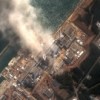
Who Controls the Nuclear Control Agencies?
As Japan struggles to confront a nuclear disaster that could be the worst in history, it seems clear that any discussion about the safety of nuclear energy should address the independence of regulatory agencies.Libyan Rebels Form “Interim Government”
Libya's pro-democracy fighters have formed an "interim government" even as forces backing the country's leader, Muammar Gaddafi, press ahead with attacks against them.Peak Water Has Already Come and Gone
Canadian Kevin Freedman is celebrating World Water Day Tuesday by living on 25 litres of water a day, instead of the North American average of 330 litres per day. And he has enlisted 31 others in his "Water Conservation Challenge" to go water- lean, using just 25 litres per day for cooking, drinking, cleaning, and sanitation for the entire month of March.SOUTHEAST ASIA: Despite Japan’s Crisis, Vietnam Aims to Win Region’s Nuclear Race
Vietnam’s race to build nuclear power plants has barely skipped a beat despite the troubling scenes unfolding in Japan, where a nuclear nightmare has gripped the country for over a week. It places the Southeast Asian nation at odds with its regional neighbours who have similar plans but are urging caution.Settlers Observe ‘Day Of Rage’ Pouring Wrath On Palestinians
Israeli settlers observed their own 'Day of Rage' last Thursday, launching reprisal attacks on Palestinians for the recent murder of a settler family in an illegal Israeli settlement in the occupied West Bank, and the demolition of a settlement structure by the Israeli authorities.
African Union at a Loss Over Libya
On Saturday, the U.S., France and the UK launched attacks on Libya's air defences and other targets following U.N. Resolution 1973. The three African members of the Security Council voted for the resolution, but a chorus of criticism has greeted the air strikes.HEALTH: Scare Haunts HIV/AIDS Patients in Ukraine
Fears are growing among HIV/AIDS sufferers in the Ukraine amid claims from some patients that they have been denied life-saving medicines by authorities as a crackdown is launched on drug substitution therapy.JAPAN: Vulnerability and Uncertainty Prevail In Wake of Nuclear Disaster
Accidents at four nuclear power reactors hit by the earthquake and tsunami in Fukushima have left thousands of residents in the vicinity facing an uncertain future as they prepare for evacuation orders to protect them from dangerous radiation contamination.Obama Leaves Door Open to Regime Change in Libya
The fate of Libyan leader Muammar Gaddafi remains up in the air after the United States and its allied partners began missile strikes over the weekend to impose a no-fly zone (NFZ) in the North African country.LIBYA: Conflicting Interests Cloud Military Intervention’s Objectives
Conflicting national and electoral interests as well as clashing military and political objectives and potential are jeopardising the U.S.-Europe led military mission to implement the no-fly zone over Libyan territory, as stipulated by U.N. Security Council resolution 1973.
BRAZIL-US: Libya Attack Sours Obama-Rousseff Meeting
The first black president of the United States visited the first woman president of Brazil: their meeting resulted in modest progress in bilateral relations, but a bitter taste could not be avoided over the announcement, in Brazil, of the U.S.-led air attack on Libya.
Regional Support Erodes for Air War on Libya
When the United Nations Security Council Resolution (UNSCR) imposing a no-fly zone in the airspace of the Libyan Arab Jamahiriya passed Thursday by a predicted 10-0, no one stopped to ask what ends the means of military force hoped to achieve.
Iran Battles U.S. At UN Human Rights Council
Forty-nine United Nations member-states have co-sponsored a resolution asking for a special mechanism to monitor Iran's human rights situation, which is expected to be voted later this week at the UN Human Rights Council (HRC).
Q&A: “Women Must Be Part of the Peace Equation”
Eleven years ago, 192 countries – all the United Nations member states – agreed to step up the integration of women in international peacebuilding and security processes, a promise that has remained largely unmet.EGYPT: Revolutionary Youth Give Clinton The Cold Shoulder
U.S. Secretary of State Hillary Clinton last week paid a highly-publicised visit to Cairo's Tahrir Square, the epicentre of Egypt's recent popular uprising. But young leaders of the revolution declined an invitation to meet with her, citing Washington's tepid support for anti-government protesters over the course of the 18-day rebellion.LIBYA: Uprising Revives Entrenched Racism Towards Black Africans
Libyan President Muammar Gaddafi's use of African mercenaries to quell the uprising against his autocratic regime has revived a deep-rooted racism between Arabs and black Africans.Manufacturing in Africa Can be Profitable – And Developmental
Investing in adding value to raw materials is crucial for the development of the African continent.« Previous Page — Next Page »


The Week with IPS

NEXT STOP - SDGs
Tracking global progress towards a sustainable world
