Languages
Saturday, November 28, 2026



News and Views from the Global South
Global Governance

CLIMATE CHANGE: Lost in Cancun
"The hurricane season officially ended on Nov. 30," a local shopkeeper told this journalist reassuringly as she entered his store with her hair blown in every direction by the wind on a drizzly, cloudy day.EUROPE: Talking Green, ‘Lending Unclean’
The European Bank for Reconstruction and Development is reneging on pledges to support low-carbon economic models in Eastern Europe, and is instead ramping up its lending for fossil-fuel energy projects, critics say.EU Plans to get Smart With Energy
The electricity grid in Europe is in desperate need of an IQ boost.Obama Pushes START Treaty to Top of Legislative Agenda
With time running out before he faces a much more hostile and Republican Congress, President Barack Obama appears to have made Senate ratification of the pending New Strategic Arms Reduction Treaty (START) with Russia his top legislative priority.CUBA: Foreign Ministry Explains Controversial “Sexual Orientation” Vote to Activists
Gay rights advocates in Cuba received an unprecedented response from Foreign Minister Bruno Rodríguez, in a meeting held at the ministry itself, after they complained about this country’s support in the United Nations for an amendment seen as a step backwards from the government’s position against discrimination based on sexual orientation.Rights Groups Fear Wikileaks Backlash Against Activists
Some of the United States' leading human rights organisations are concerned for the safety of human rights advocates in countries with repressive regimes, where disclosure by Wikileaks could put them in deadly harm.
SPAIN: Wikileaks Revelations Put Pressure on Justice Officials
The highest authorities of Spain's judicial system will have to explain to the Congress of Deputies their repeated refusals to bring U.S. soldiers to trial for the 2003 killing of journalist José Couso in Baghdad. The recent diplomatic cables made public by the whistleblower organisation Wikileaks reveal contacts with U.S. authorities aimed at preventing a trial.POLITICS: U.N. Faces Hurdles As It Seeks Mediator’s Role in Burma
Barely a week after a ranking United Nations official visited military-ruled Burma, the country’s strongman has sharply reminded the global body about the challenges that await any envoy who refuses to march in step with the junta.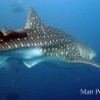
Narco-Sharks Replacing Drug Mules
Sharks are facing a new threat: they are being fished off the Pacific coast of Central America and Mexico and used to smuggle cocaine to the United States, through Mexico.
AFRICA: Food Versus Biofuels Debate Continues
"We’re going to Cancún no better off than we were in Copenhagen," said Thuli Makama, the director of Friends of the Earth Swaziland, as she prepared to leave for the climate negotiations in Mexico.
Japan Under Fire for Abandoning Kyoto Pact
Japanese NGOs feel that Prime Minister Naoto Kan's categorical statement in parliament on Monday that his government would not under any circumstances be party to a continuation of the Kyoto Protocol, which was signed in that historic city in 1997, went "beyond irony".In the End, U.S. Gets (Partial) Offshore Drilling Ban
As negotiators meet in Cancún to discuss how to mitigate the worst effects of climate change, the impacts of the oil spill disaster that unfolded earlier this year on the other side of the Gulf of Mexico are still rippling through Washington.ECUADOR: Oil Shake-Up Means Flat Fees for Foreign Companies
As the dust settles following contract negotiations with foreign oil companies, Ecuador is looking at a new map for its petroleum industry and trying to determine what it will mean in economic terms for this OPEC-member nation.CUBA: “Sexual Orientation” Vote in UN Panel Kicks Up Controversy
An unusually strong controversy has broken out in Cuba over a vote by the delegation from this Caribbean nation in favour of an amendment that left out the specific mention of sexual orientation in a United Nations General Assembly resolution on extrajudicial, arbitrary or summary executions.
DEVELOPMENT-MOZAMBIQUE: Hunger Stalks 55 Percent of Adults
Baptista Macule is sitting on a sack of groundnuts in a dusty side-alley near the sprawling, makeshift Malanga market on the outskirts of Maputo. He squints into the sun as he tries to explain the extent of poverty in his country.
U.N. a Playground for Spies of all Political Stripes
The United Nations has long been a veritable playground for spooks of all political stripes to spy on each other - going back to the days of the U.S.-Soviet Cold War in the 1960s and '70s.
Security Council Hopefuls Stymied by Myriad Squabbles
Who is responsible for stalling reform of the U.N. Security Council? The exclusive club of five nuclear-armed industrialised countries, or those from the developing world who have little say in decision-making on issues of international peace and security?Brazil Keeps a Grip on Bolivia’s Natural Gas Industry
Brazil's state-owned oil company Petrobrás maintains a solid and vigorous presence in natural gas production within Bolivian territory, even with the nationalisation of petroleum and gas in 2006 led by Bolivia's left-wing President Evo Morales.Russians Refuted U.S. Claim of Iranian Missile Threat to Europe
A diplomatic cable from last February released by Wikileaks provides a detailed account of how Russian specialists on the Iranian ballistic missile programme refuted the U.S. suggestion that Iran has missiles that could target European capitals or intends to develop such a capability.
PERU: Mineral-Rich Highlands Lack Legal Protection
More than 11 percent of Peruvian territory is distributed among mining concessions. Those mining blocks can include moors, river sources, and even protected natural areas.U.S.: No Top Secrets, but Damaging Nonetheless
While the massive dump of some 250,000 internal U.S. diplomatic communications by Wikileaks includes none marked "top secret", their dissemination is already causing considerable embarrassment and may well inflict longer-term damage on Washington's foreign relations.« Previous Page — Next Page »


The Week with IPS

NEXT STOP - SDGs
Tracking global progress towards a sustainable world
