Languages
Saturday, November 28, 2026



News and Views from the Global South
Global Governance
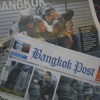
THAILAND: Media Deaths, Threats Part of the Crisis Story
As big a story as this week's crackdown on anti-government protests in Thailand is the significant number of journalists killed or hurt, and media professionals and organisations threatened during the country's most serious political conflict in years.
Q&A: Can Democracy Survive the “Oil Curse” in Africa?
Africa’s economic boom, driven by oil, has undermined the idea that democracy is a prerequisite for economic development on the continent.
WORLD: “Poor Countries Should Have a Seat at G20 Table”
The global economic crisis highlighted the necessity of transforming global economic governance. But least developed countries (LDCs) have little voice in this process. It is time they are allowed a seat at the meetings of the Group of 20 industrialised and emerging economies.Brazil-Turkey Deal with Iran Undermines Big Power Politics
When Brazil and Turkey clinched a deal with Iran over its disputed nuclear programme last weekend, the two non-permanent members of the Security Council not only challenged the unbridled political power exercised by the five big powers but also jeopardised U.S. plans for a unanimous resolution imposing sanctions against Tehran.U.S. Says Only Reason for Talks with Iran Is Enrichment Halt
The agreement on draft Security Council resolution sanctions against Iran has grabbed the headlines on the Barack Obama administration's response to Iran's nuclear swap proposal brokered by Turkey and Brazil. But the more consequential response is the acknowledgement by the U.S. State Department Monday that the administration is not willing to hold talks with Iran unless it agrees to a complete halt in uranium enrichment.
THAILAND: Bangkok Burns after Protest Leaders Surrender
If there were any hopes that Wednesday's surrender by the leaders of Thailand's biggest anti-government protests in decades would instantly ease tensions, these were dashed by the ugly spasms of violence that wracked this capital soon after they turned themselves in.ISRAEL: The Only Democracy in the Middle East?
Noam Chomsky, a fierce espouser of left-wing causes, is widely admired in countries which parade themselves as "democracies". Apparently, the admiration does not extend to Israel.
ENERGY: The Sun Lights Up the Night in Haiti
There are shortages of lots of things in Haiti: clean water, arable land, trees, living-wage jobs, housing, schools, fuel, reliable sources of electricity and Internet access. But one thing Haiti has in abundance is sunny days.Iranian Nuclear Threat Spurs Mideast Arms Sales
The United States, and most of the Western world, have transformed Iranian President Mahmoud Ahmadinejad into a virtual bogeyman, thereby spreading fear throughout the neighbouring countries of the Gulf Cooperation Council (GCC): Bahrain, Kuwait, Qatar, Oman, Saudi Arabia and the United Arab Emirates (UAE).THAILAND: Mayhem Has Little Room for Rights, Restraint
Amid gunfire and street battles here and heated, divided emotions playing out in Thailand's worst political crisis in decades, there has been little room for discussing human rights, restraint and finding a middle ground.U.S.: Momentum Builds to Ratify Land Mine Treaty
More than two-thirds of U.S. senators have signed a letter calling on President Barack Obama to develop a plan to join a 17-year-old international treaty banning the production, transfer, and use of anti-personnel land mines.IRAN: Brazil-Turkey-Mediated Deal Puts Ball in U.S. Court
The administration of President Barack Obama has reacted sceptically to the nuclear swap accord signed Monday by Iran, Turkey and Brazil, suggesting that Tehran would have to take significant additional steps to satisfy U.S. and Western demands to curb its nuclear programme.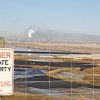
Oil Sands Riskier than Gulf Spill, Say Investor Groups
As the oil leaking into the Gulf of Mexico destroys habitat and livelihoods, the extraction of oil from Canadian oil sands deposits is having a similar impact on fragile ecosystems and communities deep in the North American interior.
MIDEAST: Israel, Iran Talking War to Ward Off War?
Suddenly, the Middle East is awash with talk of war this summer. Or, is the talk of war merely meant to keep war at bay?
ECONOMY: Africa Has Less Say After Changes in World Bank Voting
The World Bank has described its recent increase of 3.13 percent in the voting power of emerging economies as a reform "to enhance voice and participation of developing and transition countries". But the shift has actually decreased a third of African countries’ share of votes.
THAILAND: Violence, Uncertainty Follow Gov’t Crackdown
Burning tyres and buses with plumes of smoke billowing from them. Sniper shots and grenade attacks. Deaths and injuries. No-go zones in the Thai capital.GREECE: Turks Bearing Gifts
The first visit in six years of a Turkish prime minister to Greece has been widely hailed as a historical rapprochement after a long period of mutual bitterness.
Q&A: Fewer Protests, More Political Pressure to Fight Climate Change
Moving away from public protests and towards exerting political pressure on leaders in industrialised countries is the strategy chosen by the environmental movement 350.org to fight global warming, said its co-founder Kelly Blynn in an interview with IPS.THAILAND: Media Grapple with Questions of Credibility, Bias
Two months into Thailand's anti-government protests and as an army-led blockade is underway to end them, the media are struggling with challenges to their credibility and perceptions of bias in the South-east Asian country's gravest political stalemate in years.PERU: Gas Exports Will Cause Local Shortages, Governors Protest
The Peruvian government refuses to change the contract it signed with Consorcio Camisea to export natural gas to Mexico, as demanded by the governors of the southern provinces of Arequipa, Cuzco, Moquegua, Puno and Tacna, who are worried about shortages of local supplies.Shielded by U.S. Umbrella, Israel Joins Rich Man’s Club
With tongue firmly entrenched in his cheek, an Arab diplomat recounts an Israeli cabinet meeting interrupted by an aide rushing in with the latest statistics on the state of the economy.« Previous Page — Next Page »


The Week with IPS

NEXT STOP - SDGs
Tracking global progress towards a sustainable world
