Languages
Sunday, October 18, 2026



News and Views from the Global South
Global Governance

– Why Experts are Saying It’s a ‘Make or Break’ Moment for Forests –
On the occasion of World Environment Day, 5 June 2021, drawing from IPS’s bank of features and opinion editorials published this year, we are re-publishing one article a day, for the next two weeks. The original article was published on April 28 2021
Are There Clinically Meaningful Differences Between anti-COVID-19 Vaccines?
Despite claims by the industry and some politicians, there are no clinically meaningful differences among the variety of vaccines approved under emergency use authorisation (EUA).
– Youth Demand Action on Nature, Following IUCN’s First-Ever Global Youth Summit –
On the occasion of World Environment Day, 5 June 2021, drawing from IPS’s bank of features and opinion editorials published this year, we are re-publishing one article a day, for the next two weeks. The original article was published on April 23 2021

People Power: Why Mobilisations Matter Even in a Pandemic
It has been one year since the police murder of George Floyd, an outrage that resonated around the world. The killing forced people to the streets, in the USA and on every inhabited continent, to demand respect for Black lives and Black rights, proving that protest was essential even during the pandemic.
How the US is Obstructing Security Council Resolutions on Palestine
Over the past 75 years, there have been many UN Security Council (UNSC) resolutions acknowledging Israel’s violations of international law, including a Resolution under Chapter VI of the UN Charter, that could have addressed, if implemented, the plight of the Palestinians.
Wards Without Water
Malawian healthcare workers are facing challenges from all sides. More than half of healthcare facilities in Malawi are without handwashing facilities, almost two thirds have no decent toilets and almost one fifth do not have clean water on site.
– A Growing Shift in the Narrative about Climate Action –
On the occasion of World Environment Day, 5 June 2021, drawing from IPS’s bank of features and opinion editorials published this year, we are re-publishing one article a day, for the next two weeks. The original article was published on February 25 2021
Q&A: Reflecting on Five Years of Educating Children in the Throes of Crises, Emergencies and Displacement
Education Cannot Wait (ECW), the global fund that brings teaching and learning to children in emergencies and protracted crises, is observing five years of reaching boys and girls in some of the world’s hardest-hit conflict and disaster zones.
Tired with Tokenism, Youth Launch ‘Stronger Campaign’ for UN Biodiversity Day
The Global Youth Biodiversity Network (GYBN) has put leaders and policymakers on notice that they are not willing to listen to the same conversations, suggestions and unmet promises, as the world faces a biodiversity crisis.
– The Global Insecurity of Climate Change –
On the occasion of World Environment Day, 5 June 2021, drawing from IPS’s bank of features and opinion editorials published this year, we are re-publishing one article a day, for the next two weeks. The original article was published on February 24 2021

Wanted: Transparency & Accountability in Pandemic-Related Spending
Governments around the world are playing a crucial role in providing lifelines to people and firms to help combat the pandemic and its economic fallout. To support the effectiveness of these efforts, it is important that such spending be subject to adequate transparency and accountability.
– UN Blueprint that Could Urgently Solve Earth’s Triple Climate Emergencies –
On the occasion of World Environment Day, 5 June 2021, drawing from IPS’s bank of features and opinion editorials published this year, we are re-publishing one article a day, for the next two weeks. The original article was published on February 19 2021
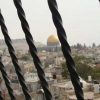
Jerusalem: A Flashpoint For Conflict Or Microcosm Of Peace?
Regardless of how the current and future violent conflicts between Israel and the Palestinians in Jerusalem will end, there will be no Israeli-Palestinian peace unless East Jerusalem becomes the capital of a Palestinian state while the city remains united.
China’s Firms Gain a Foothold in South America as Energy Providers
Over the past decade, state-owned enterprises (SOEs) from China have carved out a niche as owners and operators of electric utilities in South American countries through acquisitions of energy grids. As SOEs shift from their previous role as mostly builders to investors in large energy assets, policymakers in South America and in Washington should consider the implications of having these companies at the helm of such services.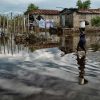
Climate Crisis: Elephants in the Room are Getting Nastier
The year 2020 will forever be notorious for the COVID-19 pandemic but it might also be known by historians for a precipitous rise in second order climate change consequences -- a new elephant in the room.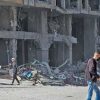
The Devastating Gun Battle in Gaza is Being Fought in an Uneven Killing Field
In most civil wars and military conflicts across the politically-volatile Middle East, including in Syria, Yemen and Palestine, the ongoing battles are being fought not on a level playing field but on an uneven killing field.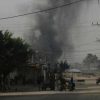
US Casts 45 Vetoes – and Counting—While Protecting a Client State
The UN Security Council (UNSC), the most powerful political body at the United Nations, has largely remained silent or ineffective in resolving one of the longstanding military conflicts in the Middle East involving Israelis and Palestinians.
Latin America & the Caribbean Assess Climate Ambition and Action Ahead of COP26
The Dominican Republic opened the 2021 virtual Latin America and the Caribbean Climate Week with a pledge to increase the country’s climate ambition by reducing its greenhouse gas emissions by 27 percent and maintaining progress towards climate neutrality according to the goals of the Paris Agreement.
Russia’s Sputnik Diplomacy
While Western countries were busy with their own vaccination campaigns, Russia has filled the leadership vacuum in developing countries. Amid the West’s scramble for vaccines, a trickle of news flies under the radar. Argentina becomes the first country in South America to produce Russia’s Sputnik V vaccine. The first shipment of Sputnik V is promised to Peru by May.
The UN’s Guterres, an Incumbent With Strong Backing by Europe, Is Bound to Win Another Term
It was all over in one crucial week. Barring an unforeseen hitch, António Guterres is the clear winner of a second, five-year term as secretary-general of the United Nations, beginning on Jan.1, 2022. This was not a surprise: he had no major competition and the process moved faster than expected.
How to Assess the Willingness of US to Suspend Patent Protection on Vaccines?
The news of the Biden Administration's willingness to lift intellectual property rights protections in the case of the Covid-19 pandemic has sent the world into turmoil, even though in recent days this willingness had become increasingly airy.« Previous Page — Next Page »





The Week with IPS

NEXT STOP - SDGs
Tracking global progress towards a sustainable world
Tracking global progress towards a sustainable world
