Languages
Sunday, October 18, 2026



News and Views from the Global South
Global Governance

The Importance of Being Listed: Why Politics Threaten the Protection of Children in Armed Conflict
Frontline workers who document and respond to violations against children have faced a particularly challenging last year, from the impact of Covid-19 on operations and child protection to the record levels of displacement worldwide to the ever-worsening threats from militaries and non-state armed groups.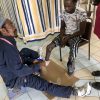
For People with Disabilities, COVID-19 Lays Bare the Weaknesses in Social Safety Nets
People with disabilities were particularly hard hit by the social and economic impacts of efforts to control COVID-19.
Call for Political Belt-tightening to Prevent Drought Becoming the Next Pandemic
“Drought is on the verge of becoming the next pandemic and there is no vaccine to cure it.”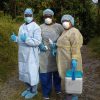
The Caribbean Looks to Research for Answers to COVID-19, NCD’s and Climate Change Challenges
In 1956, the Caribbean held its first major scientific meeting, organised by the Standing Advisory Committee for Medical Research in the British Caribbean. At the time, the Mayaro Virus, a dengue-like viral disease often called ‘jungle flu’ had just been identified as a new human disease agent by W.G Downs and G.H Wattley in Trinidad.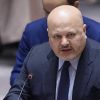
Will a British ICC Chief Prosecutor be Brave Enough to Investigate UK & its Allies?
As British barrister Karim Khan QC begins his term as ICC chief prosecutor, his first steps should be to proceed with investigations into alleged war crimes involving UK allies in Afghanistan and Palestine.
Setting the Stage for Wars During a Global Pandemic
Looking through my emails for the last year, I was struck by how often the adjective “unprecedented” occurred. The term, of course, referred to the global Covid-19 pandemic. One would imagine that this unprecedented year would result in unprecedented trends in other aspects of life.
Soil for Survival: Countries Commit to Halt Land Degradation
India’s Prime Minister Narendra Modi has told the first United Nations General Assembly meeting on desertification and drought in a decade, that his country’s report card will show it is well on track to meet its land restoration commitments.
The Marginalisation of Africa
Is Africa marginalised in contemporary economics and politics, and in contemporary economic and political research? Impressions gathered over the years and a bit of evidence (much more could be assembled) indicate that it is. I would distinguish three types of marginalisation: objective, objectified and subjective marginalisation.
World’s Nuclear Arms on High Operational Alert — & Ready to Strike
The world’s nine nuclear armed states have downsized their military arsenals, but made up for their loss by increasing the number of weapons on high operational alert, according to a new report from the Stockholm International Peace Research Institute (SIPRI).
UN Scientists: Climate Change and Biodiversity Loss. Two Parts. One Problem.
Earth is in the throes of multiple environmental crises, with climate change and the loss of biodiversity the most pressing. The urgency to confront the two challenges has been marked by policies that tackle the issues separately. Now, a report by a team of scientists has warned that success on either front is hinged on a combined approach to the dual crises.
Preventing Hunger While Building Peace
Acute hunger is expected to soar in over 20 countries in the next few months, warns a recent report on global “hunger hotspots” from the UN’s Food and Agriculture Organization (FAO) and the World Food Programme (WFP). An estimated 34 million people are “one step away from starvation”, pushed to the brink by climate shocks, conflict, and the Covid-19 pandemic.
Investing in Lives & Livelihoods of India’s Women Crucial to Nation’s Full Recovery
Thousands of Indians have been affected by the latest COVID-19 outbreak. Not only those suffering from the disease, but also those who care for them.
Nations Pledge to Tackle Inequalities as part of New Targets to end HIV/AIDS by 2030
World leaders, those on the frontlines of the AIDS response, civil society, academics and youth have agreed that there is no way to end AIDS as a public health threat by 2030 without tackling persistent inequalities among marginalised groups.
The 21st Century Nuclear Arms Race
A new report by the International Campaign to Abolish Nuclear Weapons (ICAN)—focusing on nuclear weapons spending-- following on the Bulletin of the Atomic Scientists recent decision that their Doomsday Clock, should be set as close as it has ever been to nuclear catastrophe. should serve as a wake up calls for humanity.
Is the UN Fighting a Losing Battle Against World’s Corrupt Leaders?
A hilarious anecdote, recounted in the New York Times years ago, related to the widespread corruption embedded in the political culture of a Southeast Asian country where crooked politicians were willing to provide receipts every time they received a bribe—big time bribes.
The Pandemic Should Not Leave Developing Countries Without a Voice (or a Vote)
Requiring in-person voting to elect the governing bodies of UN agencies may exclude the countries most affected by travel restrictions derived from the pandemic
From Non-aligned to One Aligned
June 4, 2021 marks 30 years since the killings of an undisclosed number of Chinese protestors at Beijing’s Tiananmen Square. For many years, the Chinese government and its ruling Chinese Communist Party (CCP), with characteristic understatement, called it the ‘June Fourth incident’.
Agroecology Under Threat
This week*, the Committee on World Food Security (CFS) is expected to endorse recommendations on agroecological and other innovative approaches for sustainable food systems, after an intense period of negotiation involving governments, UN agencies and institutions, Indigenous People’s organizations, civil society, and the private sector.
Life Below Water – the UN Calls for Action on Ocean Protection
President of the United Nations General Assembly Volkan Bozkir has told a high-level debate on oceans that the world cannot afford to delay action on ocean protection. “There is simply no scenario wherein we live on a planet without an ocean,” he said.
Africa’s Forgotten Crisis
A few weeks ago, I traveled with the UN High Commissioner for Refugees Filippo Grandi to the Modale refugee site in the Nord-Ubangi province of the Democratic Republic of the Congo (DRC). What we witnessed there was a profound humanitarian crisis that has left 4.7 million children and youth in need of urgent, life-saving, life-changing educational support.
The Kenyan Peacekeeper Championing the Ideals of the Women, Peace and Security
Major Steplyne Buyaki Nyaboga of Kenya singles out the establishment of gender-responsive military patrols in farming communities in Central Darfur, Sudan as one of the proudest moments of her two-year mission with the African Union–United Nations Hybrid Operation (UNAMID).« Previous Page — Next Page »





The Week with IPS

NEXT STOP - SDGs
Tracking global progress towards a sustainable world
Tracking global progress towards a sustainable world
