Languages
Sunday, November 8, 2026



News and Views from the Global South
Global Governance
Accessibility of Vaccines & Commitment to Ceasefire – Priority Focuses for 75th UNGA
Key focuses of the upcoming 75th session of the United Nations General Assembly (UNGA) High Level Week will be the accessibility of vaccines and a renewed plea for a global ceasefire. “I will make a strong appeal to the international community to mobilise all efforts for the global ceasefire to become a reality by the end of the year,” U.N. Secretary-General António Guterres said on Wednesday.
Impact of COVID-19 on Women and Children
The impacts of crises are never gender-neutral and COVID-19 is no exception. The pandemic has resulted in increased rates of violence against women and has exacerbated challenges in accessing justice. Women are losing their livelihoods faster than men.
At 75, is the UN Still Fit for Purpose?
This September, New Yorkers will be a lot less annoyed. They’ve been spared the annual disruptions from road closures, sirens and movement of security forces accompanying world leaders who attend the UN General Assembly. By largely moving online due to COVID-19, the world’s most significant gathering will be missing some of its excitement even as the UN celebrates an important 75th anniversary in 2020.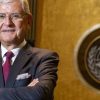
INTERVIEW: the top diplomat shepherding the General Assembly through its 75th year
The Turkish diplomat elected to be the president of the 75th session of the UN General Assembly, Volkan Bozkir, is taking on the role as the Organization grapples with an unprecedented pandemic, and questions surrounding the future direction it should take.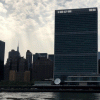
Will Trump Threaten to Pullout or De-fund the United Nations?
Back in 1998, Senator Jesse Helms, a rightwing Republican from the US state of North Carolina, carried out a virulent one-man hate-campaign against the UN-- and its very presence in New York.
A Marathon, Not a Sprint: Peru Needs Fiscal Reforms to Quell High COVID-19 Death Rate
“It’s a major paradox, no?” asks Hugo Ñopo, a researcher at the Peruvian think tank Group for the Analysis of Development (GRADE). Since the beginning of the pandemic, Peru has presented itself as an example for the region: it quickly implemented drastic prevention measures, followed scientific recommendations and prepared an economic support plan for the most vulnerable segments of the population.
A New Social Contract Needed for Children on the Move
Forced to flee wars and disasters, sometimes without family, and struggling to survive in the worst of circumstances, children on the move have long led very precarious lives. Be they refugees, internally displaced or asylum seekers, vulnerable and marginalised, they lose years of childhood. They are exposed to the worst forms of abuse, such as commercial exploitation and violence. Today, their situation is dire as they remain at the very bottom of the list to receive emergency measures to protect them from the impacts of COVID-19.
Message for Laureates and Leaders for Children
 His Holiness the Dalai Lama’s message for "Fair Share for Children - Laureates and Leaders Summit 2020", held online September 9, 2020.
Re-inventing Multilateral Solidarity: Rhetoric, Reaction or Realignment of Power?
Multilateral solidarity is gaining traction as the slogan for mobilizing support for international cooperation and for the UN. Is it replacing or merely renaming cross-border obligations, many of which have been enshrined over decades in UN treaties, conventions and agreements, and the principle of common but differentiated responsibility in their implementation?
Hopes and Challenges for the First-Ever Food Systems Summit
Building inclusive and healthier food systems, and safeguarding the health of the planet will be some of the key priorities at the first-ever Food Systems Summit next year.
TikTok, Trump and the Need for a Digital Non-Aligned Movement
Recent weeks have seen a dramatic escalation in the U.S.’ stance towards tech companies from the People's Republic of China (PRC). After hounding the telecommunications company Huawei for years, the social networking app TikTok is the latest Chinese company to enter the firing line.
Regressive Taxation Must Be Reversed
With many in the world experiencing declining living standards, there has been growing frustration. Many hope that progressive taxation will improve things. While some economies once had progressive tax systems, recent decades have seen regression.
US Poll Predictions and Presidential Politics in the American Polity
The US residential polls are akin to a drama that is staged every four years in which the American are actors on stage and the rest of the world is the audience. With one major difference, however. While in a usual theatrical performance the viewers are there mostly for amusement, though some may be enlightened and enriched by the experience, in the case of the US elections, unlike in others, their fates are inextricably linked to the outcome of the play. This is not predetermined by any playwright, though it can often be predicted. It is not implausible therefore for some on-lookers to want to intervene in what’s happening onstage. It must be done discreetly, and with great circumspection. Take for instance, the Russians in the American elections in 2016. The Russians and President Donald Trump hotly dispute allegations of any such interference.
UN Women Calls for Accelerating its Unfinished Business
Twenty-five years ago, the Fourth World Conference on Women in Beijing set a path-breaking agenda for women’s rights. As a result of the two-week gathering with more than 30,000 activists, representatives from 189 nations unanimously adopted the Beijing Declaration and Platform for Action.
World Risks Losing Entire Generation of Children, Nobel Laureates Warn
The COVID-19 pandemic has upended the lives of millions of people worldwide, accounted for over 869,000 deaths, destabilised the global economy and triggered a marked rise in poverty and hunger in the developing world. But the fallout from one of the most devastating consequences of the spreading virus is on the lives of a growing new generation: children.
Mozambique Reels from Repeated Attacks on Press Freedom
While Mozambique was recently rattled by an arson attack on a local media organisation, experts say that it’s only a part of a worrying pattern of continuous attacks on the media in the country.

The First “Virtual” Post-Pandemic UN General Assembly Meeting
Although we have not convened in this Hall since March, New York-based delegations have worked tirelessly to uphold the values and principles set out in the Charter of the United Nations, whilst contending with the COVID-19 pandemic.
Qatar Accuses UAE of Racial Discrimination in UN’s Highest Court
Qatar officials reiterated their claim on Wednesday that the United Arab Emirates (UAE) be held responsible for their “discrimination” against Qatari citizens, as the third day of public hearings proceeded at the International Court of Justice (ICJ), the United Nation’s highest court. But foreign policy experts caution that the case is not good for stability in the Persian Gulf region.
South Sudan – COVID-19 and Ongoing Violence has Catastrophic Impact on Civilians
Large-scale intercommunal violence on civilians in the Jonglei and greater Pibor regions in South Sudan has led to the mass displacement of thousands of people who are living in the open without health care, adequate food, shelter, water or sanitation in the middle of the rainy season.
Fridays for Future: How the Young Climate Movement Has Grown Since Greta Thunberg’s Lone Protest
At the end of her first week on strike in August 2018, Greta Thunberg handed out flyers that said: “You grownups don’t give a shit about my future.” Her appearance at the 2019 UN Climate Summit capped a year in the spotlight for the teenage climate activist. Delegates at the summit gave her a standing ovation, but the sound of their applause couldn’t mask Greta Thunberg’s deep frustration.
Racism at the UN: Practice What You Preach
When two recent staff surveys, one in Geneva and the other in New York, revealed widespread racism at the United Nations, it triggered the obvious question: why shouldn’t the UN Human Rights Council (HRC) probe these charges?« Previous Page — Next Page »





The Week with IPS

NEXT STOP - SDGs
Tracking global progress towards a sustainable world
Tracking global progress towards a sustainable world
