Languages
Tuesday, November 3, 2026



News and Views from the Global South
Peace
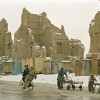
Anxiety as Donors Chart Aid for Afghanistan Beyond 2014
A key United Nations official on Friday urged the international community to match security funding for Afghanistan with economic and development funding after 2014, when most international – particularly U.S. – forces will leave the country.
Israel Divestment Campaigns Gain Momentum in U.S.
A resolution at the General Assembly of the Presbyterian Church (USA) to divest from three corporations which provide equipment used to maintain Israel's occupation of Palestinian lands failed by a mere two votes on Thursday.
Americas Team Avoids Paraguayan Rights Groups
Paraguyan rights groups are disappointed at being denied access to a delegation of the Organisation of American States (OAS) sent in this week to discover the facts behind the impeachment and removal of President Fernando Lugo on Jun. 22.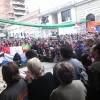
Paraguay’s Isolation Grows
Paraguay’s isolation, following the impeachment and ouster of President Fernando Lugo 11 days ago, has grown thanks to slender recognition for the new government and souring diplomatic relations with the neighbours.Analysts Say Nuclear Talks Should Continue Despite Sabre-Rattling
The one agreement that talks between Iran and the P5+1 - the five permanent members of the U.N. Security Council plus Germany - produced after a "technical meeting" in Istanbul was a decision to schedule more talks.The Battle for Federalism in Libya’s East
With Libya's first election in more than four decades looming, a vocal group of people in the east of the country is far less enthusiastic about this democratic milestone than those in the west.U.N. Report Links Rwanda to Congolese Violence
After weeks of delay, the United Nations released Monday its full annex by the U.N. Security Council condemning the Rwandan government for its support of Congolese rebels.Tests Point to Possible Arafat Poisoning
It was a scene that riveted the world for weeks: The ailing Yasser Arafat, first besieged by Israeli tanks in his Ramallah compound, then shuttled to Paris, where he spent his final days undergoing a barrage of medical tests in a French military hospital.Report Details Widespread Torture in Syrian Jails
Since March 2011, Syrian authorities have subjected tens of thousands of people to torture, rape, sexual abuse and unlawful detention, with some cases of ill treatment leading to death, according to a Human Rights Watch (HRW) report released Tuesday.Kosovo to Gain Full Sovereignty
Kosovo will finally gain full soverignty in September, almost four years after breaking away from Serbia, the International Steering Group (ISG) overseeing its independence has announced.New Israeli Deputy PM Undercuts Strategy of Pressure on Obama
By staking out a policy line on Iran reflecting the views of the Israeli national security leadership, Deputy Prime Minister Shaul Mofaz has undercut the Benjamin Netanyahu government's carefully planned strategy to get U.S. President Barack Obama to threaten war against Iran if it doesn't give up its nuclear programme.
U.S. Aid Policies in Pakistan Resulting in Anti-U.S. Sentiment
Despite President Barack Obama's stated policy of using foreign aid to improve public perception of the United States in Pakistan, two major new reports suggest that U.S. policies are exacerbating an already soured relationship.
Explanations Demanded on U.S. Inaction on Conflict Minerals
A U.S. government agency is being questioned on why it is dragging its feet on 2010 legislation that would increase transparency in extractive industries around the world, one aim of which would be to cut down on the global trade in "conflict minerals".
Q&A: Children Killed with Impunity in Syria
Radhika Coomaraswamy has been the United Nations Special Representative for Children and Armed Conflict since April 2006.
New Initiative to Combat Toxic Threats
 Reducing the risks associated with chemical, biological, radiological and nuclear (CBRN) threats is the goal of a new multi-country initiative known as the Centres of Excellence (CoE).

Conflict Heats Up in the Sahara
"We’ve been building a lot of new walls lately," says Polisario Front commander Ahmed Salem as he drives his 4 X 4 across Tindouf in Western Algeria. But the newly introduced security measures may not be enough to ensure the survival of the Western Sahrawis.Maldives Sees Islamist Resurgence
Former Maldivian President Mohamed Nasheed expressed concerns Monday about the state of democracy in his home country, noting the dividing effect of a rising tide of Islamist extremism.U.S. Dangerously Short-Sighted on Yemen, Experts Warn
As President Barack Obama's administration becomes further enmeshed in what many are calling an undeclared war in Yemen, observers here are urging the government to broaden its policy approach to the country beyond counterterrorism.OP-ED: Bahrain Repression Belies Government Stand on Dialogue
Bahrain remains a repressive state, and civil rights are violated daily.
Activists Working to Reinvigorate Campaign Against LRA
Activists are aiming to renew the fight against the Lord's Resistance Army, the Ugandan rebel group made infamous by its ruthless leader Joseph Kony, despite noticeably diminished concern for the issue just months after the release of a controversial yet viral video about the leader.Former Militants in Pakistan Hunted Down by Taliban
“I joined the Taliban six years ago but deserted them last year because I felt that they were wrong. Now, the Taliban are chasing me like a shadow. They want to kill me,” said Abdul Ghafoor, 39, who surrendered to the army in northwest Pakistan in August 2011 and vowed to support the government’s peace efforts.« Previous Page — Next Page »





The Week with IPS

NEXT STOP - SDGs
Tracking global progress towards a sustainable world
Tracking global progress towards a sustainable world
