
Sunday, November 22, 2026



News and Views from the Global South
IPS UN: Inside the Glasshouse
Canada Slowing Biodiversity Protocol’s Progress
The spirit of international negotiations in Montreal on a draft protocol on Access and Benefit Sharing (ABS) of natural resources were marred by Canada’s insistence on a decentralised approach to ABS, Peigi Wilson, a Métis lawyer present at the meeting in support of the Quebec Native Women, told IPS.UN’s Big Five Facilitate Arms Transfers to Rights Violators
The five permanent members of the Security Council - the United States, Britain, France, Russia and China - are accused of facilitating the transport of conventional weapons and cluster munitions to countries where they could be used to commit human rights violations and war crimes.BALKANS: Yugoslavia Tribunal Faces Uncertain Legacy
On the eve of World Day for International Justice, launched to recognise the emerging body of international criminal law, the International Criminal Tribunal for the former Yugoslavia (ICTY) faces an uncertain legacy. Initially slated to finish its work in 2008, the ICTY is two years behind schedule and at least four years from the final thump of its gavel.Nigeria Suffers Acute Lead-Poisoning Outbreak
The Nigerian government is trying to cope with an outbreak of lead poisoning which has killed over 200 people in Zamfara State since early July.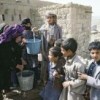
Water as Human Right Threatens to Split World Body
A long outstanding proposal to recognise the right to water as a basic universal human right is threatening to split the world's rich and poor nations.North Korea in Dire Need of Food, Medical Aid, Amnesty Says
The fragile health system in the cash-strapped Democratic People's Republic of Korea (DPRK), long described as one of the world's most secretive countries, is on the verge of collapsing, Amnesty International (AI) warned Thursday.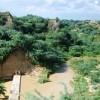
ENVIRONMENT-INDIA: Fighting Drought With Check Dams
Gazing out at the lush greenery that surrounds the village of Salaita in northern India, a smile of satisfaction appears on retired army general A.P.S. Chauhan's face.Pacific Islands Criticise Stalled Climate Financing
Despite the creation of a High-Level Advisory Group on Climate Change Financing (AGF), a group of hard-hit Pacific islands is expressing doubt that aid will be delivered in a timely manner.Haiti’s Tent Camps Likely to Remain for Years
Six months after Haiti's devastating earthquake, U.N. aid agencies say they are entering the challenging phase of replacing the tents that are home to the estimated 1.5 million people who remain displaced.Is Global Poverty Reduction a Political Myth?
When the United Nations hosts a summit meeting of world leaders next September to assess the current state of its Millennium Development Goals (MDGs), it is expected to single out one of the major "success stories" of the day: a reduction in global poverty.IRAN: Unrest Grows over Economic Woes
Last year's Iranian political demonstrations have given way to economic protests that could prove more worrisome for the Tehran government.
HAITI: Six Months On, Shelter Still a Main Priority
Six months ago Monday, an earthquake rocked the western hemisphere's poorest country, driving it deeper into poverty and burying it under its nascent infrastructure.N. Korea Agrees to Talks on Torpedoed Warship
Depending on whom you asked, Friday's statement from the U.N. condemning the "attack" on a South Korean warship was either a victory for those countries seeking to publicly shame North Korea or a failure of the international community to sufficiently assign blame to Pyongyang for the incident.Talks Continue on Arms Treaty, an Instrument for “Extreme Cases”
Experts from over 100 U.N. member states will convene Monday for two weeks to discuss the elements to be included in a long-awaited Arms Trade Treaty (ATT) - what will be a multilateral, legally-binding document regulating the transfer of conventional weapons and small and light arms.
Making 2010 a Turning Point for Women’s Health
As the international community readies to commemorate World Population Day Sunday, the United Nations is reviewing the state of the world's women - and how they stack up against the risks of maternal mortality and the lack of universal access to reproductive health.IRAN: Worries Mount over Sanctions’ Ripple Effect
Although the United States and its allies insist that the latest round of U.N. sanctions against Iran targets high-level government officials rather than the general population, interviews with a number of analysts, activists and journalists in Tehran reveal a growing concern over the impact on the country's middle class.Chile Threatens to Split South Unity in World Body
The Group of 77 (G77) has historically maintained a united front, vociferously protecting the economic interests of developing countries at the United Nations.
Flooded with NGOs, Haiti Looks to Fall Presidential Polls
They descended in droves after the Jan. 12 earthquake devastated the French-speaking Caribbean Community (Caricom) country, killing an estimated 300,000 people and leaving more than one million homeless.
Heinonen Pushed Dubious Iran Nuclear Weapons Intel
Olli Heinonen, the Finnish nuclear engineer who resigned Thursday after five years as deputy director for safeguards of the International Atomic Energy Agency (IAEA), was the driving force in turning that agency into a mechanism to support U.N. Security Council sanctions against Iran.Latin America Keeps Poverty Goals in Sight Despite Harsh Times
Nine million more people have fallen into poverty in Latin American and Caribbean countries since the global financial crisis struck, threatening the achievement of all the Millennium Development Goals (MDGs) by the 2015 deadline, according to a report released Thursday by 18 U.N. agencies.
Gender Meet Ends on High Note with New “U.N. Women”
Nearly 50 government delegations spent the past week at U.N. headquarters in New York hashing over the progress that has been made and challenges that remain in pursuing gender parity worldwide, one of the crucial elements of the Millennium Development Goals.« Previous Page — Next Page »


It was dubbed "The Glass House" by U.S. ambassador James Wadsworth in 1966. Half a century later, the United Nations has gradually expanded its role as agent of peace and protector of the world's vulnerable populations, while simultaneously facing internal pressures to become more inclusive, increase transparency and maintain legitimacy in the post-Cold War political and economic order. Highlighting the local impacts of global policies on economic development, environment, health and human rights, IPS's coverage goes beyond the edicts of the Security Council to illuminate the power struggles, successes and shortcomings of the 193-member institution as it grapples with crises like climate change, armed conflict, poverty and HIV/AIDS.

The Week with IPS
