
Sunday, November 22, 2026



News and Views from the Global South
IPS UN: Inside the Glasshouse
ENVIRONMENT-LATIN AMERICA: Glass Half Empty
The countries of Latin America have made progress in terms of access to clean water and sanitation, but have failed to curb greenhouse gas emissions and deforestation, says a new United Nations report.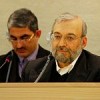
RIGHTS: Iran Rebuffs U.N. Criticism, Denies Abuses
International human rights groups and Iranian activists say Iran's decision to reject major recommendations made by the 47-member U.N. Human Rights Council on Wednesday is disappointing and signals that Tehran has no intention of easing the crackdown on dissent in the country.POLITICS: Cluster Bomb Ban to Become Law – Without U.S.
Just over a year after it was opened for signature, an international treaty banning cluster bombs received the final two ratifications it needed to become international law Tuesday.HAITI: U.N. Supports Move to Protect Heritage
The United Nations’ cultural agency, UNESCO, and the government of Haiti have joined forces to try to safeguard and protect the Caribbean nation’s artistic heritage in the wake of the Jan. 12 earthquake which destroyed not only countless lives but also many national art treasures.POLITICS: U.S. Steps Up Sanctions Diplomacy Against Iran
Faced with an increasingly impatient Congress and a defiant government in Tehran, the administration of U.S. President Barack Obama is currently stepping up its diplomatic efforts in the Middle East as it seeks to prepare the ground for tougher sanctions on Iran.RIGHTS: Nicaragua Refuses to Discuss Therapeutic Abortion
Nicaragua slammed the door on any possible debate on the restitution of therapeutic abortion - performed to save the life of the pregnant woman - despite demands that it do so voiced during a United Nations review of human rights in the country.CLIMATE CHANGE: U.N. to Mobilise Funds for Developing Nations
After countries failed to reach a binding agreement on greenhouse gas emissions at the crucial Climate Change Conference in Copenhagen last December, the United Nations moving forward to enforce a pledge to help developing countries cope with the worst impacts.BIODIVERSITY: U.N. Treaty Key Tool in Conserving Ecosystems
In a bid to pressure policymakers to take urgent action to implement a major United Nations treaty on the preservation of plant and animal species, the world body has launched a global campaign to raise awareness about the importance of biodiversity.RIGHTS: U.N. Goals on Education Under Widespread Attack
The relentless attacks on educational institutions in war zones - along with growing threats against academics, teachers and school-going children - have jeopardised one of the U.N.'s Millennium Development Goals (MDGs) - education for all by 2015.US-IRAN: Sanctions Are the Talk of the Day
If there were any doubts about what exactly U.S. President Barack Obama meant when he warned Iran of "growing consequences" during his State of the Union address last month, they seem to be dispelled by recent statements from top administration officials, who are beating the sanctions drum loud and clear.DEVELOPMENT: Crisis Could Open Doors for Change, Says UNCTAD
As the financial crisis continued to threaten world economies last year, the White House chief of staff Rahm Emanuel famously declared: "You never want a serious crisis to go to waste."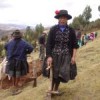
PERU: Women Combine Invention, Tradition to Improve Rural Diets
Although Huancavelica is the poorest region of Peru, it has more than just poverty, malnutrition and unmet needs. There are also women using their creativity, efforts and traditional indigenous knowledge to improve the diets of their families and communities.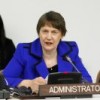
DEVELOPMENT: South-South Cooperation Key to MDGs
Member states meeting here Thursday called for the immediate implementation of development commitments made during the Nairobi high-level U.N. conference on cooperation between developing countries.RIGHTS: EU Faults U.N. for Slowdown in Gender Empowerment
Against the backdrop of continued widespread gender discrimination worldwide, the European Union (EU) has urged Secretary-General Ban Ki-moon to "urgently" speed up the creation of the proposed new U.N. agency for women.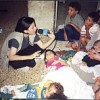
MIDEAST: Gazans Denied Justice as Rights Take a Beating
Gazans hoping for a modicum of justice following Israel’s indiscriminate military assault on the coastal territory during December 2008 and January 2009 - which left 1,400 Palestinians, mostly civilians, dead - could be waiting in vain.POLITICS: West Treats Iran’s Nuclear Offer with Caution
The declaration by Iranian President Mahmoud Ahmadinejad that his country is ready to exchange low-enriched uranium for nuclear fuel has been met with a mostly cautious reaction by Western leaders.
HAITI: Displaced Women Face Double Jeopardy
Women's rights and development activists working in Haiti say that greater attention must be paid to the immediate needs of women and girls, as well as their role in the long-term reconstruction of the devastated country.
RIGHTS: New U.N. Envoy to Crack Down on Sexual Violence
When the Security Council adopted resolution 1325 back in October 2000, it was a historic event: for the first time the U.N.'s most powerful political body dealt with a gender-related issue, explicitly linking women to peace and security.BIODIVERSITY: Northern “Biopirates” Gobbling up Resources
Rich countries are like biopirates, looting far-away lands for food, raw materials and cheap labour. They're plundering other richer ecosystems because they've largely destroyed their own. And they're blocking global efforts to create an independent scientific assessment panel that is likely point the finger at the real reason species are going extinct at 1,000 times their natural pace, experts say.DEVELOPMENT: Asia to Lead Global Economic Recovery, Says U.N.
The United Nations is predicting that the world's developing nations will recover faster than industrial countries - even as they both try to struggle out of the post-2007 global financial crisis.POLITICS: U.N. Faulted for Toothless Sanctions in Civil Wars
The United Nations estimates that at least 40 percent of civil wars during the last 60 years have been fought either over natural resources - including diamonds, gold, timber, oil, gas, and cocoa - or sustained by revenues from rich minerals and commodities.« Previous Page — Next Page »


It was dubbed "The Glass House" by U.S. ambassador James Wadsworth in 1966. Half a century later, the United Nations has gradually expanded its role as agent of peace and protector of the world's vulnerable populations, while simultaneously facing internal pressures to become more inclusive, increase transparency and maintain legitimacy in the post-Cold War political and economic order. Highlighting the local impacts of global policies on economic development, environment, health and human rights, IPS's coverage goes beyond the edicts of the Security Council to illuminate the power struggles, successes and shortcomings of the 193-member institution as it grapples with crises like climate change, armed conflict, poverty and HIV/AIDS.

The Week with IPS
