
Tuesday, November 3, 2026



News and Views from the Global South
IPS UN: Inside the Glasshouse
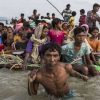
After Two Years of Horrors in Burma, the U.S. Is Still Doing Too Little, Too Late
Monsoon season is currently wreaking havoc on the more than 911,000 Rohingya refugees displaced from their homeland in Burma (Myanmar) to the ramshackle camps of Cox’s Bazar, Bangladesh.
Little Hope of Justice for Rohingya, Two Years after Exodus
Two years after the start of an exodus of Rohingya civilians from genocide-like attacks in Myanmar, members of the mainly Muslim minority have little hope of securing justice, rights or returning to their homes, according to the United Nations and aid groups.
G7 Leaders Urged to Promote Gender Empowerment
As leaders of the seven major industrialised nations (G7) meet in the coastal seatown of Biarritz in the south west of France, one of the world’s leading women’s organisations is calling for the protection and advancement of women worldwide.
Why Can’t Dynamic Asia-Pacific Beat Poverty?
Asia and the Pacific is lauded globally for its rapid economic growth over recent decades and has lifted 1.1 billion people out of extreme poverty since 1990. Nevertheless, the region continues to have the largest number of poor people in the world.
Southern African Development Community Loses Billions in Illicit Outflows
The Southern African Development Community (SADC), which comprise 16 member states, loses about 8.8 billion dollars in trade-related illicit outflows and about 21.1 billion dollars in external government debt payments annually, according to a new report released here.
Solving the Climate Crisis is Beyond Governments
Throughout my ten years working in international development and climate policy, I’ve mostly heard colleagues talk about the private sector as if it was this intangible, multifaceted medusa with its own business lingo that is impossible for us policy experts to tackle: “the ‘private sector’ needs a return on investment in order to act on climate” or “the ‘private sector' does not have the right incentives, but we need ‘private’ capital to solve this crisis”
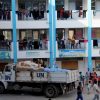
UN Aid Boss Promises “Punishment” for Misconduct in Yemen and Palestine
A senior United Nations official has promised a thorough investigation into allegations of misconduct in field operations in Yemen and the occupied Palestinian territories, saying that those responsible would be punished.
Addressing Gender & Protection Issues During Humanitarian Emergencies
Vanuatu is among the world’s ‘most at-risk’ countries to natural disasters. In the last 12 months alone, the country has faced multiple volcanic eruptions, earthquakes, cyclone and tsunami.
The Role of Women’s Organisations in Crisis-Settings
To mark World Humanitarian Day, we celebrate the overlooked women leaders who are first responders, unwavering advocates, and powerful change-makers in humanitarian emergencies.
Russia and Syria in the Spotlight for Latest Idlib Medic Deaths
Medical aid groups have again blasted Russian and Syrian government forces this week for an ever-growing death toll among doctors, paramedics and other health workers in military strikes in northwestern Syria.
A Key Role for 1.8 Billion Youth in UN’s 2030 Development Agenda
The UN Population Fund (UNFPA) is convinced that the world’s 1.8 billion adolescents and youth-- a quarter of the global population—have a key role to play in helping implement the UN’s 2030 Development Agenda.
Establishing a Science & Technology Park is No Walk in the Park
The success of Silicon Valley has been inspirational for many countries worldwide wishing to establish science and technology parks. In Asia, successful science and technology parks can be found in many economies, including China, Japan and Thailand.

Rules of War Widely Flouted, 70 years on: Red Cross
World governments are not doing enough to stop armed groups from committing mass rape, torture and other war crimes, the head of the Red Cross aid group head Peter Maurer said on Tuesday.
Will Sanctions Undermine 1947 US Treaty with UN?
When Yassir Arafat was denied a US visa to visit New York to address the United Nations back in 1988, the General Assembly defied the United States by temporarily moving the UN’s highest policy making body to Geneva-- perhaps for the first time in UN history-- providing a less-hostile political environment for the leader of the Palestine Liberation Organisation (PLO).
Five Million Palestinians Deserve Better!
An old adage passed on by veteran U.N. staff to younger recruits is, “Do nothing whenever possible. It’s safer.” For a junior officer that might indeed be career-enhancing.
Desertification a Frontline Against Climate Change: IPCC
A new United Nations report has described farming, land degradation and desertification as critical frontlines in the battle to keep the global rise in temperatures below the benchmark figure of 2 degrees Celsius.
Global Geodetic Framework Helps Monitor Natural Disasters & Rising Sea Levels
There are several initiatives in place to foster sustainable development-- and the Global Geodetic Reference governance frame is one that has proved effective.
Will Palestinian Refugees Pay a Heavy Price for UNRWA Bungling?
A crisis that has threatened to undermine the future of the UN Relief and Works Agency (UNRWA) is expected to have a devastating impact—not only on the credibility of the United Nations-- but also on the lives of over five million Palestinian refugees whose very survival depends on the humanitarian services provided by the beleaguered UN agency based in Amman and Gaza.
Your Life or Your Freedom? The Ultimate Price to Defend the Environment
For the family of indigenous Guatemalan activist Jorge Juc, the announcement last week by US President Donald Trump of an agreement declaring Guatemala a “safe third country” could not be more bitterly ironic.
Mediating Peace in a Complex World
“It is all about orchestration”, was Martin Griffiths’, the UN Special Envoy for Yemen, response to the question of what mediation in Yemen looks like today.
Nuclear Weapons Must Go: Lessons of Hiroshima & Nagasaki
It has been 74 years since a nuclear devastation took place. But a clear message stands -- that nuclear weapons must go and peace and love must reign. “Because if we forget the horrific consequences of the use of these devices, the likelihood of repetition is increased.” Jonathan Granoff, President of the Global Security Institute told IPS, as the United Nations marked the tragedies of Hiroshima and Nagasaki.« Previous Page — Next Page »





It was dubbed "The Glass House" by U.S. ambassador James Wadsworth in 1966. Half a century later, the United Nations has gradually expanded its role as agent of peace and protector of the world's vulnerable populations, while simultaneously facing internal pressures to become more inclusive, increase transparency and maintain legitimacy in the post-Cold War political and economic order. Highlighting the local impacts of global policies on economic development, environment, health and human rights, IPS's coverage goes beyond the edicts of the Security Council to illuminate the power struggles, successes and shortcomings of the 193-member institution as it grapples with crises like climate change, armed conflict, poverty and HIV/AIDS.

The Week with IPS
