
Tuesday, November 3, 2026



News and Views from the Global South
IPS UN: Inside the Glasshouse

World is in Crisis– & Multilateral Approach is the Key
As the UN General Assembly begins, we are once again ringing the alarm on the urgent issues of climate and development that demand our global attention and action. And I worry yet again leaders will not heed the warnings and not act with the clarity and at the scale the issues we’re here to tackle demand.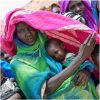
As Climate Crisis Worsens & Poverty Rises, UN Appears Off-Track on Development Agenda
The two key goals in the UN’s development agenda are the eradication of extreme poverty and hunger by 2030. But most of the world’s developing nations, currently fighting a losing battle against rising poverty and hunger –and suffering from the devastating impact of climate change-- are likely to miss the deadline for most of the 17 Sustainable Development Goals (SDGs), according to the latest report by Secretary-General Antonio Guterres.
Petition and Critics of Khashoggi Killing Heap Pressure on U.N.-Saudi Event
The United Nations faces growing public opposition to an event it is co-hosting with a Saudi Arabian charity only days before the anniversary of the murder of journalist Jamal Khashoggi.
UN Chief Calls for Action, Not “Beautiful Speeches”
UN Secretary-General Antonio Guterres has offered an unsolicited piece of advice to the 190-plus speakers, including heads of state and heads of government, who will address an unprecedented six high level plenary meetings during the General Assembly sessions September 23-27.
Multidisciplinarity of Data: Time to Put Data at the Heart of UN’s 2030 Agenda
The 2030 Agenda for Sustainable Development was adopted in 2015. At its core are 17 Sustainable Development Goals and 169 targets, all meant to guide efforts by all countries towards a more sustainable, prosperous and equal future.
Asian & Arab Parliamentarians to Move Forward on Reproductive Health & Gender Empowerment
Over the years, the UN Population Fund (UNFPA) has worked in tandem with legislators and parliamentarians to help implement the historic Programme of Action (PoA) adopted unanimously by over 20,000 UN delegates at a landmark International Conference on Population and Development (ICPD) in Cairo back in 1994.
Leaders Must Start Taking Science Seriously – U.N.
World leaders attending this month’s United Nations General Assembly should listen harder to scientists if they want to tackle climate change and meet global anti-poverty targets, U.N. experts warned this week.
Big Power Conflicts are Increasingly Taking Place in Outer Space
Nearly every article on ‘space security’ begins with the acknowledgement that satellites and space-based services are critical for modern societies. And with good reason.
Eritrea Tops Watchlist of World’s Most-Censored Countries
Eritrea has the world’s highest levels of censorship and the most active government in jailing reporters and stifling newspapers, radio and television, a study by the Committee to Protect Journalists (CPJ) watchdog says.
Culture of Peace Takes Big Stride as UN Observes 20th Anniversary of Norm-Setting 1999 Decision
It has been a long, arduous journey – a journey ridden curiously with obstacles and indifference. Two decades have passed by since the UN General Assembly (UNGA) adopted, by consensus and without reservation, its landmark and norm-setting resolution 53/243 on the Declaration and Programme of Action on a Culture of Peace in 1999.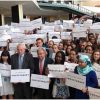
Are 9-to-5 Jobs Fast Becoming History – Even at the UN?
With the rapid leap in digital technology – including increased access to conference calls, e-translations, skype, text messaging and emails—more and more offices in the United States are providing employees with an option to “work from home”.
Is America Defeated in Afghanistan?
Following the 11 September 2001 terrorist attacks on American soil, the United States and their allies went to Afghanistan to “smoke out” Osama bin Laden and his Taliban protectors. The most fundamental primary mistake was to let all terrorists flee to Pakistan instead of sealing the border and capturing their main figures.
Exclusive: Winnie Byanyima Speaks about Inequality in Africa and Next Steps at UNAIDS
 While the 28th World Economic Forum (WEF) on Africa is being held in Cape Town, South Africa this week, the international aid and development charity Oxfam released its latest report: A tale of two continents: fighting inequality in Africa.

UN’s Upcoming Summits May Foreshadow a Revival of Multilateralism or an Obituary for World Order
The United Nations will be hosting six high level plenary meetings –- unprecedented even by its own standards—during the beginning of the 74th session of the General Assembly in late September.
Achieving Global Consensus on How to Slow Down Loss of Land
Expectations are high, perhaps too high, as the 14th Conference of the Parties (CoP 14) of the United Nations Convention to Combat Desertification (UNCCD), now into the third day of its two-week session, is being held outside the smog-filled Indian capital of New Delhi.
U.N. Criticised for Link-up with Saudi Prince MBS
The United Nations is under growing pressure to scrap an event it is co-hosting with the private foundation of Saudi Arabia’s crown prince Mohammad bin Salman, who has been linked to the killing of journalist Jamal Khashoggi.
They Call it Multistakeholderism. Where Does That Leave the UN?
Global governance is slipping away from the United Nations. Whether it is in managing the Internet, where the UN’s governing structure offers only an advisory role for governments; or climate change, where the most exciting actions are now corporate-led partnerships outside the UN Framework Convention on Climate Change; or the Gates Foundation-sponsored Gavi, The Vaccine Alliance, which is in a tug of war with the World Health Assembly on who sets health policy in developing countries, the institutional basis for global decision-making is changing.
Is the UN’s High Seas Treaty Heading Towards Troubled Waters?
The world’s high seas, which extend beyond 200 nautical miles, are deemed “international waters” to be shared globally-- but they remain largely ungoverned.
UNICEF’s Goodwill Envoy a Messenger of ill-Will, Complain Critics
When two-time Wimbledon tennis champion Boris Becker, a UNICEF goodwill ambassador, refused to make a commitment not to play in South Africa, a country blacklisted for its apartheid policies, the UN children’s agency stripped him of the prestigious title, back in October 1987.
Close the Door on Nuclear Testing
Everybody knows that nuclear weapons have been used twice in wartime and with terrible consequences. Often overlooked, however, is the large-scale, postwar use of nuclear weapons:
Sudan Transition an “Opportunity” to End Darfur Crisis
Sudan’s transition to civilian rule offers a chance to end the ethnic violence that plagues the western province of Darfur and end a peacekeeping mission there, a top United Nations official said Monday.« Previous Page — Next Page »





It was dubbed "The Glass House" by U.S. ambassador James Wadsworth in 1966. Half a century later, the United Nations has gradually expanded its role as agent of peace and protector of the world's vulnerable populations, while simultaneously facing internal pressures to become more inclusive, increase transparency and maintain legitimacy in the post-Cold War political and economic order. Highlighting the local impacts of global policies on economic development, environment, health and human rights, IPS's coverage goes beyond the edicts of the Security Council to illuminate the power struggles, successes and shortcomings of the 193-member institution as it grapples with crises like climate change, armed conflict, poverty and HIV/AIDS.

The Week with IPS
