Languages
Monday, October 5, 2026



News and Views from the Global South
Headlines

How Am I Going To Die?
With death being an inevitable outcome, a fundamental question that crosses the minds of practically everyone is: “How am I going to die?”
‘Do More With Less’: GEF CEO Claude Gascon on Speed, Scale and Reform
As governments prepare for the Eighth Assembly of the Global Environment Facility (GEF) – scheduled to be held from May 30 to June 6 in Samarkand, Uzbekistan – the stakes are unusually high.
UN Weather Agency Warns of Escalating Climate Extremes Across Caribbean and Latin America
Faster-than-average sea level rise, intensifying hurricanes, extreme heat and worsening swings between drought and flooding are increasing pressure on Latin America and the Caribbean, according to a new report released Monday, May 18 by the World Meteorological Organization (WMO).
The World Bank Wants to Change the Way It Manages Complaints: The Fixes That Could Make It Better
The World Bank made history in 1994 by creating the Inspection Panel, the first independent accountability mechanism, at any international organisation. Its function is to investigate complaints from communities who allege they were harmed because the bank failed to comply with its own policies and procedures.
Stop the Madness: Civil Society Cannot Thrive on Burnout
In an era when civil society funding is in decline, it’s time to rebel against a broken system.
Civilian Casualties Grow Amid Russian and Ukrainian Drone Strikes
Four years after the start of the Russo-Ukrainian War, 2026 has marked a significant escalation in hostilities, with intensified bombardments from both sides causing immense destruction across the region, complicating humanitarian operations, and deepening an already severe humanitarian crisis. As exchanges of attacks have intensified in recent days, the United Nations (UN) warns that women and girls will be disproportionately impacted as violence disrupts access to basic, lifesaving services.
Breaking Cultural Barriers to Equip Marginalised Kenyan Girls With Entrepreneurial Skills
For generations, communities in Kenya’s arid and semi-arid lands (ASAL) have viewed girls through the lens of marriage, with some being married at 11 in exchange for livestock or soon after secondary school, denying them opportunity for further education and skills training.
Media As Bedrock for Developing Russian-African Relations
Under the auspices of the Faculty of Journalism of Lomonosov Moscow State University, the Russian-African Club, in late April, held its IV International Forum of Journalists from Russia and Africa, which marked another historical milestone. According to an established annual tradition, discussions were focused on aspects of the media, its structure, current performance, information contents, and challenges as well as future perspectives.
Africa’s Golden Future
It is very appropriate that this Africa Forward Summit is being held in Kenya. Two weeks ago, a Kenyan marathon runner, Sabastian Sawe, did what had been considered impossible: by running a marathon in under two hours! What we have set ourselves here is also a marathon—and we must show the same resilience and perseverance that Mr. Sawe did.
DIGITAL RIGHTS: ‘The Priority Should Be Holding Tech Companies Accountable, Not Banning Children from the Digital World’
CIVICUS discusses the rising trend of social media bans for children with Marie-Ève Nadeau, Head of International Affairs of the 5Rights Foundation, an organisation that promotes children’s rights in the digital environment.
Building Resilient Food Systems in an Age of Disruption
The latest shock to global food systems, triggered by conflict in the Middle East and disruptions around the Strait of Hormuz, has once again exposed a fragile truth: the world’s food systems remain highly vulnerable to external shocks.
Field-Based Research Is a Lifeline for Zimbabwe’s Food Security
Agriculture sustains millions of people in Zimbabwe, serving as a vital source of both food and income. But climate-related pressures affecting land, crops, rainfall patterns, and increasing pest outbreaks are threatening smallholder farmers’ harvests, leaving them food insecure.
The GEF Leads Global Drive to Tackle Shipping Threat to Oceans
Under the warm waters off Tanzania’s Mafia Island, marine scientist Asha Mgeni hovers above a coral reef she has studied for years. Small fish dart through the currents. To most divers, the reef appears pristine. But Mgeni notices something unusual.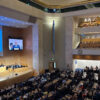
Norway’s Funding Cutoff Is a Wake-Up Call for the Plastics Treaty Negotiations
Norway’s reported decision to review and place on hold aspects of its funding to the United Nations Environment Programme (UNEP) should be understood as more than a budgetary matter. It is a political signal. It is also a warning that the global plastics treaty negotiations may now be approaching the point at which governments must decide whether the present UNEP process can still deliver the treaty they promised, or whether a different pathway is required.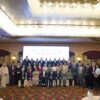
Lawmakers From Three Continents Demand Action, Not Pledges, on Population and Health
The word heard most often at a two-day parliamentary forum in Cairo last week was not "commitment"; it was “follow-up.” And the difference mattered.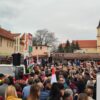
What Hungary’s New Pro-Democracy Government Means For Rule of Law
Péter Magyar, leader of the pro-democratic centre-right Tisza Party, which recently swept into power on an unstoppable wave of hope for change, has now been sworn into office as Hungary’s new Prime Minister.
The Global Epidemic of Violence in an Age of Impunity
Violence has metastasized into humanity's baseline condition. Yet international institutions remain paralyzed by vetoes and rivalry, offering hollow declarations while dehumanization becomes normalized. Coordinated action, not gestures, is desperately needed.
The Tale of Three Countries: Policy Independence Matters for Development
The Republic of Korea (Korea), Vietnam and Bangladesh are on three different rungs of the development ladder. While Korea is a member of the rich nations’ club, i.e., the Organisation for Economic Cooperation and Development (OECD), Bangladesh is still a least developed country (LDC); and Vietnam is in the middle.
Ambitious Great Green Wall Shows Slow, Steady Progress in Strengthening Landscapes, Improving Livelihoods
In 2021, Gadeja Shehu and about a hundred farmers in Garbadu village, Zamfara State in northwestern Nigeria, were invited by officials of the National Agency for the Great Green Wall to plant trees across a large stretch of land in their community.
The Iran War Is Costing Children’s Lives in Somalia
When war erupted in the Middle East in late February, the most visible consequences were playing out in the Persian Gulf, with smoke rising from Dubai's Jebel Ali port and shipping traffic across one of the world's most critical maritime routes grinding to a near halt.
Food Systems and Policies Undermining Food Security
Transnational agribusinesses increasingly shape food policies worldwide. Claiming to best address recent food security concerns, they seek to profit more from innovations in food production, processing, and distribution.« Previous Page — Next Page »





