Languages
Friday, November 13, 2026



News and Views from the Global South
Headlines

Papua New Guinea Battles COVID-19 and Health Workers’ Vaccine Scepticism
Papua New Guinea (PNG), like many other Pacific Island countries, successfully held COVID-19 at bay last year, aided by early shutting of national borders. However, by March this year, the pandemic was surging in the most populous Pacific Island nation, and by July, it had reported 17,282 cases of the virus and 175 fatalities.
“If Only the Fighting Would Stop “ A Sudanese Woman’s Wish
With her bare hands, Roda clears debris and forages scraps from her wrecked teashop after attackers scorched Gumuruk, a town in the Greater Jonglei region where conflict frequently disrupts daily life and stifles progress.
Rich Country Hypocrisy Exposed by Vaccine Inequities
‘No one is protected from the global pandemic until everyone is’ has become a popular mantra. But vaccine apartheid worldwide, due to rich countries’ policies, has made COVID-19 a developing country pandemic, delaying its end and global economic recovery.
Combating COVID-19 and Ensuring No One is Left Behind
If the world wants to beat back the COVID-19 pandemic and ensure no one is left behind in the recovery, two issues thrown into sharp relief by the pandemic need attention: digitalization and regional cooperation.
Reflections on South Sudan’s Ten Years of Independence
The declaration of independence of South Sudan was a great historic moment that gave hope to South Sudanese on July 9, 2011. It brought a sense of satisfaction, indicating achievement of a life-time dream for which millions of our people across generations paid the ultimate price.
Nothing About Us, Without Us, Asian Youth Tell Parliamentarians
Youth advocates from Asian countries called for an overhaul of a system that excluded young people from participation in policymaking. During an interaction with parliamentarians from 23 countries, youth representatives considered an enabling political framework to be the most crucial reform required to remove inequities.
“No Comment — & Don’t Quote me on That”
When a Southeast Asian ambassador hosted a lunch for journalists, including reporters from the New York Times, the Wall Street Journal and the Washington Post, he told us there was an ulterior motive for the sumptuous lunch at his residence.
A Film Challenging Religious Norms
When Turkish- Norwegian writer and filmmaker Nefise Ozkal Lorentzen heard about Seyran Ates’ mixed gender mosque in Berlin, Germany, she immediately decided to make a film on Seyran’s life. It took three years to produce the film, ‘Seyran Ates: Sex Revolution and Islam’ a portrait of a female Imam and her struggles in activating revolution within Islam.
Bridging the Gap and Crossing the Bridge
It may be a challenge, but it is also an absolute necessity: bridging the gap between international law and reality and quickly crossing the bridge to reach all crisis-affected children and youth left furthest behind. Inclusive and equitable quality education is the right of every girl and boy and the objective of Sustainable Development Goal 4.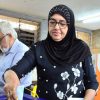
The New Social Contract: an Opportunity for Deliberative Participation
These days there hasn’t been certainly a shortage of reports portraying the decline of liberal democracy around the world. With rising popularism and a divisive use of social media, we should not be surprised about a general malaise taking roots in most advanced liberal democracies.
Q&A: UN Food Systems Summit Opportunity for the World to Unite on Healthy, Fair & Sustainable Food Systems
Before the COVID-19 pandemic upended every sphere of life, the world was lagging on a goal to end hunger by 2030. According to the United Nations, more than 820 million people had already been categorised as food insecure, meaning they lacked access to reliable and sufficient amounts of affordable, healthy food.
“The Critical Importance of Ecosystem Restoration”
June 2021 marked the launch of UN Decade on Ecosystem restoration. This effort aims at reversing the damage that us humans have caused and are still causing to Nature. It is clear that we have to reverse course and spare no effort into making this ‘Decade on Ecosystem Restoration’ a success. Preserving Nature and maintaining its services are critical for our survival on this planet and for our livelihoods.
Calls to Halt Construction of Massive Oilfield in One of Africa’s last Wildernesses
Wildlife and environmental campaigners have called for international action as concerns grow over a project to create a massive oilfield in one of Africa’s last wildernesses.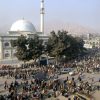
Another Impending Cataclysm in Afghanistan
The Biden administration made a decision to withdraw US troops from Afghanistan based on the Trump-Taliban agreement. Their last combat soldier may have already left. There is nothing to argue about!
Bangladesh’s Indigenous Forest Dwellers Fear Losing Ancestral Land as Officials Grapple with Land Grabs
When the Bangladesh Forest Department felled Basanti Rema’s banana orchard, Rema, a Garo indigenous forest-dweller of Madhupur Forest, felt she was living a nightmare. Rema, from Pegmari village in Madhupur, Tangail district, had cultivated the banana plants on half an acre in the Madhupur Forest. But the Forest Department claimed that the land on which the bananas were cultivated belonged to the department.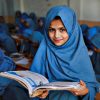
Investing in Education as Driver for All Our Futures
Never before have so many children been out of school. 1.6 billion children and young people – more than 90% of students worldwide – have been impacted by school closures during the pandemic. Hundreds of millions of those children have gone without any learning at all, deprived of all the benefits that being in school provides.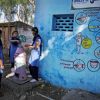
Prioritising Menstrual Health and Hygiene During Emergencies
Over the last few years, the world has witnessed accelerated action to achieve the Sustainable Development Goals (SDGs), especially SDG 5 on gender equality and women’s empowerment. This has also led to significant interest in menstrual health and hygiene management (MHHM) as a critical factor in girls’ education and women’s participation in many spheres of life.
Agroecology as the Centrepiece of Sustainable Food Systems
In three weeks, the United Nations will bring together farmers, scientists, policymakers and civil society for the last major event ahead of the September UN Food Systems Summit.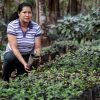
Why we Need to Build Economies– not Walls– to Stop Migration
If you speak to farmers in El Salvador, many will tell you about the time they were driven to head north across Central America towards the US. The routes to the border are many, but the origins are so often the same: desperation and hope that better employment opportunities can be found elsewhere.
Developing Country Solidarity Needed to Overcome Pandemic
As rich countries have delayed contagion containment, including mass vaccination, in developing countries, much weaker fiscal efforts in the South have worsened the growing world pandemic apartheid.
USMCA Agreement: Towards a New Economic Relationship in North America?
The visit of the Vice President of the United States to Mexico on June 8 served to address various issues on the bilateral agenda . The media gave importance especially to the migration issue, but Mrs. Harris gave a prominent place , also , to the labor question. Her appointments deserve some comments.« Previous Page — Next Page »


