Languages
Saturday, November 14, 2026



News and Views from the Global South
Headlines

Palestinians are Suffering from Hunger, Poverty, Conflict & a Global Pandemic
The Trump administration’s decision to cut off assistance to the United Nations Relief and Works Agency (UNRWA) caused considerable hardship for Palestinian refugees during the coronavirus pandemic, particularly those in Gaza where a majority of the population are refugees and poverty is rampant due to Israel’s blockade, Khaled Elgindy, a Senior Fellow at the Middle East Institute (MEI), told IPS.
Rohingya Children Find Refuge in Education
Although learning centres in Cox’s Bazar Kutupalong Refugee Camp are closed because of the COVID-19 pandemic, Mariom Akhter, a Rohingya mother of four, is grateful not only for the schooling her children have had but the training sessions she as a parent was able to attend. The skills she learnt has helped her assist her children with their education at home in a crisis. It’s something she’s likely needed to help her children with over the last few weeks after a Mar. 22 fire spread through the camp, destroying the shelters of at least 45,000 people as well as important infrastructure, including hospitals, learning centres, aid distribution points and a registration centre. At least 15 people were reported dead and 400 missing.
In the Secretive World of Government-to-Government Lending, 100 Chinese Debt Contracts Offer a Trove of New Information
Is Chinese financing good for developing countries? This has become a provocative question, freighted with ideology, geopolitics, and commercial rivalries. That doesn’t mean it isn’t worth trying to answer factually and empirically.
Clash of Cultures – Is it Real or a Smokescreen?
The notion of “Clash of Cultures” is most frequently used as a justification for anti-immigrant prejudice and, particularly in Europe and in the USA, for islamophobia. The reasoning goes as follows: immigrants, especially Muslims, have a deeply different culture from the hosting communities and these differences create unsurmountable tensions and conflicts.
The Invisible Women in Energy: Biomass Producers Who Deserve More Recognition
As the world looks to address issues of gender equity, development and climate change, the importance of increasing the participation of women in the energy sector is gaining attention. To date, this topic has generally been framed around the underrepresentation of women in the energy workforce.
Overcoming COVID-19: World Leaders Must Finance a More Equal World to Beat Pandemics
Leaders at this year’s World Bank/IMF Spring Meetings (April 5-11) will determine how best to recover from one of the biggest crises the institutions have faced since their founding in 1944—COVID-19’s impact and its economic aftermath.
Helping Youth Agribusiness Keep Pace with Fast Growing Africa
From small towns to big cities, sub-Saharan Africa has the fastest urban growth rate in the world. The continent’s population is expected to double by 2050 with the youth representing 60% of the overall population. The UN Department of Global Communication, for example, projects that for the next 15 years urban growth is set to double for several African cities: Dar es Salaam will reach over 13 million inhabitants and Kampala will exceed seven million.
Cost of Being ’Honour Bearers’ Sexual Violence During Communal Riots in India
Delayed, or no, justice and perpetrators’ impunity effectively silence rape and sexual assault survivors of communal violence in India. Activists and human rights lawyers have been speaking out about how rape and sexual violence, especially during communal conflicts, aims to humiliate religious and other minorities by turning the women into symbols of dishonour.
Was Trump’s Family-Separation Policy Torture?
“A crime against humanity” and “a disgrace to our great country”: that’s how 99-year-old Benjamin Ferencz, the last surviving prosecutor of the Nazis at the Nuremberg war-crimes trials, characterized the Donald Trump administration’s coercive separation of thousands of immigrant children from parents seeking asylum.
Indonesia’s Climate Villages Where Communities Work Together to Mitigate Climate Change
Residents of Ngadirejo village in Sukaharjo regency, Central Java province, had often found themselves helpless when their wells dried up or water flooded through their homes. But thanks to a national campaign called Program Kampung Iklim, known by its acronym ProKlim, they now have solutions to this flooding that generally occurs because of a lack of adequate water catchments.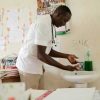
A Post-COVID-19 Recovery will not be Possible if Water, Sanitation & Hygiene are not High on the Agenda
This World Health Day, G20 finance ministers will meet in Rome, Italy, to discuss how they will build back from the pandemic. The global economy is and concerted effort, coordination and imagination is needed to enable not only a worldwide recovery but also to ensure that the world’s poorest people are not left behind.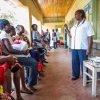
On World Health Day, a Call for Equity, Justice & the End of Paternalism
The past year has forced many of us to address difficult truths about how we treat and take care of each other — among them is a reckoning with racism and injustice.
Transforming Global Food Systems
Jose Graziano da Silva on the Path to Zero Hunger
The battle for the future of food has grown contentious, and José Graziano da Silva has become a lightning rod for criticism. In 2014, as Director General of the United Nations Food and Agriculture Organization (FAO), he presided over the institution’s first International Agroecology Symposium, opening what he called “a new window in the Cathedral of the Green Revolution.” The FAO has since then formalized support for “Scaling Up Agroecology” while continuing to promote the kinds of chemical-intensive agriculture associated with the Green Revolution.
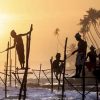
A Healthy Indian Ocean Feeds, Protects, and Connects all South Asians
It is the oceans that engendered life. The lives of humans remain connected to the seas, making the good health of the seas and the efficient management of sea-based activity essential elements for the wellbeing of people and nations.
Women and Girls to the Front
Women hold up half the sky. Some years ago, Sarah al-Amiri, a young Emirati engineer, had a fixed gaze beyond the sky and towards our galaxy. “Space was a sector that we never dared to dream growing up,” she noted.
Getting to Better than Normal in a Post-COVID-19 World
Girls in Asia don't want to go back to normal – they want to go "back to better than normal", says Zara Rapoport, a delegate during an online seminar on the impact of the COVID-19 pandemic on gender.
Disability Discrimination at the World Bank: Is it Immunity or Impunity?
The 15,900-strong World Bank, which has funded over 12,000 development projects worldwide since 1947, is an international institution with a superlative reputation for its sustained efforts to end poverty in the developing world—with loans, interest-free credit and outright grants.
IMF, World Bank Must Support Developing Countries’ Recovery
The COVID-19 pandemic continues to take an unprecedented human and economic toll, wiping away years of modest and uneven progress towards the Sustainable Development Goals (SDGs). Developing countries now need much more support as progress towards the SDGs was ‘not on track’ even before the pandemic.
Mexico Looks to the Heavens for a Solution to Its Water Crisis
In neighbourhoods like Tehuixtitla in southern Mexico City, rain brings joy, because it provides water for showering, washing dishes and clothes, and cooking, by means of rainwater harvesting systems (RHS).
Three Ways the US Can Promote Equity in Ending the COVID-19 Pandemic Globally
As richer western nations continue hoarding COVID-19 vaccines to the detriment of poorer nations, there is some light on the horizon. On April 15, 2021, the U.S. will join the Global Vaccine Alliance (GAVI) and co-host the launch of the Investment Opportunity for COVAX Advance Market Commitment.
Pandemic Accentuates Need for Caribbean Countries to Improve Food and Nutrition Security
Last year, Jaxine Scott was off work as a caregiver at a primary school as a result of the pandemic. One day, she noticed a green shoot emerging from some garlic in her fridge. She decided to plant it, and to her surprise, it thrived. “I thought ‘It looks like I have a green thumb, let me plant something else,’” Scott says. She now has a backyard garden, including cucumber, pumpkin, melon, callaloo, cantaloupe, pak choy and tomatoes. “It makes me feel good,” she says. “I can help my family members and neighbours. It has saved me money. I’m not going to stop, I’m going to continue,” she says.« Previous Page — Next Page »


