Languages
Sunday, November 15, 2026



News and Views from the Global South
Headlines

The Plight of Domestic Workers in Brazil
The inclusivity of Brazilian society is put to the test as the coronavirus pandemic highlights a labour sector ripe with historical and structural inequality: domestic work.
Human Trafficking Survivor Harold D’Souza: “The Perpetrators are More Aggressive Than Ever”
The fallout of the COVID-19 pandemic continues: as more people around the world lose their livelihoods, human trafficking is on the rise. Support services for survivors have been shut, and past gains to combat it have been reversed. Funding has dried up.
Food Security Bursts Onto the Global Agenda
The month of October 2020 will be recalled as one of the most important moments in raising awareness about world food security, whether in the global debate or in the search for possible concrete solutions.
A Long, Uneven and Uncertain Ascent
The COVID-19 pandemic continues to spread with over 1 million lives tragically lost so far. Living with the novel coronavirus has been a challenge like no other, but the world is adapting.
Enhanced Social Protection an Opportunity Asia Pacific Must Grasp
In the fight against COVID-19, success has so far been defined by responses in Asia and the Pacific. Many countries in our region have been hailed as reference points in containing the virus. Yet if the region is to build back better, the success of immediate responses should not distract from the weaknesses COVID-19 has laid bare. Too many people in our region are left to fend for themselves in times of need. This pandemic was no exception. Comprehensive social protection systems could right this wrong. Building these systems must be central to our long-term recovery strategy.
Questions Remain over Botswana’s Mass Elephant Deaths
When hundreds of elephants died in the space of a few months in Botswana earlier this year, conservationists were shocked. Wildlife experts said it was one of the largest elephant mortality events in history.
Venezuela, Twitter, and Crimes Against Humanity
In mid-September, the United Nations Human Rights Council approved the renewal, for another two years, of the mandate of the Fact-Finding Mission to determine and document the existence of crimes against humanity in Venezuela, under the government of Nicolás Maduro.
Education: Act Now, Don’t Wait for the Bill
School reopening doesn’t mean that education is back on course. For a start, schools remain closed in over 50 countries, affecting more than 800 million students. The poorest ones may never make it back to school, driven by poverty into child labour or early marriage. Distance learning has been out of reach for one third of the 1.6 billion students affected worldwide by school closures. They may disengage altogether if school closures continue.
Limited Liability: Profit Without Responsibility
Limited liability protection for shareholders in joint stock companies was introduced to encourage investments in them. However, it has encouraged irresponsibility, causing much harm while generating profits without responsibility. Limited liability limits responsibility Columbia Law School’s Professor Katarina Pistor has extended her critique of the legal system to emphasize the implications of such limited liability. Limited liability encourages shareholders not to pay attention to the harm corporations they invest in may do.
Low-cost Technology can Have Life-changing Impacts for Rural Women
Access to technology which is relatively inexpensive to deploy can have a life-changing impact for rural women, social scientist Valentina Rotondi told IPS.
Climate Change: New Threat to Nepal’s Rhinos
Nepal’s population of one-horned rhinoceros that survived hunting, a shrinking habitat and wildlife trafficking are now faced with a new threat: changes in their living environment due to a rapidly-warming atmosphere.
Why Food System Transformation Needs Water
The impact of Covid-19 on supply chains and food security has dealt a blow to the already faltering global development ambition of ending hunger.
Why a Zimbabwean Farming Project Failed: Lessons for Rural Innovation
Many countries in sub-Saharan Africa commit resources to promote agricultural innovations. This is based on the assumption that rural livelihoods are mainly agricultural and that the innovations will increase agricultural production and household income.
Q&A: Food Systems need to Mimic Nature
Despite the World Food Programme (WFP) being awarded the 2020 Nobel Peace Prize for its work in addressing global hunger, sustainable food systems expert Emile Frison believes a lot more needs to be done. This includes the rethinking of approaches to agricultural production, establishing deeper relationships between consumers and producers, and taking a wholistic approach towards socio-economic factors.
Food Citizenship: Innovative Partnerships for Healthy Food Systems
Food is high on the political agenda. The need to make food systems more resilient to external shocks like climate change and Covid-19 is now well acknowledged among states and other actors. Green, healthy, and inclusive food systems should become the new normal. But to make this happen we need to reshape the entire food system, with citizens driving bottom-up innovations.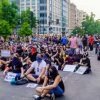
Amid COVID-19, What is the Health of Civic Freedoms?
More than half a year after the World Health Organization declared the COVID-19 outbreak a pandemic, governments are continuing to waste precious time and energy restricting human rights rather than focusing on fighting the virus.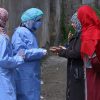
What Developing Countries Can Teach Us About How To Respond To a Pandemic
Nine months into the pandemic, Europe remains one of the regions worst affected by COVID-19. Ten of the 20 countries with the highest death count per million people are European. The other ten are in the Americas. This includes the US, which has the highest number of confirmed cases and deaths in the world.
UN Survives a World Turned Upside Down
As the United Nations plans to commemorate its annual UN Day, come October 24, Secretary-General Antonio Guterres is presiding over a world body which has remained locked down since last March because of the spreading coronavirus pandemic.
Is the IMF Encouraging World Financial Leaders to Walk Blindly Towards More Austerity?
This week the world’s Ministers of Finance and Central Bank Governors meet virtually at the 2020 Annual Meetings of the International Monetary Fund and the World Bank and decide on the fate of the world. This year’s gathering is particularly important, given that the world is confronting an unprecedented crisis. Governments are struggling to finance emergency care and urgent socioeconomic support to cope with the COVID19 pandemic.
High Tech, Low Labour?
In the glitzy Dolby Theater in Hollywood Heights, with stars dressed in hundred thousand-dollar garbs, Parasite—a film about inequality, class tension and the fault lines of capitalism—won big. I couldn’t help but recall South Korean director Bong Joon-ho’s earlier 2013 film, Snowpiercer.
Why We Need Trees to End to Poverty – Landmark Report
With extreme poverty (living on $1.90 a day) projected to rise for the first time in over 20 years, a new study has concluded that global poverty eradication efforts could be futile in the absence of forests and trees.« Previous Page — Next Page »


