Languages
Sunday, October 11, 2026



News and Views from the Global South
Headlines

Myanmar: Five Years Since the Coup and No End in Sight To War
Five years of conflict since the military seized power have reduced Myanmar to a failed state and taken a huge toll of lives lost and destroyed. But with all sides seeking total victory, there is no end in sight.
Protecting Africa’s Ocean Future and Why a Precautionary Pause on Deep-sea Mining Matters
The world is entering a decisive period for the future of the ocean. With the High Seas Treaty coming into force and meaningful progress being made on the World Trade Organization Agreement on Fisheries Subsidies, global momentum for stronger marine governance is building. Yet, new pressures linked to the push for deep-sea mining — the extraction of minerals from seabed thousands of meters below the ocean surface — threaten to undermine these gains. To safeguard progress, global decision-making will have to keep pace with such emerging risks. In this context, Africa will host several global discussions in 2026, including those that will shape the ocean's future, with a series of opportunities for leadership starting with the African Union Summit in February to the Our Ocean Conference in Mombasa, Kenya in June.
Support Science in Halting Global Biodiversity Crisis—King Charles
British Monarch King Charles says science is the solution to protecting nature and halting global biodiversity loss, which is threatening humanity’s survival.
Explainer: Why Nature Is Everyone’s Business
Our food, fuel, and fortunes come from nature, but as these resources are turned into profits, the balance between exploiting and replenishing the planet is ever more precarious. Global businesses impact nature through mining, manufacturing, processing and retail operations. At the same time, nature impacts business operations because there is a loss of biodiversity and extreme weather events such as droughts, floods, and high temperatures.
The Delicate Balance of International Migration
The delicate balance of international migration relies on the high demand for labor and the enforcement of stricter immigration controls. This equilibrium is especially crucial when considering the international migration of students and skilled workers.
Is it the Budgetary Crisis – Or Leadership Crisis – Facing the United Nations – Or Both?
In the month of February 2025, one year ago, United Nations Secretary-General Antonio Guterres commenced his briefing of the media by announcing that “I want to start by expressing my deep concern about information received in the last 48 hours by UN agencies — as well as many humanitarian and development NGOs — regarding severe cuts in funding by the United States.” He went on to warn that ““The consequences will be especially devastating for vulnerable people around the world.”
High Seas Treaty Will Transform Our Fragile Ocean for the Better
“The ocean’s health is humanity’s health”, said UN Secretary-General Antonio Guterres, in September 2025. He was commenting after the High Seas Treaty (BBNJ) [1] finally achieved ratification, going on to call for “a swift, full implementation” from all partners. As of January 17, 2026, the treaty has come into force, meaning the time for implementation is now. What is the High Seas Treaty?
Group of 77—Representing 134 Nations, Plus China—Protest Funding Cuts for South-South Cooperation
A sharp cut in funding for “South-South Cooperation” (UNOSSC) has triggered a strong protest from the 134-member Group of 77 (G-77), described as the largest intergovernmental organization of developing countries within the United Nations.
Venezuela at a Crossroads
When US special forces seized Nicolás Maduro and his wife from the presidential residence in Caracas on 3 January, killing at least 24 Venezuelan security officers and 32 Cuban intelligence operatives in the process, many in the Venezuelan opposition briefly dared hope.
To Develop a Continent, Africa Must Nourish Its Children
Hunger shadowed Mercy Lung’aho’s childhood, fueling her campaign to promote nutrition as a foundation for Africa’s development.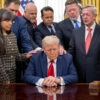
Do Resources Define the Parameters of Faith-based Engagement and Diplomacy Today?
Several events, meetings, consultations, initiatives, etc. taking place among faith-inspired, ‘faith-based’ and a variety of other similar efforts, over the past year, in the United States especially, concern me.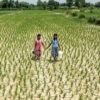
U.S. Exit from Paris Agreement Deepens Climate Vulnerability for the Rest of the World
On January 27, the United States officially withdrew from the Paris Agreement, an international treaty adopted in 2015 aiming to reduce global warming and strengthen countries’ resilience to climate impacts. Following a year of regulatory rollbacks and sustained efforts by the Trump administration to dismantle federal climate policy, this move is expected to trigger wide ranging ripple effects—undermining international efforts to curb climate change, accelerating environmental degradation and biodiversity loss, and increasing risks to human health, safety, and long-term development.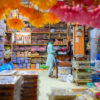
Business Growth and Innovation Can Boost India’s Productivity
India’s productivity growth over the past two decades has been impressive, reflecting rapid expansion in high-value services, gradual efficiency-enhancing reforms, and scale advantages from a large domestic market.
The UN is Being Undermined by the ‘Law of the Jungle’
UN Secretary-General Antonio Guterres was dead on target when he told the Security Council last week that the rule of law worldwide is being replaced by the law of the jungle. “We see flagrant violations of international law and brazen disregard for the UN Charter. From Gaza to Ukraine, and around the world, the rule of law is being treated as an à la carte menu,” he pointed out, as mass killings continue.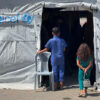
‘Unfathomable But Avoidable’ Suffering in Gaza Hospitals, Says Volunteer Nurse
“I’d never encountered anything like it before. I had no idea that there could be a place that needed humanitarian aid and that a government entity wouldn’t allow physicians or health workers into [that place],” says Jane.*
Melting Reserves of Power: Mongolia’s Glaciers and the Future of Energy and Food Security
The International Year of Glaciers’ Preservation in 2025 was a timely reminder that the stability of Mongolia’s economy rests on fragile mountain systems that are melting faster than ever recorded. The loss reverberates across the country’s energy and agricultural systems, two development pillars that draw from the same finite resource: water.
Gambia’s Supreme Court to Decide on FGM Ban
Gambia's Supreme Court is considering whether a law protecting women and girls from female genital mutilation (FGM) is constitutional. The practice, common in Gambia, often involves forcibly restraining girls while parts of their genitals are cut, sometimes with the wound sewn shut.
Talent Wasted: Afghanistan’s Educated Women Adapt Under Taliban Restrictions
Young women in Afghanistan’s capital, Kabul, are trying their hands at unfamiliar tasks in embroidery, tailoring and designing beads in market stalls. Many should instead have been sitting at desks writing computer software or reporting news, the fields they trained for.
Exiled: Myanmar’s Resistance to Junta Rule Flourishes Abroad
From construction and hotel workers to kitchen and restaurant staff—estimates of the numbers of Myanmar migrants living in Thailand range up to six million, with a surge of new arrivals since the 2021 military coup.
‘Since the Coup, Factory Employers Have Increasingly Worked with the Military to Restrict Organising and Silence Workers’
CIVICUS speaks to the Business and Human Rights Centre (BHRC) about labour rights abuses in Myanmar’s garment industry since the 2021 military coup.
Haiti at a Crossroads: Political Uncertainty and Gang Control Push Nation Toward Collapse
As Haiti’s Transitional President Council (TPC) approaches its February 7 expiration date and the country remains without a newly elected president, humanitarian experts warn the nation risks further sliding into insecurity, raising fears of broader collapse.« Previous Page — Next Page »





